Africa
Tinubunism -By Ozioma Nwadike
A democracy cannot survive when its foundational document is treated as a mere suggestion. The 1999 Constitution’s supremacy, as affirmed in Ugba v. Suswam (supra), exists precisely to prevent this slide into tyranny. The events in Rivers State are a prologue to a darker future—one where Nigeria’s democracy exists in name only. If a governor can be removed under constitutional ambiguity, if the National Assembly can mock its own procedures, and if the public’s outrage is met with impunity, then the “nascent” democracy of the past 25 years is already stillborn. The choice is stark: Nigeria must reclaim its constitutional order, or surrender to Tinubunism – a regime where the only law is power, and the only opposition is silence.

In their seminal work The History of the Yorubas, Rev. Samuel Johnson and Dr. Obadiah Johnson recount how 18th-century Egba chiefs, frustrated by western duplicity, rued over their unprofitable alliance with the English. As those ancient wise men put it, “We have labored incessantly, yet we remain in the same spot, without progress or advantage.” This vivid metaphor of running in place echoes hauntingly through time and can be aptly used to describe Nigeria’s democracy, which, after over 66 years of independence, still remains “nascent.”
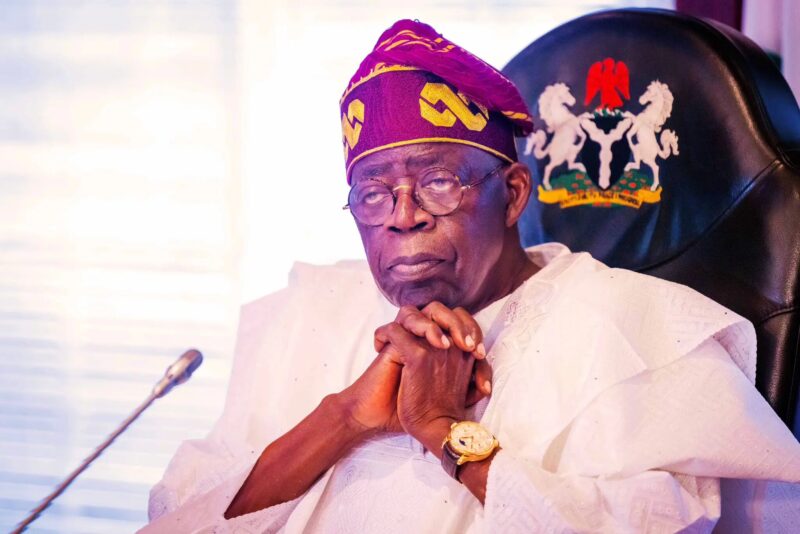
Today, Nigerian democracy confronts one of its gravest existential crises since the return to civilian rule in 1999. On March 18, 2025, President Bola Ahmed Tinubu declared a state of emergency in Rivers State, suspending the democratically elected governor and the state house of assembly. In their stead, the President appointed retired Chief of Naval Staff, Admiral Ibokette Ibas, as the state administrator.

The declaration of a state of emergency in Nigeria’s oil-rich Rivers State stems from a bitter political deadlock between two factions. One camp comprises factional members of the Rivers State House of Assembly loyal to President Tinubu’s strongest non-Yoruba ally, the rambunctious former governor of Rivers State, Nyesom Wike. The other side is led by Governor Sim Fubara, a previously unknown political quantity whose election as Governor was marred by widespread electoral irregularities. Upon assuming office, Fubara severed ties with Wike, his erstwhile political patron, setting off a dramatic chain of events that has now culminated in the dismantling of democratic structures in the state. The contest between Wike and Fubara mirrors the biblical dispute between two harlots over a new-born child in the book of Kings, during the reign of Solomon. Just as one woman was willing to see the child divided rather than allow the other to have him, it would seem that either Wike or Fubara was determined to risk it all rather than concede any advantage to their opponent.
The Nigerian Bar Association (NBA), the country’s professional body of lawyers, has denounced President Tinubu’s actions as “unconstitutional, unlawful, and a dangerous affront to Nigeria’s democracy.” The NBA argues that, despite the political tension in Rivers State, the situation did not meet the constitutional threshold for removing elected officials. Similarly, the state chapter of the Nigerian Labour Congress (NLC) has threatened strike action, while several national opposition leaders have criticized the President’s drastic move. To many observers, it appears that by suspending Governor Fubara and the House of Assembly, the President has effectively achieved a political victory for his ally, Nyesom Wike, through the backdoor.
To die-hard supporters of the President, however, there is much ado about nothing. They are quick to draw parallels with the events of 1962, when Prime Minister Tafawa Balewa declared a state of emergency in the old Western Region, removed Premier S.L. Akintola, and appointed Dr. Moses Majekodunmi as the Federal Administrator. Yet a key distinction stands out: while Prime Minister Balewa made firm assurances that constitutional order would be restored in the Western Region as soon as practicable, underscoring the unnaturalness of his actions in a democratic order, in contrast, President Tinubu did not offer any such assurances, merely stating that the suspension was for an “initial” term of six months. One is left to wonder whether the President intends to rule Rivers State by fiat indefinitely.
Furthermore, in defending the President’s actions, his supporters often cite former President Olusegun Obasanjo’s use of emergency powers in Plateau (2004) and Ekiti (2006) states, which involved the suspension of democratically elected governors and state assemblies. However, this argument overlooks a more recent precedent set by former President Goodluck Jonathan. In response to the deadly Boko Haram insurgency in northeastern Nigeria, Jonathan declared a state of emergency in Borno, Yobe, and Adamawa states. He deployed the military to address the crisis but explicitly stated that the governors and other political officeholders in the affected states would continue to discharge their constitutional duties. Notably, President Bola Tinubu, then an opposition leader, sharply criticized Jonathan’s use of emergency powers, describing it as a ‘barely disguised attempt to muzzle the elected governments of these states, reflecting unpardonable mediocrity and diabolic partisanship aimed at the 2015 elections.” One would say a jarring hypocritical turn of events in the Nigerian political terrain where principles mean nothing.

Under the 1999 Constitution of the Federal Republic of Nigeria, as amended, Section 305 grants the President power to declare a state of emergency in Nigeria or any part thereof. This section also outlines the conditions and procedure for such a declaration. As noted by the NBA, the constitutional threshold required for use of emergency powers include a state of war, natural calamity, and breakdown of law and order as to require extraordinary measures to restore peace and security. However, the 1999 Constitution is silent on the scope of the President’s emergency powers upon such proclamation. Many legal commentators correctly point out that no part of the constitution expressly grants the President the power to suspend the governor or house of assembly of a state and to appoint an administrator in their place. Therefore, the assumption that such far-reaching powers are implicitly granted under Section 305 requires more than mere conjecture.
In P.T.F. v. Fidelity Bank Plc (2022) 9 NWLR (Pt. 1836) 475 the Nigerian supreme court held that “whenever a court is confronted with the interpretation of a constitutional provision, as in the instant case, the provisions of the Constitution as a whole ought to be read in determining the object of the particular provision”
This principle of constitutional interpretation invites the consideration of Section 11 of the 1999 constitution which empowers the National Assembly to make laws for public order and safety of constituent states during a period when Nigeria is at war; or such period as when the State House of Assembly is unable to perform its functions. Yet, subsection 4 of the said section 11 contains the proviso that nothing in this section shall be construed as conferring on the National Assembly power to remove the Governor or Deputy Governor of a State from office. Hence, even in times of war—a scenario logically warranting a state of emergency—the Constitution expressly denies the National Assembly, a key federating authority, the power to oust a governor.
Even when weighed against legal theory, the President’s declaration falls short. The central idea of a state of emergency is the temporary suspension of certain rights to restore order during times of crisis, such as war, rebellion, or natural disasters. In a democracy, such measures are typically justified as a means of protecting the constitutional order itself, as long as they are seen as temporary and proportionate to the emergency. This is recognized by Article 4 of the International Covenant on Civil and Political Rights (ICCPR). However, in Rivers State, things have continued as they were before the suspension of the Governor and the House of Assembly. Previously withheld Rivers state allocation has been released to the unelected administrator. A new secretary to the state government appointed by the administrator to replace the democratically appointed one. Commercial activities and movement have continued in full swing.
Notably, far more egregious than the President’s arrogation of usurpation powers, was the manner in which the National Assembly purported to have approved the President’s suspension of the Governor of Rivers State. Section 305(5) of the 1999 Constitution requires a presidential proclamation of a state of emergency to be supported by a two-thirds majority of all members of each House of the National Assembly, failing which it ceases to have effect.
In Ugba v. Suswam (2014) 14 NWLR (Pt. 1427) 264, the Nigerian Supreme Court held that the “Constitution is supreme and what it has stipulated remains sacrosanct and immutable and nothing can be done about it but to strictly comply therewith”.
In a farcical display, the House of Representatives by voice vote of “nay” or “yay”, in full public glare, claimed to have passed the President’s proclamation. In fact, Speaker Abass Tajudeen eagerly announced that 243 members were present during the plenary, despite visibly empty seats throughout the chambers. It is not easy to wake up a person who is pretending to sleep but it must be emphasized that the number of members present at the plenary has no bearing whatsoever on the constitutional provision that 2/3 of all members of the House of Representative (i.e 240 members) must approve a proclamation of state of emergency, and not merely those present. Moreover, a voice vote cannot credibly establish such a precise threshold. What transpired was, in my view, a charade
The Senate’s so-called approval was equally scandalous. Invoking its Standing Rules, the Senate retreated into a closed session, after which the crisis-ridden Senate President Godswill Akpabio announced approval of the President’s emergency powers. Several opposition senators later alleged that the constitutional two-thirds majority—73 of 109 senators—was not met. A quick examination of the Senate Standing Rules reveals that either the Senate leaders cannot read basic English, or more sinister forces are at play. The Standing Rules provide that upon the declaration of a state of emergency, the President must transmit to the Senate copies of the gazette containing the proclamation and a compendium of background information on the circumstances. The Senate President is then required to brief the Senators in a closed session, making sensitive documents available to them. The Standing Rules require the Senate to resolve into a committee of the whole to consider the proclamation and thereafter decide whether to approve it in accordance with the Constitution. Nothing in the Senate Standing Rules entitles the Senate to enter into a closed session to determine the 2/3 majority required to approve the President’s emergency powers.
On the whole, the suspension of democratic structures in Rivers State is not merely an isolated power grab—it is the latest manifestation of a broader, more insidious agenda: the gradual transformation of Nigeria into a one-party state, where opposition is crushed under the weight of executive impunity and legislative complicity. The parallels between President Tinubu’s actions and the authoritarian playbook are too glaring to ignore.
A democracy cannot survive when its foundational document is treated as a mere suggestion. The 1999 Constitution’s supremacy, as affirmed in Ugba v. Suswam (supra), exists precisely to prevent this slide into tyranny. The events in Rivers State are a prologue to a darker future—one where Nigeria’s democracy exists in name only. If a governor can be removed under constitutional ambiguity, if the National Assembly can mock its own procedures, and if the public’s outrage is met with impunity, then the “nascent” democracy of the past 25 years is already stillborn. The choice is stark: Nigeria must reclaim its constitutional order, or surrender to Tinubunism – a regime where the only law is power, and the only opposition is silence.
Ozioma Nwadike, is a legal practitioner and public commentator. He can be reached on X (formerly Twitter) @Bslder