
Breaking News
Tinubu’s Economic Reforms: Temporary Hardship, Lasting Gains — Onanuga
Presidential adviser Bayo Onanuga defends Tinubu’s reforms, saying Nigeria has moved from the brink of financial collapse and that the pains will ease.

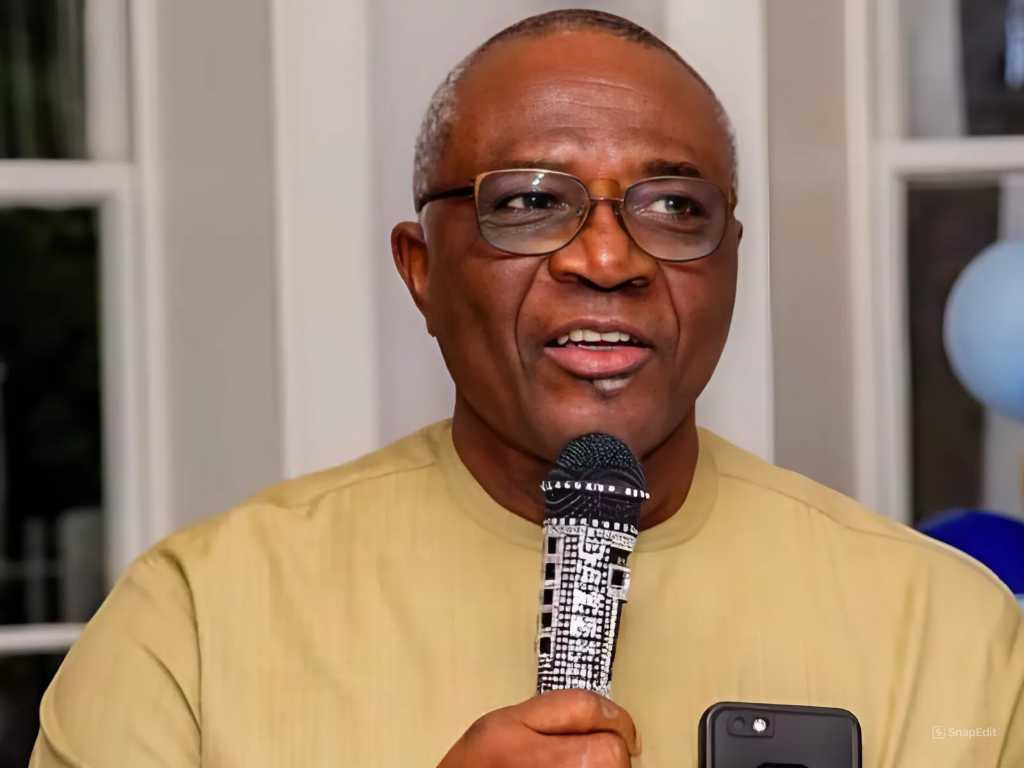
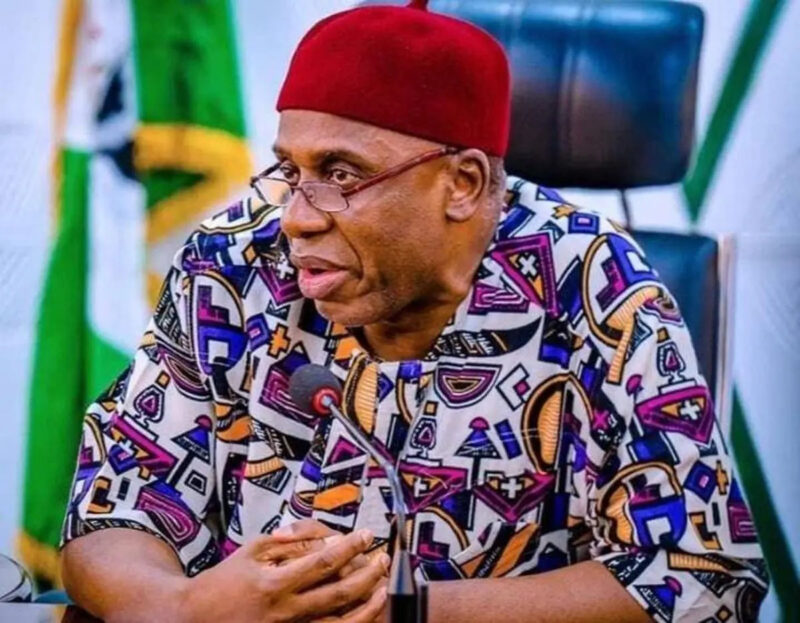
President Bola Tinubu’s reforms may be causing hardship in the short term, but the sacrifices will eventually produce lasting benefits for Nigerians, Special Adviser to the President on Information and Strategy, Bayo Onanuga, has said.
Onanuga, while speaking on the administration’s reforms, the 2027 elections, state police and local government autonomy, maintained that Tinubu inherited an economy that was already showing serious signs of financial distress.
According to him, the President had to act quickly to prevent the country from sliding into financial insolvency.
‘There’s no way you can carry out any reform without pains’
Onanuga said the President had never denied the difficulties created by the reforms, insisting that major economic restructuring inevitably comes with some pain.
“The message this President, on his own and through the ministers—Finance and others—has been passing on is that there’s no way you can carry out any reform without its attendant pains.”
He said Tinubu was aware of the pressure created by the high cost of living and had introduced several interventions to cushion vulnerable Nigerians.
Among them, he cited the $3.5 billion ward-centric programme recently launched by the President, as well as initiatives targeting education, healthcare, transportation and social welfare.
Onanuga argued that without the reforms, Nigeria could have faced a more severe financial crisis.
He recalled that the NNPC had experienced difficulties paying suppliers of refined petroleum products, while the CBN was unable to remit about $800 million owed to foreign airlines.
He further said the country could not fund letters of credit worth more than $7 billion and had accumulated ways and means advances of about N30 trillion.
“Worse was that, contrary to the picture of exchange reserves that Emefiele projected, our net reserve was less than $4 billion. These were signs that we were heading for financial insolvency. President Tinubu had to act fast to save the nation from collapse.”
‘The economy is shaping up well’
The presidential adviser said the situation had improved significantly since the reforms began.
“But today, we have moved from the brink of financial collapse. The economy is shaping up well. The country now has $52 billion in reserves. We have a stable exchange rate.”
He added that Nigeria had recorded trade surpluses since around the third or fourth quarter of 2023 and said investors were increasingly showing confidence in the country.
Onanuga also pointed to the performance of the Nigerian stock market.
He said the All-Share Index had risen from about 50,000 points when Tinubu assumed office to more than five times that level, describing the Nigerian stock market as the best in the world in terms of returns to investors.
He also listed NELFUND, free vocational education, CrediCorp, increased pension payments, higher minimum wage and cheaper kidney treatment among the administration’s interventions.
CNG helping to cut fuel costs
Onanuga defended the removal of fuel subsidy, saying the government had simultaneously introduced CNG as a cheaper alternative.
“Yes, the government removed fuel subsidy. But the same government introduced a cheaper, indeed five times cheaper, fuel, Compressed Natural Gas, CNG.”
He said many commercial buses and taxis had converted to CNG and benefited from lower operating costs.
The presidential adviser also disclosed that one of his vehicles runs on CNG.
“One of my cars is also running on CNG, and I am happier for it in terms of saved costs.”
2027: APC will be judged on reforms
On the APC’s prospects in the 2027 elections, Onanuga said voters would weigh the temporary hardship against the long-term benefits of the reforms.
“I think that, at the end of the day, people will be able to evaluate the merits of the reforms vis-à-vis the temporary pains that we are going through, and I think they will give the party the benefit—and the President the benefit—of the doubt.”
He argued that opposition parties had yet to present convincing alternatives to the Tinubu administration’s policies.
According to him, Nigerians should demand to know what opposition candidates would do differently, particularly on fuel subsidy and foreign exchange policy.
Shettima’s religion not the reason for 2027 ticket
On Tinubu’s decision to retain Vice President Kashim Shettima as his running mate, Onanuga dismissed concerns over religious balancing.
“You know, in 2023, the President said he didn’t pick Shettima because he’s a Muslim; that position has not changed. People should begin to look at our country beyond religion.”
He said the President chose Shettima because of what he could contribute to the administration and praised him as an “able, reliable and very efficient second-in-command.”
Onanuga also rejected earlier claims that the Tinubu administration would Islamise Nigeria, describing such fears as propaganda.
‘If they are not doing well, the President would have removed them’
On the performance of ministers, Onanuga said critics should identify specific ministers they believed were underperforming.
Asked whether the ministers were doing well, he replied:
“Well, if they are not doing well, the President would have removed them. But what I know is that he has not told me that he has a minister who is not performing well.”
He added that he was not the employer of the ministers and therefore was not in a position to formally assess their performance.
State police may come before end of first term
On the proposed creation of state police, Onanuga said the initiative could become a reality before the end of Tinubu’s first term.
“I think it’s possible, given the enthusiasm the states and the National Assembly have shown. We can’t solve the problem of insecurity if we don’t have the states commanding some forces of their own.”
He said the proposal could also generate significant employment.
“If every state assembles, say, 10,000 state policemen—multiply it—there are 360,000 jobs that we are going to create easily.”
Onanuga said the states had demonstrated willingness to support the initiative financially and argued that state police should not be viewed through the lens of the 2027 election.
“It is irresponsible for some people to link state police with the upcoming election. Our security is more important.”
He noted that state governors are currently described as chief security officers without having direct control over police commissioners in their states, who report to Abuja.
FG expects local government autonomy
On local government autonomy, Onanuga said implementation of the Supreme Court judgment granting financial autonomy to councils had been slow but remained necessary.
“There is a court order that the councils should operate with financial autonomy. We admit that the implementation has been a bit slow, but I think we shall overcome very, very soon.”
He said local governments needed to be empowered to address governance gaps across the country.
Onanuga, however, declined to provide a specific timeline for full implementation.
He also urged citizens to hold governors accountable if they believed their governors were spending too much time outside their states.
“If their governor is spending more time in Abuja than in the state, they should call him out. That’s my own advice.”
Africans Angle News










You must be logged in to post a comment Login