Forgotten Dairies
Understanding Politics Is the Beginning of Wisdom: Why Nigeria Will Not Change Until Nigerians Vote Out 27 Years of Bad Leadership and Underdevelopment -By Daniel Nduka Okonkwo
Nigeria’s political system operates on a design that rewards betrayal and punishes hope. Power is shared between the federal government in Abuja, thirty-six states, and seven hundred and seventy-four local government areas, a structure meant to bring governance closer to the people. In practice, this same structure has become a maze in which accountability disappears at every layer.

The persistence of Nigeria’s political class reflects a systemic feature of the country’s democracy rather than a set of isolated anomalies. High incumbency retention, party-switching flexibility, and control over public resources allow a closed circle of political actors to sustain careers across decades, moving fluidly between legislative seats, state government houses, and federal ministries. Nigeria’s political class has perfected the art of never truly leaving. Since the return to democratic rule in 1999, a small circle of names has simply rotated through the corridors of power, shifting seats rather than surrendering influence. Ahmad Lawan entered the House of Representatives in 1999 and has remained in the National Assembly for over two decades, rising to become Senate President. David Mark spent twenty unbroken years in the Senate, eight of them as its President. Ali Ndume, James Manager, Femi Gbajabiamila, Enyinnaya Abaribe, Alhassan Doguwa, and Nicholas Mutu have each logged between two and three decades in one chamber or another, with Mutu standing as one of the longest-serving members of the House of Representatives, having served continuously since 1999. They are joined by a wider circle of long-tenured lawmakers, including Leo Ogor, Ndudi Elumelu, and Khadijat Bukar Abba Ibrahim, all of whom have been prominent figures in the National Assembly over the years. Beyond the National Assembly, the pattern repeats itself in state and federal executive circles. Rotimi Amaechi moved from Speaker of the Rivers State House of Assembly to Governor and later Federal Minister of Transportation. George Akume rose from Governor of Benue State to Senator, Federal Minister, and later Secretary to the Government of the Federation. These are not isolated careers. They are a system in which political office functions less as public service and more as a permanent address, passed between the same set of occupants while the rest of the country waits for a change that never quite arrives.
Nigeria’s political system operates on a design that rewards betrayal and punishes hope. Power is shared between the federal government in Abuja, thirty-six states, and seven hundred and seventy-four local government areas, a structure meant to bring governance closer to the people. In practice, this same structure has become a maze in which accountability disappears at every layer. The federal character principle, created to spread public employment and opportunities more fairly across the country’s many ethnic and regional groups, has instead become a shield for mediocrity, allowing loyalty to a godfather or a political bloc to outweigh competence. National wealth still depends heavily on centrally collected oil revenue shared among the tiers of government, which means political survival is less about serving citizens and more about controlling access to the federal purse. Campaigns are built not on public policy but on ethnic arithmetic and religious sentiment, and once elections are won, Nigeria’s familiar pattern repeats itself. Detailed policies are announced with fanfare and abandoned without consequence because the country’s institutions are strong on paper and weak in practice.
The toll this exacts on ordinary citizens is not abstract. It is emotional, social, and economic. The steady diet of corruption scandals, inflation, and insecurity has bred a chronic anxiety that many Nigerians now carry as a near-permanent condition of daily life. Political disagreements fracture friendships and families along tribal and religious lines, weaponising identity in ways that leave communities more divided with every election cycle. Each broken campaign promise deepens a national cynicism that now borders on despair, eroding whatever residual faith citizens once held in the democratic process. For those who dare to oppose entrenched interests publicly, the risk is not merely social discomfort but physical danger, intimidation, and organised political violence. For a country trying to build an economy, the sheer amount of energy Nigerians spend absorbing and processing political dysfunction is energy stolen from productivity, business growth, and personal well-being.
None of this happens by accident. It is engineered. Politicians buy votes openly with cash, wrappers, or bags of rice, converting the ballot into a transaction rather than a mandate. Party primaries are rigged well before a single vote is cast in the general election, ensuring that credible candidates are eliminated before the public ever gets a chance to choose them. Agreements are signed and projects are commissioned purely for photo opportunities, then quietly abandoned once the cameras leave. In constituencies where opposition support runs strong, thugs are deployed to intimidate voters into staying home. At the treasury level, inflated budgets and ghost-worker schemes allow public funds to vanish into private pockets with almost no fear of consequence. Weak courts and toothless anti-corruption agencies rarely catch up with offenders in time to matter; godfathers who bankrolled campaigns collect on their investment rather than the electorate; and elected officials enjoy a form of immunity that shields them from immediate accountability while in office. Nigeria’s recall law exists on paper but is designed to fail in practice, requiring more than half of a constituency’s registered voters to sign a petition before a referendum can even be held, a requirement so demanding that no federal lawmaker has ever been successfully removed through that process. In any event, it does not apply to the President or state governors, who may only be removed through impeachment. Transactional politics, in other words, is not a symptom of Nigeria’s problems. It is the operating system.
Given all of this, it is fair to ask whether Nigeria can ever truly get better under this class of politicians and this style of leadership. The honest answer is that it cannot, not as long as the incentives remain unchanged and not as long as voters keep participating in the very transaction that guarantees their own betrayal. A politician who wins office through vote buying owes nothing to the voter who sold a ballot for a bag of rice. A politician who owes a nomination to a godfather answers to that godfather, not to the public. A politician shielded by immunity and unaccountable institutions has no structural reason to deliver on a single promise made during the campaign. The problem is not simply that Nigeria has bad leaders. It is that the system, as currently practised, manufactures bad leaders and then insulates them from the people they are meant to serve.
This is why the responsibility cannot rest with politicians alone. Voters bear a share of this burden, and it is time that responsibility is acknowledged honestly. Ethnic and religious loyalty continues to override competence at the ballot box, with too many citizens voting for a name that sounds like home rather than a record that promises results. Poverty makes this worse, not because Nigerians are foolish but because a family struggling to eat today cannot always afford to gamble on a distant promise of good governance tomorrow, making small cash gifts appear to be rational choices in an irrational system. Failed politicians simply switch parties and reappear on a winning ticket, counting on short memories to erase yesterday’s failures. Opposition parties, starved of structure and funding, rarely offer a credible alternative strong enough to break this cycle nationally. Each of these patterns has repeated itself election after election, and each time, the outcome has been the same disappointment dressed in a new party’s colours.
Nigeria’s political awakening, if it is to mean anything, must begin with citizens reclaiming the power they have quietly handed away. That begins with securing a Permanent Voter Card well ahead of the deadline, rejecting the poisoned bait of vote buying no matter how small the sum or how urgent the need may feel in the moment, and refusing to be shackled by tribal or religious manipulation disguised as identity pride. It requires active resistance rather than passive participation, registering early at INEC offices and designated registration centres, educating neighbours and family members about the true cost of trading a vote for a favour, and understanding that the price of that favour is paid many times over in the years that follow. On election day, it means marching to the polls with resolve, casting a ballot peacefully, and staying to protect the integrity of the count until results are properly recorded and announced. Once the votes are cast, however, the work does not end. Leaders must be tracked, transparency demanded at every level of government, from the grassroots to the Federal Capital, and public funds scrutinised long after the campaign banners have come down.
Understanding how this system works is the beginning of wisdom because it moves citizens beyond empty outrage to the harder work of accountability. Nigeria will not be rescued by a single election or by a single generation of better politicians appearing out of nowhere. It will be rescued, if it is rescued at all, by an electorate that finally recognises its own role in perpetuating the very leadership it complains about and that chooses, deliberately and repeatedly, to stop making the same mistake at the ballot box. The coming election is not just another vote. It is a test of whether Nigerians have learned anything from the betrayals of the past or whether the cycle of poverty, division, and broken promises will simply be renewed once again.
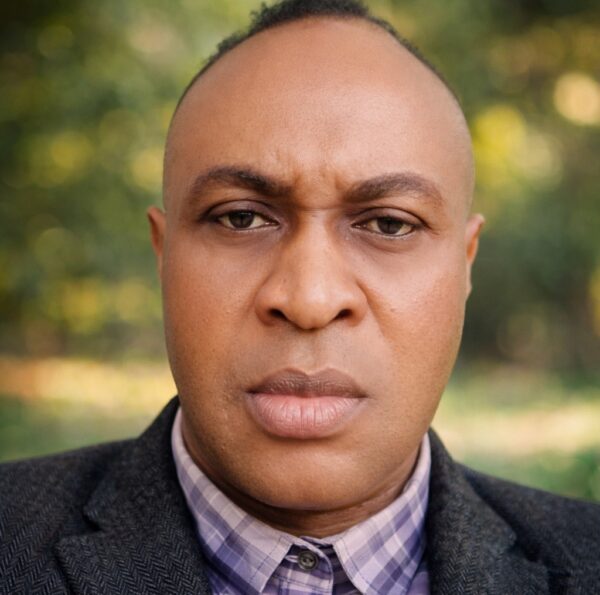
Daniel Nduka Okonkwo is an investigative journalist, human rights advocate, and policy analyst based in Abuja, Nigeria. He is the publisher of Profiles International Human Rights Advocate, a platform focused on accountability journalism, governance reporting, and the documentation of human rights issues across Africa. His work examines the intersection of political power, institutional accountability, systemic failure, and the human impact of corruption, with particular focus on Nigeria and the wider African continent.
Okonkwo’s reporting and analysis have been published in Sahara Reporters, African Defence Forum, Daily Trust, Vanguard, Daily Intel, Opinion Nigeria, African Angle, Local Newsbreak, and other international media outlets. His work is driven by a commitment to transparency, democratic governance, and justice. He also collaborates with Daniels Entertainment on human rights initiatives, extending his advocacy beyond traditional journalism into broader public engagement.
He is based in Abuja, Nigeria, and can be reached at dan.okonkwo.73@gmail.com.