Politics
What Does Taraba Actually Need: Recurrent Town Hall Meetings or Meaningful Progress? -By Nuruddeen Inuwa Aminu
The people of Taraba are a patient and resilient people. They have heard many promises over the years. What they need now is a government that delivers on its promises, not just repeats them. The most powerful message a government can send is not through a microphone at a town hall, but through a new road, a thriving school, a well-stocked hospital, and a secure community. It is a message of progress, and that is what Taraba truly needs.

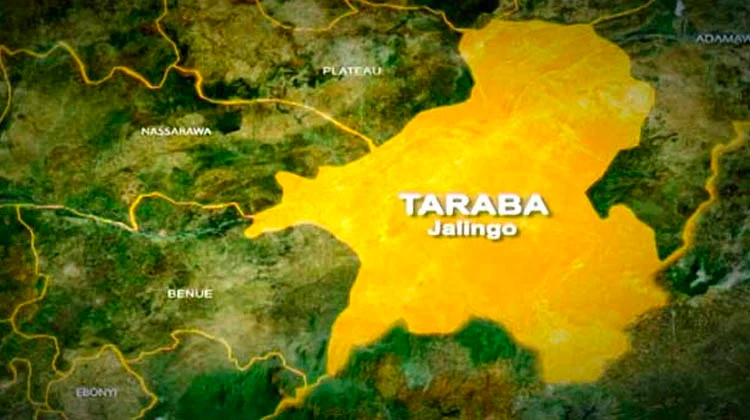
In recent times, the administration of Governor Agbu Kefas has been widely lauded for its commitment to what is often termed “inclusive governance.” A central tenet of this approach has been the frequent hosting of town hall meetings, a platform designed to bring the government closer to the people. These gatherings, held across the state’s three senatorial zones, are presented as a symbol of democracy in action—a space for citizens to voice their concerns, for the government to explain its policies, and for a direct, unfiltered dialogue to take place.
And in theory, this is a laudable effort. After years of what many perceived as detached and one-way communication from government, the idea of a leader sitting down to listen to the people is refreshing. It speaks to a desire for transparency and accountability. We hear stories of citizens passionately airing grievances about dilapidated roads, insecurity, and lack of access to basic amenities. We see the Governor and his team taking notes, making promises, and giving assurances. It creates a sense of hope, a feeling that finally, our voices are being heard.
But as the echoes of one town hall meeting fade and the preparations for the next one begin, a more critical question must be asked: Are these meetings a means to an end, or are they becoming the end in themselves? Are they a genuine engine for change, or a well-choreographed substitute for meaningful, tangible progress?
The people of Taraba State, a land blessed with abundant agricultural potential and rich cultural heritage, are not looking for dialogue for dialogue’s sake. They are looking for results. They are looking for a government that doesn’t just listen to their problems but solves them. The true measure of a government’s success is not the number of town halls it holds, but the visible transformation in the lives of its citizens.
What does meaningful progress look like in Taraba? It starts with the roads. For a state so dependent on agriculture, the state of our roads is a crippling constraint. Farmers in Yorro, Karim Lamido or Donga cannot get their produce to the market efficiently. Traders are stranded, and the cost of goods soars. A town hall meeting where citizens plead for the repair of the Mararaba-Yorro Road or the Jalingo township roads is a good first step, but it is rendered hollow if the next rainy season finds those same roads in the same state of disrepair. Progress is not the promise to fix the roads; it is the sight of construction crews at work, a new road surface, and the free flow of traffic.
Progress is also about security. For years, parts of Taraba have been plagued by communal conflicts, farmer-herder clashes, and a general sense of insecurity that has made it difficult for people to farm, trade, and live in peace. Insecurity has been a major drain on the state’s economy, leading to a significant loss of human capital, the closure of businesses, and a high level of poverty. While town hall meetings can be a platform for promoting inter-communal dialogue, the real progress lies in a measurable reduction in violent incidents, the return of displaced persons in suburbs of Karim Lamido and other affected communities to their homes, and the creation of a secure environment that attracts investors and allows economic activities to flourish.
Furthermore, meaningful progress extends to the foundational pillars of any modern society: education and healthcare. The government’s declaration of free and compulsory education is a commendable step. But what follows? Does it translate to well-equipped classrooms, well trained teachers, and students who can actually read and write? The core of Taraba’s educational crisis is revealed not in statistics, but in the disturbing, physical decay of the school environment. The reality inside most public school classrooms as reported in the state capital is one of profound neglect. Students are forced to learn in despicable conditions. Classrooms feature leaking roofs, threatening to displace learning with every rainfall, and cracked, crumbling walls that pose safety hazards. Most critically, basic necessities like desks and chairs are virtually non-existent. Instead of a structured learning environment, students are seen sitting on dusty, unforgiving concrete floors, their uniforms invariably streaked with dirt. If this is the stark, undeniable reality of the public education system within Jalingo—the seat of government—one can only wonder at the unimaginable deterioration and near-total abandonment characterizing schools in the state’s vast rural communities.
Similarly, this disconnect between promise and reality is equally mirrored in the state of essential healthcare infrastructure. The commitment to rehabilitating primary healthcare centers (PHC) and procuring new medical equipment is a promise of progress. Progress is neither simply signing contracts nor making public announcements; it is ensuring that every PHC is a fully functional clinic. The reality of progress is a functional clinic with a doctor, a nurse, and a steady supply of medicine in even the most remote communities. Without these foundational elements, the promise of revitalized healthcare remains just a disheartening piece of political rhetoric, leaving vulnerable populations without the critical safety net they deserve.
The danger of the recurring town hall meeting is that it can create a cycle of performative governance. The government stages a meeting, citizens present their problems, the government acknowledges them, and the media reports on the “bold step towards inclusive governance.” Rinse and repeat. The focus shifts from the hard work of implementation to the public relations spectacle of engagement. Money and resources are spent on the logistics of these meetings—security, sound systems, venues, and media coverage—that could arguably be better channeled into the very projects being discussed.
This is not to say that the government of Governor Agbu Kefas has not been engaged in meaningful projects. The unveiling of the TARAVEST investment plan, the remodelling of the state’s airport runway, and the inauguration of the greenhouse farm are all notable initiatives. The listening tour and town hall meetings are framed as part of this broader strategy, a way to ensure that these projects are aligned with the people’s priorities. The question, however, is whether these meetings are a genuine guide for action or merely a public endorsement of pre-determined plans.
What Taraba truly needs is a government that transitions from the era of dialogue to the age of delivery. Town hall meetings should not be an endless loop of problem-stating. Instead, they should be transformed into accountability sessions. Imagine a town hall where the Governor doesn’t just listen to new problems but reports on the progress made on the issues raised at the previous meeting. Imagine a meeting where the focus is not on what the government will do, but on what it has done.
The people of Taraba are a patient and resilient people. They have heard many promises over the years. What they need now is a government that delivers on its promises, not just repeats them. The most powerful message a government can send is not through a microphone at a town hall, but through a new road, a thriving school, a well-stocked hospital, and a secure community. It is a message of progress, and that is what Taraba truly needs.
Nuruddeen Inuwa Aminu wrote from Jalingo, and can be reached at
nuruddeeninuwa4@gmail.com