Global Issues
When Development Silences People, It Ceases to Be a Right—It Becomes a Tool of Control -By Fransiscus Nanga Roka
But a development that autocalles for oecumenism becomes excluded just the same. It makes people think they have achieved change when in fact it is really just an improvement for the rulers at expense of people at all levels–which really only bastardizes what human i evidently meant for all time to be equal opportunity everywhere regardless how you look so long as your heart beat keeps up its pace faye gerrity If human development is to be survival, it has to ride on human initiative. Without participation, it is invalid.

Initially, development was seen as a vision from which anything you wanted dignity, equality, self fulfilment seemed possible. Today, that vision is near collapse. In many parts of the “developing world,” ‘development’ is no longer anchored in human rights. It has been converted into an emblem of power instead a justification for control, an outlet for inihibition, and vehicle inequalities both reduced and shared among the people.
The worldwide story of growth seems just too good to be true. Governments cite some newly built rail line as proof they are making progress; think tanks refer all improvements in statistical indices to their policy advice. And yes, there is some truth behind this smooth veneer: development increasingly gets done without residents being involved, in fact against them.
Development projects that have only an impact on economic growth are not recognizing that the right to development, as stated in international human rights law, has a broader meaning. It is also means participation, being fair and accountable. It means that people and communities should not merely be objects of policy making, but actively participate in shaping their own futures. But in practice this basic principle is scarcely ever respected. It is reduced to theatre for consultation. Communities are informed about decisions made but not listened to. Decisions are made, without any right of reply.
This is a transformation of development itself, not an implementation failure.
Development has become an instrument for concentrating governance in many places. Ever larger projects be they in infrastructure, energy or municipal expansion are justified as for the national good, yet in reality they drive out communities and stanch dissent through force. Laws are adjusted to speed up approvals, weaken oversight and bureaucracy slow down decision making. The outcome is a form of development that emphasizes efficiency at the expense justice, production of things before respect for rights and control without consent.
The effects are profound. Where participation is incomplete, development is not universal in reach. Where accountability is weakened, development becomes exploitative. And where opposition is seen as obstruction, development gets constrained. But what we are seeing is not development as an individual right, it is development through control and domination.
The most frightening part of these changes is that they become normal. Development changes its name, but erodes power and makes rights into a forgotten ideal. When projects are labeled as “inclusive” even as they marginalize segments of society, or when actions limiting freedom are called “necessary tradeoffs”, the language of human rights itself is being cannibalized by a mechanism that undercuts its essence.
It’s no longer only hypocrisy, it’s strategic. By treating development as a technical course and thus not a question of politics or related principles, States and organizations evade responsibility. Metrics replace voices. Efficiency replaces justice. Growth replaces one’s right to long for a more dignified life.That same dynamic also marks success: it is gauged not in terms of whether people become more powerful but by the extent to which quotas are met.
Shell companies like Enron that do well on indexes but come from fraud and deceit.
Asset recovery sometimes one is better off dead than alive. The inability to claim tribal benefits or other sources of present and future income freezes many out of higher education, heightens their relative poverty for its duration in spite of SSI and TANF relief programs
For the international community the reversal of direction can hardly be tolerated. At present development projects in many parts of the world remain locked within structures and processes from which few emerge on top.
The right to development has to be taken back not just as an empty slogan, but confirmed in legal form by human rights law. This requires more than merely adjusting policy: it calls for a root and branch reformation in how development is conceived, implemented and judged.
Firstly, participation must be real rather than symbolic. Communities have to be in a position to influence decisions not just react after they have been made. Secondly, accountability needs to be real rather than voluntary. Development activity that violates rights must have its consequences, not just its recommendations. Finally, development needs to be assessed not just by outcomes but also processes, how does it respect every person’s dignity, equality and freedom at each stage in the cycle?
Most importantly, we must face the uncomfortable truth that development is never neutral. It reflects decisions about who counts, whose stakes prevail and whose claims to rights are protected or sacrificed.
But a development that autocalles for oecumenism becomes excluded just the same. It makes people think they have achieved change when in fact it is really just an improvement for the rulers at expense of people at all levels–which really only bastardizes what human i evidently meant for all time to be equal opportunity everywhere regardless how you look so long as your heart beat keeps up its pace faye gerrity If human development is to be survival, it has to ride on human initiative. Without participation, it is invalid. Without explanation, it becomes incomprehensible jumble. And without groundings, what should be a claim degenerates into something utterly meaningless.When development curbs the ability of a people to speak up, it is no longer a human right instead, it serves rulers in name only who maintain power by controlling what others can say about them.
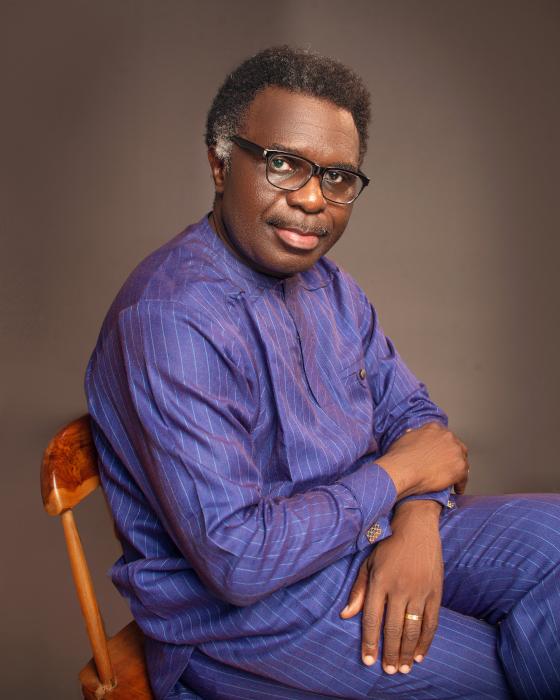
Fransiscus Nanga Roka
Faculty of Law University 17 August 1945 Surabaya Indonesia