
Forgotten Dairies
Control Hormuz or Lose the World: The War That Now Defines the Global Economy -By Fransiscus Nanga Roka
Fail to control it and the consequences keep piling up: Energy markets careen; inflation becomes a global pandemic; political pressures mount in democracies; and allies begin to question the cost of aligning themselves with you. Perception is power in modern warfare, where today’s perception is not that of control but however it may be characterized itself in this particular instance, an emotion that is close to terror.

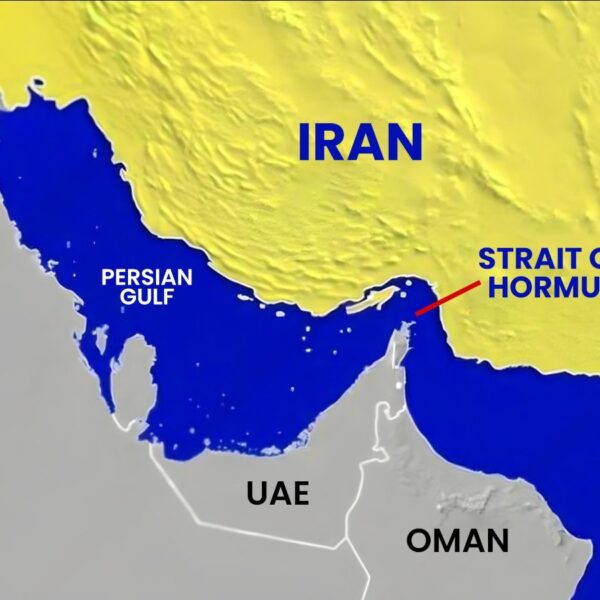
Thirty days into the war between the United States, Israel, and Iran, one brutal truth has shattered every illusion of containment: this is no longer a regional conflict. It is a systemic shock to the global order and it runs through a single, narrow corridor.
The Strait of Hormuz is not just a shipping lane. It is the central artery of globalization. Roughly a fifth of the world’s oil flows through it. When it trembles, the world economy convulses. And today, it is not just trembling. It is being weaponized.
Since time immemorial, military theory has been preoccupied with ground: the conquest of cities, overthrown monarchs and master of the skies. But on day 30, an even greater truth is revealed. In modern war, terrain is dead. It has been replaced by traffic energy flow, trade routes and the financial infrastructure which backs all militaries. Iran has a better grasp of this than its would be opponents. It does not have to physically defeat either the USA or Israel. It does not need to rule the skies or win every naval battle. Its only requirement is simple: destabilize Hormuz to the extent that the world starts tearing up procedures, agreements and laws. That is not a sign of weakness, it is strategic clarity. Iran has made Hormuz, by suddenly introducing land mines, unmanned aircraft attacks, missile warnings and other clandestine disruptions, a zone where the world takes risks indefinitely. The result is not absolute cessation but something which is even more effective: ambiguity. And ambiguity is the most potent weapon in an economy wide globalization.
In the war’s initial phase, everything went according to plan: precision strikes, the destruction of targets and overwhelming force in a matter of days. It was a strategy for swift dominance. That, however, is dominance without victory. Iran has absorbed the blows and learned how to adapt. Its military capability may be on the decline, but it still retains its strategic position because this is no longer a war against military targets, but a war in which pressure is applied across entire systems. Oil prices jump not because tankers are no longer sailing, but in anticipation of their possible halt. Insurance costs rise. Ships take new courses. Supply chains break. Inflation spreads. This is not “collateral damage.” This is the battlefield.
Were this still a regional war, its consequences would be regional. But Hormuz globalizes all that.In Asia, countries with energy dependence feel nervous about future supplies. But in Europe, already strung out markets swallow down another spike of inflationward pressure. In United States households perceives the war not through media reports but as money spiget shut off also heat prices rise, eat prices go up and uncertainty increases. This is how war seeps into 21st century daily life attacking the system? It means attacking people. For all their pretensions, capital and labor both depend on oil. You can blast a factory, ship schoolchildren off to elsewhere for the duration, or knock out target specific with guided missiles. But what kind of enemy do you make yourself as soon.
Since the United States and Israel enjoy an overwhelming military superiority, they can strike faster, deeper from distances either nearer to or farther from Iran than Iranian forces ever will hit any target back within their own borders. But it’s only this single goal that really counts: stability. Without control of the Hormuz Strait, a stringent superiority does not logically make. As result the outcome of this war is not how much gets blown up. It’s whether or not the world system is still operating. And that is threatened.
No longer can one be uncertain. The center of gravity in this conflict is no longer Tehran, Tel Aviv, or Washington. It is Hormuz.
You control it and suddenly confidence is restored, the markets stabilize, and strategic initiative is regained.
Fail to control it and the consequences keep piling up: Energy markets careen; inflation becomes a global pandemic; political pressures mount in democracies; and allies begin to question the cost of aligning themselves with you. Perception is power in modern warfare, where today’s perception is not that of control but however it may be characterized itself in this particular instance, an emotion that is close to terror.
The 30th day of the confrontation revealed something far more deadly than an increase in hostilities: exposure. Globalization has been shaken up pretty thoroughly by this war. A single point of attack held for a sustained period can bring the whole modern world crashing down. This is not just war but a trial by fire for the global system and clearly, it is straining.
It’s no longer a question that the United States and Israel can win in military terms–they have the forces.
The question now is whether they can win strategically before the economic ramifications reshape the battlefield itself. Hormuz is the pressure point, and then where will a war spread? Not quite there geographically. But its economic, political and psychological impact are much larger than wherever it erupts. Victory can easily prove irrelevant. In this war, control of the land is not worth very much. What matters is who controls flows and who can choke them off. If Hormuz goes, the world isn’t just losing a shipping lane. It’s losing its direction.
Fransiscus Nanga Roka
Faculty of Law University 17 August 1945 Surabaya Indonesia























You must be logged in to post a comment Login