
Forgotten Dairies
Plateau State: The Struggle for Unity and the Search for Peace –By Muhammad Bashir Abdulhafiz
The attack on Anguwan Rukuba of Jos North should not be another statistic. It should be a turning point. It should be the moment we collectively decide that enough is enough. The struggle for unity in Plateau State is not a struggle for politicians or community leaders alone, it is a struggle for every one of us. And it is a struggle we must win. For in the end, peace is not just the absence of violence. It is the presence of justice, the embrace of diversity, and the courage to build a future together, despite our painful past. Let us begin that work today.

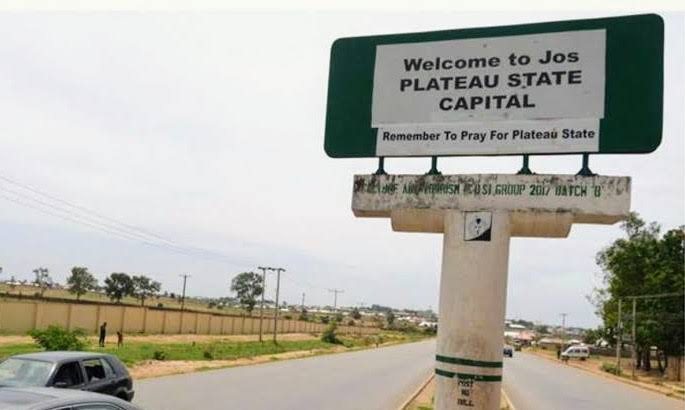
Once again, the sound of gunfire has replaced the morning prayers in Plateau State. The recent attack on Anguwan Rukuba community, where unknown gunmen struck with brutal precision, is not just another news headline. It is a wound on the conscience of our nation. As the blood of the victims dries on the soil, we are left with the same haunting questions: When will this end? When will Plateau, once known as the ‘Home of Peace and Tourism’, rediscover its true identity?
For decades, Plateau State has been trapped in a cycle of violence that many have simply accepted as normal. But it is not normal. The struggle for unity in this region is one of the most complex challenges facing Nigeria today. To understand why peace remains elusive, we must look at two intertwined crises: the manipulation of religious differences and the violent clashes between farmers and herders. The Anguwan Rukuba of Jos North attack is merely the latest symptom of a disease that has been left to worsen for too long.
The crisis in Plateau State did not begin yesterday. For over twenty years, communities that once lived side by side have been torn apart. What started as isolated disputes over land and resources evolved into something more dangerous. Religious identity, whether a community is predominantly Christian or Muslim became a weapon. In the hands of selfish leaders and desperate individuals, faith was twisted from a source of comfort into a tool for division.
The farmer-herder conflict added fuel to the fire. Plateau State, with its fertile lands and strategic location, has always been a meeting point for farmers who cultivate the land and herders who move with their cattle. Historically, these groups coexisted through agreements and mutual respect. But as the population grew, as climate change altered grazing patterns, and as the old systems of conflict resolution broke down, violence became the default.
What we see today is a perfect storm. When a herder’s cattle destroy a farmer’s crops, it is no longer just a local dispute. It quickly becomes a religious issue. When a community is attacked, it is no longer just about land, it is framed as an attack on a faith. This manipulation has made it nearly impossible to address the root causes, because every conversation is hijacked by identity politics.
The recent attack in Anguwan Rukuba of Jos North local government area, is a grim reminder of how fragile peace has become. While the identity of the gunmen remains officially ‘unknown’, the pattern is painfully familiar. Innocent people, going about their daily lives, were shot down. Families were thrown into mourning. And once again, the silence of the authorities in the immediate aftermath spoke louder than any press release.
When attacks happen and the perpetrators are not swiftly identified and prosecuted, it creates a dangerous vacuum. In that vacuum, fear grows. Communities begin to see themselves as targets. They form vigilante groups. They begin to distrust not only their neighbors but also the government meant to protect them. This is how a single attack can lead into a cycle of retaliation that lasts for years. We must be honest: the reason violence persists in Plateau State is not because peace is impossible. It is because there has been a failure of political will, a failure of community leadership, and a failure of accountability.
As citizens, we cannot afford to wait for the government to solve all our problems. We have a role to play, and that role begins with how we see each other.
First, we must reject the narrative that our neighbor is our enemy. The man farming the land and the man herding cattle are both Nigerians. The Christian and the Muslim sitting under the same tree in the village market are both Plateau indigenes. We must consciously choose to separate the actions of criminals from the identity of an entire group. When we allow politicians or community leaders to generalize an entire ethnic or religious group as ‘the problem’, we are giving them permission to continue using us for their ambitions.
Second, we must invest in local peace structures. Our traditional rulers, community elders, and religious leaders still hold immense influence. We must demand that they do more than simply condemn attacks after they happen. We need them to sit together across faiths and ethnic lines, to create early warning systems. We need them to resolve disputes over land and water before they escalate into violence. The solutions to our problems are often found in our own traditions of conflict resolution, but we have neglected them.
Third, we must hold our own communities accountable. We must refuse to harbor criminals. We must refuse to support or celebrate anyone who takes up arms, no matter what justification they give. A community that protects killers is a community that is preparing for its own destruction.
Advice to Those in Authority: What Must Change.
But the burden of responsibility lies most heavily on those in authority. The government at the local, state and federal levels has a clear duty to protect lives and property, and at this point, the record has been disappointing.
To the government, I say this: security must be proactive, not reactive. Deploying soldiers after an attack is not enough. There must be a visible, consistent security presence in vulnerable communities. Intelligence gathering must be improved so that plots are uncovered before they are executed. The ‘unknown gunmen’ phenomenon must become unacceptable. Every attack should lead to an investigation, and every investigation should lead to arrests and prosecutions. Impunity is the mother of violence.
Furthermore, there must be a comprehensive strategy to address the farmer-herder conflict. This is not a new problem, and other countries have found solutions. We need to invest in ranching and grazing reserves to take the pressure off open grazing. We need to create conflict resolution mechanisms at the local government level that are accessible, fair, and swift. We need to implement the National Livestock Transformation Plan with sincerity, not as a political slogan.
Religious leaders and political elites must also be held to account. Too often, inflammatory statements from leaders precede outbreaks of violence. The authorities must have the courage to arrest and prosecute anyone, regardless of their status, who uses hate speech to incite violence. Freedom of speech does not include the freedom to call for the death of your neighbor.
I am a young Nigerian. I did not choose to inherit this crisis, but I refuse to accept it as my destiny. Plateau State has too much beauty, too much history, and too many good people to be defined by violence. The struggle for unity is a struggle for our future. Without peace, there can be no development. Without unity, there can be no progress.
To my fellow citizens, I say: let us be more than our fears. Let us reach across the divides that others have built. Let us refuse to see the world through the narrow lens of religion or ethnicity. When we visit our neighbor’s mosques or churches, let us do so not as strangers but as brothers. When conflicts arise, let us be the ones who call for calm, not those who spread the fire.
To those in authority, I say: the people of Plateau State are tired. They are tired of burying their loved ones. They are tired of living in fear. They are tired of hearing promises that are never kept. The time for excuses is over. Show us that this government can protect its citizens. Show us that justice is not only for the powerful. Invest in peace with the same urgency you invest in politics.
The attack on Anguwan Rukuba of Jos North should not be another statistic. It should be a turning point. It should be the moment we collectively decide that enough is enough. The struggle for unity in Plateau State is not a struggle for politicians or community leaders alone, it is a struggle for every one of us. And it is a struggle we must win. For in the end, peace is not just the absence of violence. It is the presence of justice, the embrace of diversity, and the courage to build a future together, despite our painful past. Let us begin that work today.
God bless Jos North.
God bless Plateau State.
God bless the Federal Republic of Nigeria.
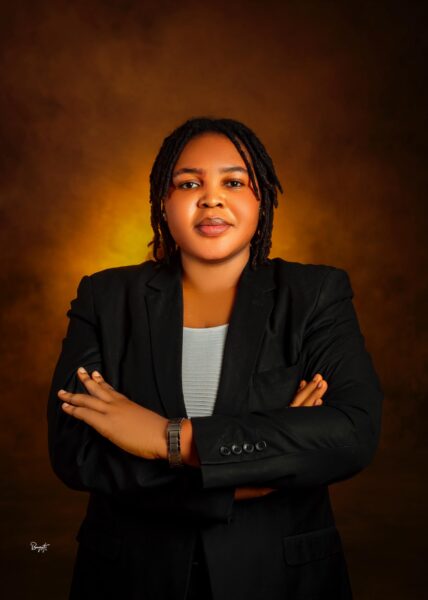
Muhammad Bashir Abdulhafiz wrote from Jos, and can be reached via abdulhafizmuhammad81@gmail.com instantly.















You must be logged in to post a comment Login