
Breaking News
2027: 7 Prominent Politicians, Grassroots Leaders Dump Peter Obi’s NDC for APC, ADC, SDP, PDP
Seven major defections hit Peter Obi’s NDC ahead of the 2027 elections, involving governorship candidates, party chieftains, a senator and grassroots leaders.

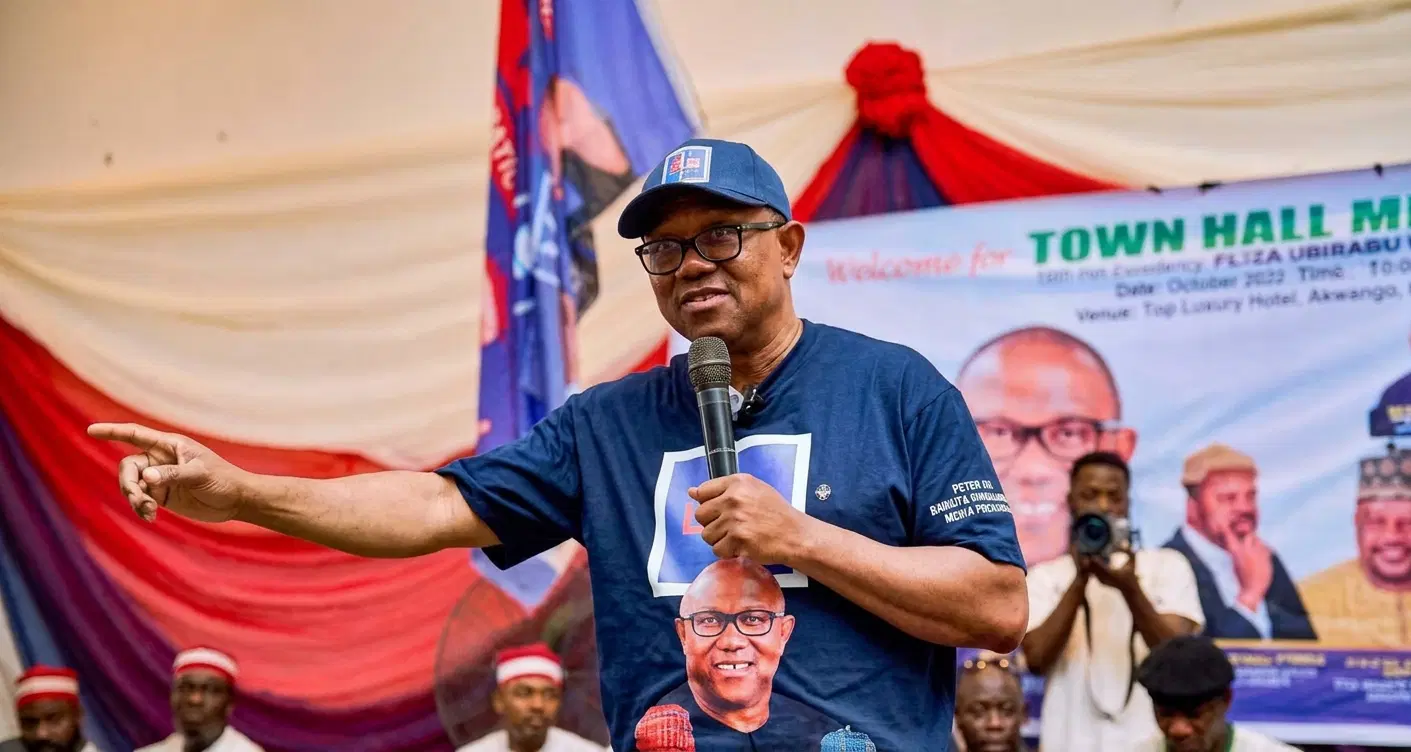
Peter Obi’s Nigeria Democratic Congress (NDC) is facing mounting political pressure following a series of high-profile defections by party chieftains, governorship candidates, former political associates and grassroots leaders to opposition parties ahead of the 2027 general elections.
The defectors have moved to different political platforms, including the ruling All Progressives Congress (APC), African Democratic Congress (ADC), Social Democratic Party (SDP) and Peoples Democratic Party (PDP).
The wave of departures has triggered questions about the NDC’s internal stability and its capacity to consolidate political support, particularly across northern Nigeria.
Some former members blamed internal disagreements, alleged exclusion and dissatisfaction with the party’s leadership, while others left with their supporters and political structures.
Here are seven major defections recorded by the party.
1. Uka Ndubuisi – APC
Uka Ndubuisi, who was the NDC deputy governorship candidate in Ebonyi State and its National Youth Publicity Secretary, joined the APC on Thursday.
He announced his defection during the APC governorship campaign rally in Ebonyi, where he pledged to move the NDC’s political structure in the state to the ruling party.
His departure represents a notable loss for the NDC’s political machinery in Ebonyi.
2. Ibrahim Kashim – APC
Another major departure involved Ibrahim Kashim, the NDC governorship candidate in Bauchi State, who formally defected to the APC on November 16.
Following his decision, Kashim called on his supporters, associates and political followers to join him in the ruling party.
The move dealt a setback to the NDC’s efforts to establish a strong political presence in Bauchi and other parts of northern Nigeria ahead of the 2027 elections.
3. Yinusa Tanko – SDP
Yinusa Tanko, who was closely associated with Peter Obi and previously coordinated the Obidient Movement, also left the NDC camp for the SDP.
Before his defection, Tanko resigned as National Coordinator of the Obidient Movement and Obi’s Political Adviser on North on October 30.
He was later appointed National Coordinator of the SDP Presidential Campaign Council and unveiled during the council’s inauguration at the party’s national secretariat in Abuja on November 11.
His departure represents a significant development within the political movement that helped drive Obi’s previous presidential campaign.
4. Abdulmumin Abdulsalami – ADC
Abdulmumin Abdulsalami, the NDC’s former Deputy National Publicity Secretary, also resigned from the party around November 12.
He reportedly complained about alleged internal injustice, exclusion and frustration with influential party members.
About two weeks after his resignation, he joined the ADC, adding to the growing number of prominent figures leaving the NDC.
5. Godwin Obasi and More Than 6,000 Others – PDP
The NDC also suffered a reported mass defection in Enugu State in September when a group led by Chief Godwin Obasi announced its decision to join the PDP.
The group claimed to comprise more than 6,000 members from all 17 local government areas and 260 wards in the state.
The development was regarded as a major blow to the NDC’s grassroots presence in Enugu, given the extensive political structures the defectors claimed to represent.
6. Haladu Sa’adu, Mannir Umar and Other Kano Leaders – APC
Several NDC officials and grassroots mobilisers in Kano State also abandoned the party for the APC on November 16.
The defectors included Haladu Sa’adu, the party’s Vice-Chairman in Bichi Local Government Area; Treasurer Mannir Umar; five ward chairmen; ward secretaries; women and youth leaders; and other members of the Kwankwasiyya movement.
Their exit further weakened the party’s grassroots organisation in Kano, a state considered crucial to the outcome of the 2027 presidential election.
7. Rufai Hanga – APC
Rufai Hanga, the NDC’s only senator from northern Nigeria, also joined the APC.
His defection represents another setback for the party’s political representation in the Senate from the region and has added to concerns over its declining political influence in northern Nigeria.
The departure of Hanga, alongside governorship candidates, party executives and grassroots leaders, has placed the NDC’s internal cohesion and mobilisation capacity under increased scrutiny.
Nevertheless, some party leaders have dismissed concerns about the impact of the defections, insisting that Peter Obi remains well-positioned to meet the constitutional requirements for winning the presidency in 2027.
Africans Angle News














You must be logged in to post a comment Login