
Breaking News
INEC mock polls: Low turnout, BVAS challenges mar nationwide exercise
INEC’s nationwide mock election records low turnout, BVAS glitches and delayed results uploads, despite impressive participation in some states.

The Independent National Electoral Commission’s (INEC) nationwide mock accreditation and election exercise has exposed significant challenges ahead of the 2027 general elections, following widespread voter apathy, technical glitches, logistical delays and inadequate public awareness in several states.
The exercise, conducted on Saturday across selected polling units nationwide, recorded impressive participation in Plateau, Nasarawa, Akwa Ibom and Edo states. However, several other states, including Benue, Abia, Adamawa, Kaduna, Bauchi, Borno, Kebbi, Katsina, Sokoto, Zamfara, Oyo, Ogun, Ondo, Bayelsa and Kano, experienced poor turnout, with some polling units recording no participation.
The mock exercise was designed to evaluate the effectiveness of the Bimodal Voter Accreditation System (BVAS) and the electronic transmission of election results through the INEC Result Viewing Portal (IReV).
However, reports from different locations revealed operational shortcomings that could affect the commission’s preparedness for the 2027 general elections if not addressed.
Some voters experienced problems with BVAS, particularly its inability to recognise facial features or retrieve registration information. Delayed deployment of election materials also affected the commencement of activities in some polling units.
The electronic transmission of results was another area of concern, as only 14,726 out of the expected 17,614 results, representing 83.32 per cent, had been uploaded to the IReV portal as of 9:10pm.
The exercise commenced at 8:30am and ended at 2:30pm, covering 17,676 selected polling units across the 36 states and the Federal Capital Territory.
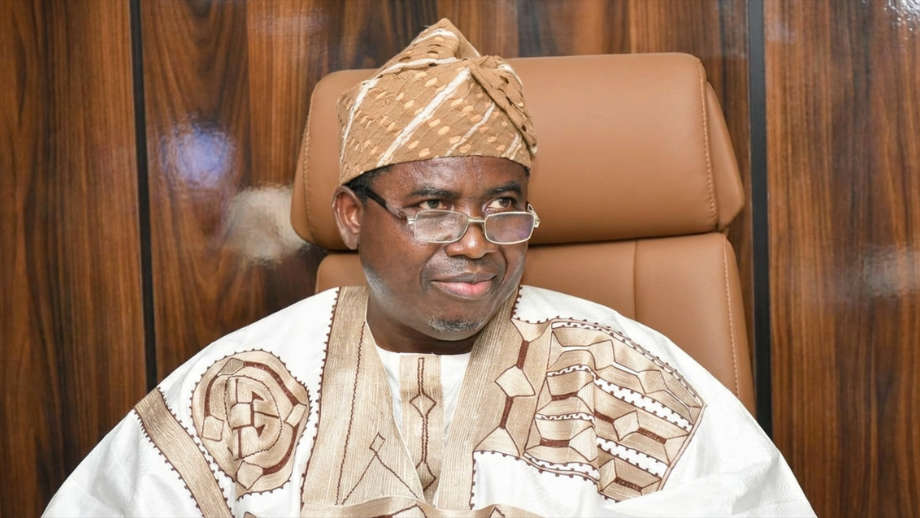
Despite the challenges, INEC Chairman, Professor Joash Amupitan, gave a positive assessment of the exercise in Plateau State, praising the voter turnout and the performance of the electoral technology.
He reaffirmed the commission’s commitment to delivering free, fair, inclusive, credible and transparent elections in 2027.
The INEC chairman also announced that the commission was implementing its Election Risk Management (ERM) framework to identify vulnerable polling units and possible security flashpoints before the elections.
PLATEAU EMERGES AMONG STATES WITH HIGH TURNOUT
Plateau State recorded one of the strongest participation levels during the nationwide exercise, with a significant number of residents turning out for accreditation and voting.
At Gring Ward in Jos South Local Government Area, voting started at approximately 9am.
An INEC official at Obasanjo Model School, Jos South, told Vanguard that more than 50 voters had participated as of 3pm.
Amupitan visited the location alongside the Plateau Resident Electoral Commissioner, Professor Samuel Egwu, and expressed satisfaction with the exercise.
“You can see for yourself that it is very impressive. The turnout is very good,” he said.
According to the INEC chairman, the exercise was organised to assess the performance of BVAS and the electronic transmission of results ahead of the 2027 polls.
He noted that accreditation was completed within seconds and that the process remained orderly.
He also highlighted the successful accreditation and voting of an elderly woman, describing it as evidence that the technology could accommodate voters of different age groups.
Amupitan suggested that the ongoing sanitation exercise might have contributed to lower participation in some locations, although he maintained that INEC had created awareness about the exercise.
NASARAWA, AKWA IBOM AND EDO ALSO RECORD IMPRESSIVE PARTICIPATION
Nasarawa State witnessed a large and peaceful turnout, although some communities experienced delays due to logistical difficulties.
At Akabe Junction, Galadima Ward, Doma Local Government Area, Presiding Officer Nehemiah Anji described voter participation as impressive and confirmed that the BVAS devices were functioning properly.
However, residents in some remote communities waited for several hours before INEC officials and sensitive election materials arrived at approximately 10:30am.
The state Commissioner for Information, Culture and Tourism, Dr. Nawani Aboki, commended residents for remaining patient and maintaining order despite the delays.
In Akwa Ibom, large numbers of voters participated at Ward 11, Unit 11, Village Council polling unit along Ikot Ekpene Road in Uyo, where voting was already in progress by 10:15am.
A similar level of participation was recorded at Christ the King Primary School, Ward 3, Unit 3, where voters turned out and waited for the announcement of results.
An INEC official, David, said the exercise was proceeding without major problems.
“Yes, we have a huge turnout here. We are expecting more voters to come. At the end, we will sort and announce the results and upload them to the IReV. We are also using the BVAS here,” he said.
However, Uyo Urban 1, Unit 5, recorded relatively low participation.
Edo State also recorded a strong turnout, particularly in Oredo Local Government Area of Benin City.
At Ward 7, Unit 42, New Benin, many residents participated in the exercise.
An APC agent, Daniel Odenigbo, described the exercise as peaceful and orderly, while commending INEC officials for their efficiency.
The APC Ward 6 Chairman in Oredo, Christopher Ize, also welcomed the turnout.
Benedict Omordon, Senior Special Assistant to the Speaker of the Edo State House of Assembly, said the mock exercise was necessary to evaluate BVAS and identify possible challenges before the 2027 elections.
INEC REPORTS GOOD BVAS PERFORMANCE IN LAGOS, ABUJA
The electoral technology received positive reviews in some parts of Lagos and Abuja.
In Lagos, the Resident Electoral Commissioner, Professor Ayobami Salami, said BVAS was performing satisfactorily, with voter accreditation taking less than one minute.
Speaking during an inspection of Polling Unit 057, Ward 07, Shitta/Ogunlana Drive, Surulere, he said the locations he visited recorded no network interruptions or technical complaints from voters and ad-hoc personnel.
Salami further revealed that INEC had purchased approximately 57,000 additional BVAS machines to increase its existing inventory.
He said the commission had also reduced the maximum number of registered voters assigned to one BVAS device from 1,250 to 850 to prevent overcrowding and unnecessary delays.
Consequently, polling units with more than 850 registered voters would receive additional machines.
He explained that the devices had been configured with uniform parameters to support biometric accreditation and the electronic transmission of results from Form EC8A to the IReV portal.
However, he insisted that manual accreditation would not be permitted under the Electoral Act.
“There are two means of identification: facial recognition and fingerprint verification. If we cannot validate a voter through either of these two methods, it will be difficult for us to allow that person to vote. Otherwise, we would be going against our own law,” he said.
The Chairman of Surulere Local Government Area, Bamidele Yusuf, praised INEC officials for arriving before 8:30am and beginning accreditation on schedule.
He attributed the relatively encouraging turnout to grassroots awareness campaigns but warned that testing only two polling units per ward might not adequately represent the challenges of a nationwide general election.
In Abuja, BVAS also performed satisfactorily at the polling units monitored in Kubwa and Garki.
At City Centre Polling Unit, Area 10, Garki, 18 voters were accredited successfully, with each process taking less than one minute. Three BVAS devices were used at the polling unit.
The devices also functioned properly at Arab Road/Water Board Junction in Kubwa, although some other locations recorded poor participation.
SEVERAL NORTHERN STATES RECORD POOR TURNOUT
While some states recorded encouraging participation, the situation was largely disappointing in several northern locations.
Benue State witnessed particularly low turnout, with some polling units recording no voters despite having hundreds of registered residents.
At LGEA Primary School, Wurukum, Wailomayo Ward, only six of the 833 registered voters participated.
At High Level Market polling unit, none of the 755 registered voters had arrived as of 1:30pm.
Similarly, McCarthy Stadium I polling unit in Ankpa/Wadata Ward recorded zero participation despite having 759 registered voters.
At Madikpo Tokunbo Market polling unit, only 11 out of 745 registered voters took part.
Despite the poor participation, presiding officers described the accreditation and voting processes as smooth.
ADAMAWA, JIGAWA AND KADUNA EXPERIENCE LOW PARTICIPATION
In Adamawa State, voter turnout remained low throughout the exercise, from its commencement until approximately 3pm.
INEC National Commissioner responsible for Adamawa, Gombe and Taraba states, Rear Admiral Jemila Abubakar Sadiq (retd.), said the exercise was aimed at ensuring free, credible and acceptable elections in 2027.
Jigawa State also recorded low participation, with reports indicating that many residents were unaware of the mock exercise.
Some polling units in Ringim and Dutse experienced delays following the late arrival of electoral officials. Nevertheless, accreditation, voting and electronic transmission were successfully carried out at the locations monitored.
In Kaduna State, particularly low turnout was recorded at the polling units where former Governor Nasir el-Rufai and incumbent Governor Uba Sani are registered.
At el-Rufai’s polling unit in Unguwan Sarki Ward 07, Kaduna North, no voter was seen during the visit.
At Governor Uba Sani’s polling unit at LEA Kawo Ward, only one voter was observed casting a ballot.
Normal commercial and social activities continued across the metropolis.
Other states, including Bauchi, Borno, Kebbi, Katsina, Sokoto and Zamfara, equally experienced poor voter participation.
In Bauchi, only a few voters were present at Bakari Dukur Primary School and Yelwa Maternity Ward polling units. Some participants also complained about difficulties with BVAS while their information was being captured.
Borno State recorded a similar situation, with residents seemingly more focused on their regular activities than the mock exercise.
At Gomari Airport, Bulama Jida I polling unit in Jere, only two policemen and an FRSC official were present by 8am. INEC officials arrived at approximately 9am.
In Kebbi, the number of security personnel at Aliero Housing Estate 006 Primary School polling unit exceeded the number of voters. However, INEC ad-hoc staff reported that BVAS was working properly.
Poor participation was also recorded in Katsina, where residents blamed inadequate publicity and public awareness.
Sokoto and Zamfara equally recorded only a handful of voters at the polling units monitored.
Kano State experienced a combination of delayed election materials, BVAS difficulties and low participation.
At Mariri Primary School in Kumbotso Local Government Area, only four people had participated at polling unit 007A by 1:11pm. Seven voters were recorded at unit 007B, while 10 participated at unit 008.
Some residents reportedly abandoned the exercise without voting.
One of the affected voters, Kamal Magaji, said the card reader failed to retrieve his details despite his name and photograph appearing on the voter register.
He called on INEC to resolve the technical problems before the 2027 general elections.
Meanwhile, some political figures took advantage of the exercise to campaign for support for the APC ahead of 2027.
SOUTH-WEST AND SOUTH-EAST RECORD DIFFERENT OUTCOMES
The exercise also produced mixed results across the South-West and South-East regions.
In Oyo State, several polling units in Ibadan were almost deserted, with only a few elderly residents participating.
Locations affected included Emmanuel College, Awolowo Avenue, Samonda; Adeoyo Maternity Hospital; and the Nigerian Television Authority complex.
A 68-year-old participant, Mrs. Bose Adebayo, said she was satisfied with the accreditation process.
“I am happy with what I have seen today. The process is straightforward, and I hope INEC will conduct the actual election in 2027 in the same manner,” she said.
Another voter, 72-year-old Olusegun Akinola, urged INEC to maintain the improvements made to its electoral technology.
In Ogun State, about 15 people had participated at St. Peter’s Primary School, Ake, Abeokuta, as of 11:30am, while Molete Market, Erunwon Ward 1, recorded eight accredited voters.
Despite the low turnout, the Resident Electoral Commissioner, Mrs. Feyijimi Shasheyi, described the exercise as successful, stating that no significant technical problems were reported at the polling units she visited.
She said INEC had deployed information and communications technology personnel to provide technical assistance, with at least one official assigned to every two polling units.
Ondo State also experienced poor participation in several locations, with some voters reporting problems with BVAS.
At Tipper Garage, Ward 2, Unit 046, only two of the 470 registered voters participated.
Champion Junction, Ward 3, Unit 15, recorded six participants, while 11 of the 940 registered voters voted at High Court, Ward 5, Unit 11.
However, Ajipowo, Ward 2, Unit 17, recorded a large turnout.
Some elderly voters complained that the BVAS initially failed to capture their facial features, although the devices later began working.
The Ondo Resident Electoral Commissioner, Dr. Mutiu Agboke, identified environmental conditions, inadequate awareness and expectations of financial inducements as some of the reasons behind the low turnout.
He said an elderly man had reportedly asked whether there was money available before agreeing to participate.
Nevertheless, Agboke maintained that the exercise had achieved its major objective of testing BVAS and assessing the speed of electronic results transmission.
He explained that the accreditation process could be conducted offline, while internet connectivity was only required when transmitting results.
He added that where network coverage was unavailable at a polling unit, the presiding officer could move to an area with connectivity to upload the results.
According to him, accreditation took less than one second at the centres he visited, giving him confidence that the exercise would strengthen INEC’s preparations.
In Abia State, several polling units in Umuahia recorded little or no participation.
INEC officials at Ibeku High School, School Road Primary School and Ugba Primary School reportedly waited for voters who did not show up.
Some residents blamed the situation on poor publicity and the restriction of the exercise to selected polling units.
A public servant, Chimwe Kanu, expressed disappointment after arriving at St. Stephen’s Primary School, Umuahia, only to discover that her polling unit was not included in the exercise.
She also raised concerns about the failure to distribute PVCs to some registered voters.
At Amuzukwu Umuahia Civic Centre, only two people had participated as of 1:25pm.
One of the participants, Iberibe Ifeanyi Chukwu, said he was satisfied with the accreditation process but urged INEC to prevent willing voters from being disenfranchised through delays in the arrival of election materials.
Bayelsa State also recorded low turnout, although the exercise generally proceeded without major problems.
At Kpansia Epie Community Town Hall in Yenagoa, nine voters had completed accreditation as of 11:15am.
The Assistant Presiding Officer, Sampson Wale, confirmed that BVAS was functioning smoothly.
In Lagos State, low participation was accompanied by a disagreement in Yaba, where some voters confronted electoral officials over alleged changes to their polling units without being notified beforehand.
The confrontation did not result in violence.
The Lagos REC said INEC had displayed the list of selected polling units at its local government offices to enable voters to confirm their designated locations.
RESULTS UPLOAD REACHES 83.32 PER CENT
The slow uploading of election results to the IReV portal was another major issue identified during the exercise.
By 9:10pm, INEC had uploaded 14,726 of the expected 17,614 results, representing 83.32 per cent.
In Zamfara State, seven of the 14 local government areas had uploaded at least one result, while the other seven had not uploaded any.
Bukkuyum recorded four uploaded results out of 20 polling units, while Gusau had three out of 22 and Tsafe recorded two out of 22.
Maradun, Kaura Namoda, Gummi and Bungudu each uploaded one result.
In Yobe State, Tarmuwa recorded the highest number of uploads, with eight out of 20 polling units.
Nangere followed with six, while Karasawa and Jakusko recorded two and one uploads respectively.
Several other local government areas across both states had yet to upload any results at the time.
INEC CHAIRMAN OUTLINES MEASURES FOR CREDIBLE 2027 POLLS
As part of efforts to ensure credible elections in 2027, Amupitan said INEC was also working to address security challenges that could threaten the electoral process.
He disclosed that the commission was implementing its Election Risk Management framework to identify vulnerable polling units and possible security flashpoints across the country.
“The information gathered through the assessment has been shared with relevant law enforcement agencies to enable them to take necessary preventive measures,” he said.
According to him, INEC had strengthened its cooperation with security agencies through a strategic election security conference involving the military, police, Nigeria Security and Civil Defence Corps and other paramilitary organisations.
The initiative was designed to develop strategies for protecting voters, electoral officials, election materials and members of the National Youth Service Corps before, during and after the elections.
Amupitan added that the commission would carefully examine the outcome of the mock exercise to identify technical and operational weaknesses and address them before the general elections.
He reaffirmed INEC’s commitment to conducting credible elections and announced that the presidential and National Assembly elections would take place on January 16, 2027.
The governorship and State Houses of Assembly elections, he said, were scheduled for February 6, 2027.
The nationwide mock exercise has offered INEC an opportunity to evaluate its preparedness and identify areas requiring improvement ahead of the 2027 general elections.
Nevertheless, the widespread voter apathy, technical difficulties with BVAS, delays in deploying election materials and slow electronic transmission of results have raised important concerns about the commission’s readiness for the nationwide polls.
Africans Angle News






















You must be logged in to post a comment Login