Forgotten Dairies
2027: The INEC Nigerians Want -By Isaac Asabor
If INEC is independent in fact, not just in law; if it operates with integrity, not just procedure; if it communicates transparently and manages competently, then 2027 could mark a turning point. If not, the trust deficit will deepen, and the legitimacy of democratic governance will continue to erode. The choice is stark. And the stakes could not be higher.

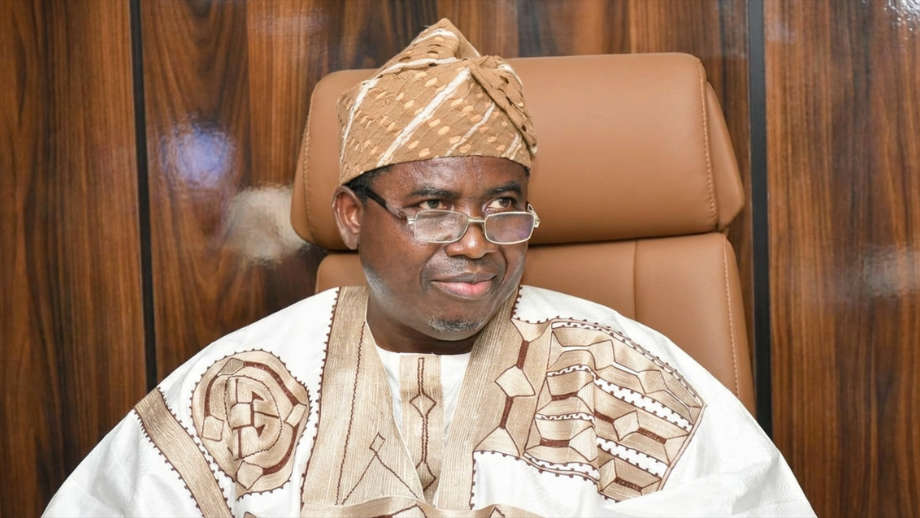
By 2027, Nigerians will not merely be voting in another election; they will be passing judgment on the credibility of their democracy itself. The question is no longer whether elections will be held, that ritual is now routine, but whether those elections will mean anything. At the heart of this question lies the Independent National Electoral Commission (INEC): an institution constitutionally designed to be impartial but persistently perceived as vulnerable.
The truth, stripped of all diplomatic language, is this: Nigerians do not suffer from a lack of electoral laws. They suffer from a lack of trust in those entrusted to enforce them.
Nigeria’s electoral history is not short on reforms. From manual voting systems to biometric accreditation and electronic transmission, the architecture has evolved. Yet, public confidence has not kept pace. This disconnect explains the deepening trust deficit. Nigerians have seen elections where procedures were followed on paper but subverted in practice. They have watched courts uphold outcomes under the doctrine of “substantial compliance,” even when public perception suggested otherwise.
So, when Nigerians look ahead to 2027, they are not asking for more laws. They are asking for credibility. In fact, not a few Nigerians are at the moment calling for a truly independent National Electoral Commission (INEC), expressing deep frustration with a system they believe is too vulnerable to political influence. The calls reflect a broader loss of trust in electoral processes and a rising insistence that democratic institutions must be insulated from interference if they are to serve the people effectively. So, when Nigerians look ahead to 2027, they are not asking for more laws, they are asking for credibility.
Without a doubt, INEC’s independence is guaranteed in the Constitution, but Nigerians know that legal provisions alone do not produce real autonomy. Independence, in practical terms, is tested in moments of pressure, during result collation, under political scrutiny, and in the face of institutional interference.
So, the INEC Nigerians want in 2027 is one that does not merely “claim” independence but demonstrates it visibly and consistently. This means as 2027 approaches, Nigerians expect an electoral body that is not just independent in theory but visibly and consistently so in practice, through leadership appointments that inspire confidence, decision-making shielded from political interference, and clear, transparent communication that leaves no room for doubt. But independence alone is not enough; integrity is the soul of the process. INEC must demonstrate operational honesty by openly acknowledging failures when they occur, apply rules consistently without bending to political convenience, and enforce real accountability so that misconduct is punished rather than normalized. Technology, often touted as the cure-all, will only matter if it is deployed reliably and transparently featuring real-time, verifiable result transmission, systems open to independent audit, and strong contingency plans to prevent glitches from escalating into crises. Ultimately, none of this exists in a vacuum, as the judiciary continues to carry the weight of interpreting electoral disputes, with the doctrine of substantial compliance standing as both a necessary stabilizer and a growing source of public skepticism.
Courts are right to avoid overturning elections on trivial grounds. But when “substantial compliance” appears to excuse serious irregularities, it undermines confidence not just in elections, but in justice itself.
The INEC Nigerians want is one whose processes are so transparent and credible that courts are rarely forced into controversial interpretations. Electoral integrity should not depend on judicial rescue.
For all the high-level discussions about law and technology, Nigerian elections are still often undermined by basic failures: late arrival of materials, poorly trained staff, and inconsistent procedures. These are not complex problems. They are management problems. So, an INEC worthy of 2027 must get the fundamentals right, and such fundamentals cut across a polling unit opening on time, adequate training for electoral officers and clear communication with voters at every stage. The reason for demanding for the foregoing criteria in this context is as credibility begins with competence.
In fact, INEC does not operate in a vacuum. The integrity of elections is directly tied to the integrity of political parties. Flawed primaries, arbitrary candidate substitutions, and internal undemocratic practices distort the electoral process long before voting day.
Nigerians expect INEC to enforce compliance with party regulations without fear or favour. A credible election cannot emerge from a flawed nomination process.
Again, no election can be credible if voters feel unsafe. Violence, intimidation, and voter suppression remain real threats.
The INEC Nigerians want is one that works seamlessly with security agencies, not as a subordinate, but as a coordinator, to ensure that every voter can participate freely. Security must protect the process, not influence it.
Ultimately, trust is built on transparency. Nigerians do not expect perfection; they expect openness.
Every stage of the electoral process, from voter registration to result declaration, must be visible and verifiable. When people can see the process, they are more likely to accept the outcome, even if it does not favour them.
Without a doubt, there is an uncomfortable truth that must be acknowledged: no institution, however well designed, can rise above the character of the people who run it. Nigeria’s electoral challenges are not purely structural. They are also moral.
The INEC Nigerians want in 2027 is not just an institution with better systems; it is an institution led by individuals who understand the weight of their responsibility. People who see themselves not as administrators, but as custodians of democracy.
By 2027, Nigerians will not be impressed by promises or reforms on paper. They will judge INEC by one simple standard: can it conduct an election whose outcome is broadly accepted as credible? That is the test.
If INEC is independent in fact, not just in law; if it operates with integrity, not just procedure; if it communicates transparently and manages competently, then 2027 could mark a turning point. If not, the trust deficit will deepen, and the legitimacy of democratic governance will continue to erode. The choice is stark. And the stakes could not be higher.