
Global Issues
A Single Vessel Paralyzed Global Commerce And International Law Was Unprepared -By Fransiscus Nanga Roka
A truly resilient global order would have legal mechanisms for dealing with such shocks, as well as emergency governance structures to coordinate them and integrated economic safeguards. What we saw instead was ad hoc improvisation, piecemeal litigation and reactive crisis management.

The grounding of the Ever Given in the Suez Canal WAS not just another maritime accident. What we had was a global systems failure, dressed up as an isolated logistical issue.
March, 2021; For six days a single vessel blocked one of the worlds most important channels for trade. Hundreds of ships stacked at both sides of the canal. Global supply chains stalled. Oil prices fluctuated. Manufacturing schedules collapsed. Trade was delayed worth billions of dollars. But even more alarming than the accident was how woefully unprepared international law has proven to be when the wheels of world commerce ground to a sudden halt.
They said the incident exposed a reality: That today’s global economy is structurally brittle, legally fragmented and dangerously reliant on maritime chokepoints that are easy to disrupt.
Globalization has worshipped at the altar of efficiency for decades. It meant narrower shipping routes, faster logistics, leaner inventories and denser maritime traffic. It was built for speed and efficiency, with resilience systematically left out of the equation. It can leave the economic architecture so closely compressed that a single navigational error in any canal is sufficient to shake international trade across continents.
This is not efficiency. This is systemic over dependence pretending to be economic sophistication.
The ensuing Legal Chaos with the Ever Given Discovered even more fundamental weakness in Structure. Liability, salvage pence, insurance allocations, cargo claims as well as eco hazards, contractual delays and also sovereignty were regular immediate inquiries. Compensation claims of hundreds of millions of dollars found their way through Egypt’s Admiralty Court system. But the larger issue was not simply who must pay.
The true crisis was that international maritime law has no overall proportional regime to the effects of global economic paralysis engendered by the blockage.
Overall, modern shipping law is still based on frameworks written for private commercial disputes, problems of clearance and transport rather than systemic disruptions with the potential to impact a global economy. Participation in international trade traditionally meant that conventions governing carriage, limitation of liability, salvage rights and marine insurance were always tailored for a world where one vessel blocking the Suez could hold entire nations hostage at once.
This disjuncture between global economic interdependence and a moribund legal architecture has become impossible to ignore now.
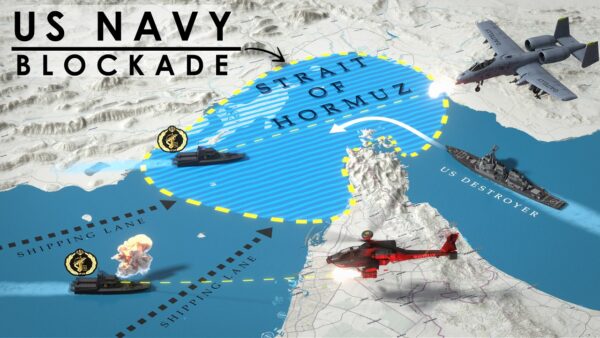
The Suez blockage showed that global trade is reliant on deceptively fragile choke points: the Suez Canal; the Panama Canal; the Straits of Hormuz; this new CliffsNotes version of a vital commercial shipping lane. These thin links uphold the flow of energy, food, medicine, technology and industrial manufacturing. Nonetheless, international law has yet to reform many disruptions to be classified as primarily transnational system risks rather than localized commercial accidents. Obsolete that legal thinking which is quite dangerous.
And as a matter of fact the disruption in maritime chokepoints now gives rise to economic health, geopolitics and humanitarian issues. Fuel prices are a reflection of delayed energy shipments. Grain delayed transport impact food markets The supply chain of healthcare systems has been hindered which have resulted in delayed medical supplies The line between economic disruption and global security risks is blurring at an alarming rate.
But these international governance structures remain fragmented.
Shipping law is distinct from trade law. Trade law exists independently of security models. Environmental regulation functions independently of supply chain governance. There is no integrated legal framework to deal with the cascading effects of large port interruptions in a hyper-globalized economy.
The Ever Given crisis was not simply a physical blockage, but an institutional one, instead. The international economic system has grown technologically integrated, though legally disjointed.
This contradiction is posing large systemic risk. Larger vessels, more concentrated trade routes and smaller supply chains will only increase the costs of disruption. Storms and aids to navigation are being exacerbated by climate change. Rising geopolitical tensions raise risks around strategic waterways. Cyberattacks threaten shipping infrastructure. But international legal reform still topples at the speed of 20th century bureaucracy as global commerce wheels by, full current fast into the twenty first century. That imbalance is unsustainable.
With the world no longer applying an economic functionality lens to maritime chokepoints, The very arteries of civilization. Once blocked, the repercussions go way beyond a dam with delayed cargo, it lays bare the weakness of the global order. The most troubling lesson from the Ever Given crisis is not that a single ship could block a canal.
That was it; that the level of economic dependence upon a few commodities and shipping lanes had become so normalized that no vessel could be allowed to threaten world commerce at all.
A truly resilient global order would have legal mechanisms for dealing with such shocks, as well as emergency governance structures to coordinate them and integrated economic safeguards. What we saw instead was ad hoc improvisation, piecemeal litigation and reactive crisis management.
That is not resilience. That is globalisation dressed up as organised vulnerability.
Let us be clear: A global economy that can be partly paralyzed by one ship is not just interdependent, it is dangerously fragile.
Fransiscus Nanga Roka
Faculty of Law University 17 August 1945 Surabaya Indonesia























You must be logged in to post a comment Login