
Forgotten Dairies
When Secret Debt Destroys Nations: The Mozambique Tuna Bonds Scandal -By Fransiscus Nanga Roka
Mozambique did not act alone. This involved international actors operating at different levels of the transaction chain. The scandal could have never reached the scale it did without structures to execute external financing, advisory services, banking channels and legal facilitation.

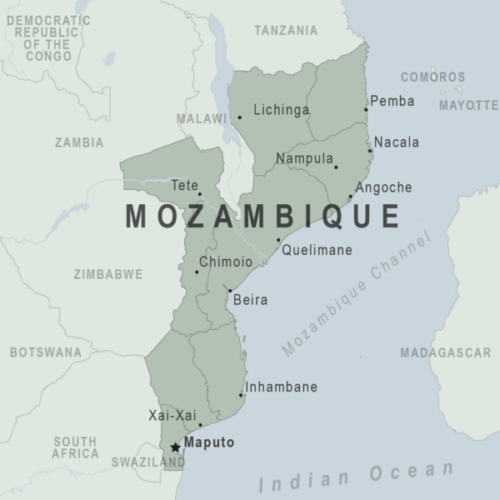
Mozambique in its Oyama: the “Tuna Bonds” scandal was never just a corruption case. One hell of an impressive show of how international finance can methodically manufacture national collapse within the boundaries of legality.
The scandal revolved around over $2 billion in undisclosed loans linked to state-sponsored maritime ventures.Latest on the four State-backed maritime projects, tuna fishinge coastogcy measures. These state-concealed loans, arranged using various international financial institutions and tied to shadowy public vessels in the African nation, were invisible from Mozambicans, as well as global benefactors and portions of the government itself. The ensuing disaster was cataclysmic: economic depression, monetary free fall, debt crisis, interrupted foreign help and deepened misery for millions of commonplace residents.
This may be the most depressing truth of all: Mozambique was not just a victim of corruption. It shared international financial complicity.
The scandal revealed that political elites, foreign bankers, corporate intermediaries and global financial networks together had built the foundations of a system that enabled a huge amount of concealed sovereign debt behind their backs. Big, secret loans do not just appear out of nowhere. They demand institutional collusion, intentional opacity, and profit-seeking financial actors.
This is what makes the Tuna Bonds scandal of world wide significance.
It undermined the reassuring fantasy that sovereign debt markets are driven by rational economic governance. In this case the scandal exposed just how willing international finance will turn a blind eye to corruption when it is commercially lucrative.
Banks collected fees.
Intermediaries secured contracts.
Political actors accumulated power.
And citizens inherited the debt.
That last point is the moral heart of the crisis. Earnings power, therefore, is hardly thrown in the face of sovereign corruption architects. It punishes populations. It is ordinary people who end up paying for this with austerity, inflation and oxidized healthcare systems, crumbling infrastructure and lost development opportunities — rather than the officials who capitalized on secret loans.
In this way, secret debt acts as a system of structural violence.
It offloads the costs of sins committed by those with power onto the backs of societies that never agreed to take on the burdens being placed upon them. Public trust crumbled along with economic stability in Mozambique. International donors froze support. Investor confidence deteriorated. The national economy fell into desperate situation extended as deepening poverty.
But the scandal revealed something even more shocking: weak global mechanisms for accountability in finance.
International banking systems obviously require transparency, fiscal discipline and anti-corruption reforms from developing countries. Compelling accountability out of public sovereignty or unsuspecting credit-collateralising states in the form of investors is one thing; compelling accountability out of powerful financial actors participating in opacity sovereign lending works like a charm to make them disperse, defocate and impeach.
It sees the hypocrisy of modern global finance in a contradiction.
The international order that seeks to instruct the more vulnerable states about good governance is benefiting all too regularly from dangerous environments characterized by weak oversight and institutional fragility. It was called out in public but make cash from it privately. Through global financial networks the risk is socialized onto populations and profits are privatized.
The Tuna Bonds case revealed that secrecy itself is now an instrument of commerce.
Of these, opaque offshore structures as well as undisclosed guarantees and hidden commissions concealed hefty liabilities until it was too late to minimize the economic damage. Such mechanisms are not bugs in the system. They are simply details of a global financial ecosystem that rewards complexity precisely because complexity breeds opaqueness.
The scandal should never become defined only as in the context of a governance failure on the part of an African nation.
That narrative is intellectually dishonest.
Mozambique did not act alone. This involved international actors operating at different levels of the transaction chain. The scandal could have never reached the scale it did without structures to execute external financing, advisory services, banking channels and legal facilitation.
This therefore reveals a larger truth about the international economic order; that global finance routinely trades upon asymmetrical relationships in which fragile states are granted little choice but to accept catastrophic risks, while transnational financial actors retain mobility, protection and leverage.
If this happens, sovereign debt stops being a development instrument.
It turns into a means for extraction.
The Tuna Bonds fallout also exposed the limits of international accountability. Litigation spilled from one jurisdiction to another, rife with allegations of fraud, bribery and institutional abuse. But many of the deeper structural incentives that drove the scandal remain in place, largely untouched after years of legal wrangling.
And that is the most dangerous lesson of all.
Financial scandals ongoing, as world acts just to issue them Is not culminating in a treatment of the problem itself but is maintaining stakeholder status quo rather than treating these incidents like symptoms of overseen and by design basis. So long as it is possible to make money lending real resources more or less opaquely, like bubbles these crises will continue to re-appear elsewhere in other guises with new variations of government and financial structure [v.1(4): Doc 513].
As such the Mozambique scandal was not a one off.
It was a warning.
The caution that a world financial system that can shield sovereign debt from an entire populace is no less than poorly regulated but structurally perilous.
Nor does an unsustainable (financial) order that turns secret elite arrangements into a multi-generational public suffering help development, behind the euphemism of investment and growth, it institutionalizes economic injustice.
Fransiscus Nanga Roka
Faculty of Law University 17 August 1945 Surabaya Indonesia





















You must be logged in to post a comment Login