
Politics
Why Oshiomhole Was Right To Challenge Akpabio’s Senate Power Play -By Isaac Asabor
For now, Oshiomhole’s intervention helped prevent what many feared could have become a dangerous precedent, one capable of turning the Senate into an exclusive political fortress rather than a democratic institution open to competition and accountability.

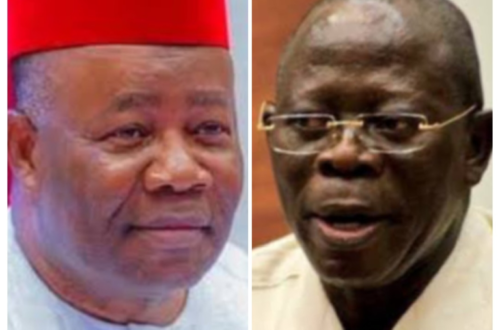
The Nigerian Senate has witnessed countless political confrontations over the years, but the recent clash between Senate President Godswill Akpabio and Senator Adams Oshiomhole exposed something far more disturbing than a routine disagreement over parliamentary procedure. What played out on the Senate floor was a revealing display of how political power can be manipulated to serve personal ambition rather than democratic principles.
To many Nigerians, especially those not familiar with the technical workings of the National Assembly, the controversy may have appeared complicated or insignificant. But beneath the legal jargon and Senate procedures lies a simple issue ordinary citizens can easily understand whether leaders should create rules that favour themselves while shutting others out.
In this case, Oshiomhole’s resistance was not merely political grandstanding. It was a necessary challenge against what many viewed as an attempt to turn the Senate leadership into an exclusive club controlled by a select few.
At the centre of the controversy was a proposed amendment to the Senate Standing Orders. The amendment sought to make it mandatory for anyone aspiring to become Senate President or Deputy Senate President to have served at least two consecutive terms in the Senate, amounting to eight uninterrupted years.
On paper, supporters of the proposal argued that such a rule would ensure experienced lawmakers occupy the highest leadership positions in the upper legislative chamber. Experience, after all, is often important in governance.
However, critics quickly saw through the proposal and questioned the real motive behind it. Many believed the amendment was carefully designed to influence political calculations ahead of 2027 by preventing certain politicians, especially newcomers or returning political heavyweights, from contesting for Senate leadership positions in the future. Among those reportedly affected would be influential figures like Hope Uzodimma, if he runs, and even Ifeanyi Okowa whose interest to for Senatorial position come 2027 is no more a secret.
But what made the situation particularly controversial was the glaring contradiction that Oshiomhole immediately pointed out: Senate President Akpabio himself would not fully qualify under the very rule being promoted. That observation changed the entire narrative.
Oshiomhole’s argument was straightforward and difficult to ignore. If a rule is considered necessary for fairness and competence, then it must apply equally to everyone, including that currently occupying office. A leader cannot create conditions meant for others while exempting himself from the same standards.
This was why many Nigerians saw Oshiomhole’s intervention as courageous. He openly challenged what appeared to be a classic example of selective rulemaking, where laws are weaponized against opponents but conveniently ignored when they affect those in power.
The drama became even more troubling because of the manner in which the disagreement unfolded inside the Senate chamber.
When Oshiomhole attempted to raise objections and question the amendment process, reports indicated that he was repeatedly interrupted and prevented from fully expressing his concerns. Matters escalated further when Akpabio allegedly threatened to have him removed from the chamber.
For many observers, such conduct raised serious concerns about intolerance toward dissent voice within the Senate.
In any democratic institution, disagreement is normal. In fact, democracy depends on the ability of lawmakers to challenge proposals, question leadership decisions, and demand accountability without fear of intimidation. When a Senate President appears unwilling to tolerate opposing views, it sends a dangerous message about the state of democratic culture within the legislature.
What strengthened Oshiomhole’s position even further was what happened afterward. Following public criticism and growing controversy, the Senate eventually stepped back from the amendment after concerns emerged over constitutional inconsistencies. That reversal was highly significant because it suggested that the process may indeed have been flawed from the beginning.
To many Nigerians, the Senate’s decision to retreat amounted to an indirect admission that Oshiomhole’s warnings were valid. Had he remained silent like many others reportedly did, the controversial amendment might have quietly passed into Senate rules without serious scrutiny.
Another important aspect of this episode was the alleged attempt by some supporters of the Senate leadership to dismiss Oshiomhole as someone who supposedly did not understand parliamentary procedures. Such arguments completely missed the substance of the issue.
Whether one agrees with Oshiomhole’s political style or not, his intervention forced a national conversation about fairness, transparency, and abuse of institutional power.
The irony is that Nigeria’s political history already provides examples showing that Senate leadership has never strictly depended on long years of uninterrupted service alone. Former Senate President David Mark rose through a process that was considered legitimate within the rules of his time. Even Akpabio himself benefited from an existing system that did not impose the restrictive conditions now being proposed. This is precisely why critics viewed the amendment as an attempt to pull up the ladder after climbing it.
Beyond personalities and political camps, the larger issue here concerns the kind of democracy Nigerians want. Should political institutions remain open and competitive, where every qualified individual has a fair opportunity? Or should a small political elite continuously rewrite the rules to preserve power for themselves and their allies? That is the real question raised by this Senate controversy.
Oshiomhole’s resistance reminded Nigerians that democracy is not sustained by silence or blind loyalty. It survives when individuals are willing to challenge questionable actions, even when doing so may attract hostility from powerful figures.
The Senate’s eventual retreat may have temporarily calmed tensions, but it does not erase the troubling implications of what was attempted. If anything, it highlights how easily democratic institutions can be manipulated when there is insufficient resistance.
In the end, this confrontation was never simply about Senate procedure. It was about political morality, fairness, and the dangerous culture of “different rules for different people.”
For now, Oshiomhole’s intervention helped prevent what many feared could have become a dangerous precedent, one capable of turning the Senate into an exclusive political fortress rather than a democratic institution open to competition and accountability.
Whether Nigerians admire his confrontational style or not, his stand served an important purpose: it reminded the political class that democracy cannot survive where power is allowed to operate without challenge.



















You must be logged in to post a comment Login