Global Issues
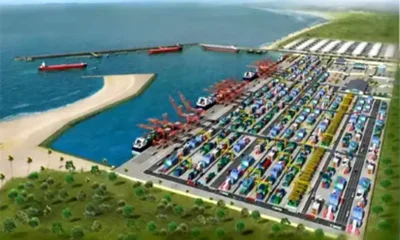
Abidjan-Lagos Corridor Highway Under Construction, by Kestér Kenn Klomegâh


Never underestimate the power of Economic Community of West Africa States (ECOWAS), also known as CEDEAO in French and Portuguese, created on 28th May 1975 as a regional political and economic union bringing together fifteen (15) countries of West Africa. Per the date of its established, this so-called regional bloc marks its 50th year in 2025, a significant historical celebration.
Considered one of the pillar regional blocs of the continent-wide African Economic Community (AEC), ECOWAS generally has its primary common goal of working consistently towards achieving, what is first referred to, as “collective self-sufficiency” for its member states by creating a single large trade bloc by building a full economic and trading union. Additionally, ECOWAS aims to raise living standards of an estimated population of over 425 million people and to promote economic development based on the principles of inter-dependence, solidarity, and cooperation.
Until writing this article, ECOWAS has frequently been discussing and reviewing the Abidjan-Lagos Corridor Highway Development Project, one single regional infrastructure project these several years. It has shown its total commitment looking for funding while billions have been siphoned by leaders into foreign banks. African leaders are quick negotiating and paying for foreign military weapons but grossly unsuccessful in soliciting similar assistance from these external partners to invest in infrastructure development such as the Abidjan-Lagos Corridor Highway Development Project.
West African Highway Launched in 2017
The construction of this proposed grandiose West African highway has its own chequered history. The proposed project was successfully launched in 2017, and since then it has had series of high-powered meetings and conferences, technical studies has been conducted, and financing the construction and to its feasibility and practical operationalization. The Abidjan-Lagos highway, the six-lane dual carriage highway, is estimated at $15.1 billion.
On resource mobilization, it was explicitly noted that ECOWAS had adopted a new regulatory framework on the Public Private Partnership (PPP) – an incentive for the entry of private sector in large investments like the nature of this project. The African Development Bank (AfDB) on behalf of the development partners offered its assurance for unwavering commitment to the realization of the highway.
Akinwunmi Adesina, President of the African Development Bank (AfDB) has several times highlighted the importance of the Abidjan-Lagos highway as an infrastructure project in West Africa that would ease free movement of people, goods and services, generate social and economic activities, and ultimately promote cross-border trade within the region, its economic viability and enormous potentials especially now that African Union looks to implement the African Continental Free Trade Area (AfCFTA). Noticeably, Africa has long been considered as a frontier for manufacturing, for technology, for food production. Africa is getting ready for business, it is busily building the world’s largest single market of 1.4 billion people.
Special Meetings and Technical Consultations
Several meetings upon meetings, and upon meetings have been held since the project was proposed in 2017. Since 2017, paid meetings were held, experts were paid. The latest of such paid meeting was held in November 10-11, 2024. This roundtable was initiated following the instructions given to the ECOWAS Commission. Late September 2024, such roundtable meeting was held in Abidjan, capital city of Côte d’Ivoire, under the auspices of the Commission of the Economic Community of West African States (ECOWAS), the African Development Bank (AfDB) and the ECOWAS Bank for Investment and Development (EBID).
The highway corridor is calculated to be approximately 1,080 km long. It will connect some of the largest and most economically dynamic cities Abidjan, Accra, Cotonou, Lomé and Lagos, while covering a large proportion of West Africa’s population. It will also link very vibrant seaports in West Africa. In addition, it will serve all the landlocked ECOWAS member-states, for example Burkina Faso, Mali and Niger in the region. Nearly 40 million people are estimated to be living along the Abidjan-Lagos corridor while 47 million people travel along the axis every year. These are expected to be direct beneficiaries of the development of the project touted to be a real backbone of trade in the region.
According official documents, this highway project falls in line with the key objectives of the ECOWAS Vision 2050, including (i) facilitating the movement of people and goods, and (ii) accelerating trade and transport, regional and international, improving road infrastructure. It is eventually expected that the transport corridor will be transformed into a development corridor to stimulate investment, sustainable development and poverty reduction within the entire region.
West African Highway and AfCFTA
The focal point of controversy and debate, these several years, are centered on mechanism of financing, the state-of-the-art management of this new mega-highway – from planning through practical construction to its final commissioning, ready for cutting-edge usage by the transport industry. The idea of prioritizing highway innovation, signalling a bold leap in West Africa’s transportation infrastructure, is its recognizable potential transformative impact. Simply intended to improve and facilitate movement of services, goods and people across the region. The Abidjan-Lagos Highway highlights its potential to enhance regional connectivity and drive economic growth, especially with the establishment of the African Continental Free Trade (AfCFTA), the ambitious flagship of the African Union (AU).
According to ECOWAS latest document issued after their two-day special meeting held on November 11 in Abidjan, Côte d’Ivoire, “experts have lauded findings of the study which has among others, unveiled a potential $6.8 billion investment prepared and ready to be implemented to unlock economic growth and enhance the viability of the proposed highway.” The overall objective is to identify and unlock the inherent and latent economic potential (short, medium and long-term) and commercial viability of economic and industrial value chain projects. These economic projects, once implemented, will also generate trade volumes and traffic to augment the viability of the highway.
The final draft reports were issued after groups revisited (that was not the first time) several tolled bridges and roads in Abidjan for knowledge and experience sharing strategy envisaged for the Abidjan-Lagos Highway. At the end of the exercise, the study report (re)validated commitment to unlock the inherent and latent economic potential of the highway construction and estimated at $6.8 billion in potential investment in the region.
Final Construction Still Out of Sight
For the past few years, significant attention have been drawn by widely publicized announcement of securing enough funds from African banks and from external sources for the construction this regional highway which could become a cornerstone, and the public narrative of achievement by ECOWAS, which marks its 50th year in 2025. However, transport industry analysts, researchers and experts have already cast serious doubts and skyline skepticism if ECOWAS could live to this onerous task. Grandiose ceremony-infested ECOWAS future task of achieving its primary target of constructing ‘speed-highway’ remains an eternal dream. Noticeably, ECOWAS has little to celebrate, except its existence by name, (the golden jubilee) at its 50th year in May 2025. At least, Africans will rather jubilate over the authenticity of reforming and transforming the Economic Community of West Africa States (ECOWAS)