Forgotten Dairies
Alleged Military Encroachment, Disputed Land Titles, and Nigerian Communities Seeking Legal Redress -By Daniel Nduka Okonkwo
Observers and community advocates have argued that certain concerns raised in connection with the NAF Green Garden Estate in Enugwu-Agidi warrant closer examination. These issues form part of ongoing reporting and active legal proceedings.


From Abuja to Anambra, allegations of armed encroachment, disputed documentation, and communities resisting through legal channels raise broader questions about land governance in Nigeria, while an active court case in Enugwu-Agidi tests whether judicial institutions can provide a resolution.
When armed personnel reportedly erect signboards reading “Military Zone: Keep Off” on farmland cultivated for generations, when disputed court documents appear in contested ownership claims, and when private development projects become associated with security enforcement in unresolved land disputes, questions arise about the relationship between power, land administration, and access to justice in Nigeria.
Across Nigeria’s thirty-six states and the Federal Capital Territory, land-related disputes continue to generate public concern. An investigation by Profiles International Human Rights Advocate has examined allegations that weaknesses in land administration, record management, institutional accountability, and implementation of the Land Use Act of 1978 may create conditions in which communities, landowners, and purchasers become vulnerable to dispossession.
> “Military Zone: Keep Off” signboards were reportedly erected on communal farmland despite concerns raised locally about the absence of any publicly announced military project in the area.
One of the matters presently attracting public attention concerns the NAF Green Garden Estate in Enugwu-Agidi, Njikoka Local Government Area of Anambra State.
Investigative journalist Daniel Nduka Okonkwo of Profiles International Human Rights Advocate is conducting an ongoing multi-source investigation into allegations concerning land acquisition processes, reported military presence, and concerns raised by indigenous landowners regarding activities connected to the estate project, which has been promoted under the Nigerian Air Force banner and linked publicly to NAF Construction Services.
A civil action relating to aspects of the disputed land remains pending before a competent court. Formal petitions have reportedly been submitted to the Anambra State Commissioner for Lands, the Deputy Governor, the Attorney General, and the Commissioner for Housing.
At the policy level, critics of the Land Use Act of 1978 argue that compulsory acquisition provisions intended for public interest projects have, in some instances, generated controversy regarding consultation processes and compensation practices. State governments have at various times invoked these provisions to acquire family and communal lands, with affected communities raising concerns about the adequacy of notice, consultation, and compensation paid.
At the community level, especially in parts of southwestern Nigeria, disputes commonly described as Omonile-related conflicts have included allegations of intimidation, unauthorised fencing, disputed boundary adjustments, and unlawful demands for payments during construction activities. There have also been recurring reports of fraudulent transactions involving disputed Certificates of Occupancy, forged survey documentation, and multiple sales of the same parcel of land to different buyers.
These concerns have contributed to wider calls for improved due diligence, stronger land registration systems, and more transparent dispute resolution mechanisms. The Nigerian Institution of Surveyors continues to encourage physical verification and independent legal review before any land purchase is finalised.
The consequences extend beyond ownership disputes. Agricultural communities affected by prolonged land conflict frequently report reduced food production. In commercially active zones, available estimates suggest the cumulative value of property affected by land disputes and controversial acquisition activities runs into trillions of naira. At the macroeconomic level, economists and development analysts have repeatedly linked insecure land tenure to reduced investment, weaker property markets, and diminished access to credit. Farmer-herder disputes rooted in contested land tenure have similarly been linked to significant annual losses in agricultural productivity and regional economic output.
One of the more sensitive dimensions of Nigeria’s land governance debate concerns allegations that military personnel have, in certain situations, become involved in disputed land matters.
In the Federal Capital Territory, public disagreements emerged between government authorities and military actors over competing claims to land administration and enforcement authority. FCT Minister Nyesom Wike publicly raised concerns regarding military personnel allegedly acting in connection with a contested parcel in Abuja, describing the situation as an improper use of institutional authority in a civilian land matter.
In Enugu State, communities have publicly protested military-related land claims and raised concerns regarding planned demolitions and acquisition activities. In one reported instance, community members alleged that armed personnel moved to fence off ancestral land in defiance of a state High Court restraining order.
Media reports have also documented disputes in Rivers and Lagos States in which communities alleged that security personnel were involved in contested land enforcement actions. In Lagos State, human rights organisations raised concerns about the conduct of security personnel in the Ebute-Afuye community, where local fish farmers and residents reported disruption to their livelihoods. In Rivers State, communities in Elele Alimini held public protests over the alleged forceful takeover of farmland. In one notable instance in Oyo State, a High Court issued a judgment against the Nigerian Army where unlawful trespass on a family’s land was established, with damages awarded against the institution.
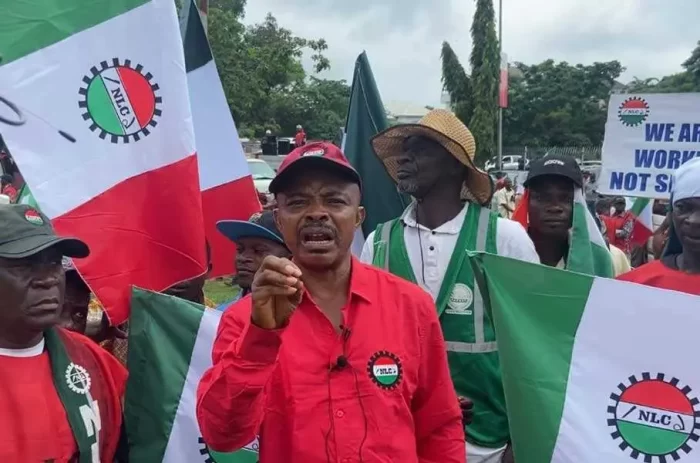
In Abuja, indigenous Gbagyi community groups have staged demonstrations at the National Assembly, raising concerns about encroachment on ancestral territories across areas including Tungan Maje, Zuba, Iddo, and Giri.
Military authorities have generally maintained that land under dispute was lawfully acquired and forms part of historical allocations made for defence or public purposes, with civilian developers or community members said to have built on such parcels in error. Civil society organisations, however, continue to advocate for stronger oversight, transparency, and civilian accountability mechanisms.
In Anambra State, some petitions and public complaints have raised concerns regarding the alleged involvement of armed security personnel in disputes connected to private development projects.
Community representatives in at least one matter reportedly petitioned the state government, including Governor Chukwuma Soludo, over allegations that armed personnel were present during enforcement activities associated with contested land, with signboards identifying the location as a military zone reportedly installed despite no official military project being announced in the area.
Separate petitions submitted by residents in Nkwelle-Ezunaka reportedly alleged that security operatives, including personnel linked to the Nigerian Navy, were present during demolition and land clearance activities conducted without valid court orders.
These allegations remain matters of public record and, where applicable, remain unresolved or subject to official review.
Observers and community advocates have argued that certain concerns raised in connection with the NAF Green Garden Estate in Enugwu-Agidi warrant closer examination. These issues form part of ongoing reporting and active legal proceedings.
In Enugwu-Agidi, within the Njikoka Local Government Area of Anambra State, concerns have been raised regarding the NAF Green Garden Estate project.
Project promoters publicly announced plans for a large-scale residential development on the site, with reports indicating proposals for up to 800 housing units. Allegedly, the development formed part of a broader plan to transform the area into a major residential estate.
Community representatives have submitted formal complaints alleging that portions of ancestral land belonging to Achalla Village were affected during acquisition and development activities. Some residents further allege that armed personnel were present around the project area and that warning signboards identifying the location as a military zone were installed without authorization.
These allegations remain disputed and have not been determined by any court.
As part of an ongoing multi-source investigation, journalist Daniel Nduka Okonkwo of Profiles International Human Rights Advocate has conducted structured on-record interviews with several parties possessing direct and material knowledge of the matters under examination, including senior community leadership, a legal representative acting for the affected community, an eyewitness to key land transactions, and individuals connected at various levels with NAF Construction Services and Green Gardens Limited. The interviews have surfaced substantive questions regarding the processes by which the land in dispute was acquired, the documentation relied upon to establish title, and the circumstances surrounding the reported presence of armed personnel at the site. Chief Marc Benito Ozigbo, the Chief Executive Officer of Green Gardens Consultants Limited, engaged with this publication during the course of the investigation and provided responses, the full content of which will be published and examined in a subsequent detailed investigative report. This publication has information obtained during the course of this investigation that raises questions of significant public interest. All named parties and institutions referenced in this report have been formally approached for comment. This investigation continues.
Community representatives allege that ancestral lands were affected and have raised concerns regarding the reported security presence at the site. These issues remain before the courts and have not been judicially determined.
Suit remains pending before a competent court. Petitions concerning the matter have reportedly been submitted to the Commissioner for Lands, Prof. Offornze Dike Amucheazi (SAN), the Deputy Governor, the Commissioner for Housing, and the Attorney General of Anambra State.
Consistent with responsible investigative practice, formal right-of-reply opportunities have been extended to all parties referenced in this report, including NAF Construction Services and Green Gardens Limited. As of the time of going to press, responses remain outstanding despite repeated follow-up contacts. Any responses received will be published in full and reflected in subsequent reporting.
What connects the concerns raised by a fish farming community in Lagos, the protests of Gbagyi youth outside the National Assembly, demolition allegations in Anambra, and the pending court case in Enugwu-Agidi is not simply a set of isolated incidents. Analysts and civil society advocates argue that these matters collectively point to structural questions about Nigeria’s land governance framework.
The Land Use Act of 1978, designed to nationalise land ownership and broaden access, has attracted sustained criticism from legal scholars, community organisations, and policy analysts who argue that its implementation has in practice concentrated decision-making authority in ways that leave ordinary Nigerians, particularly those without formal documentation or political access, in a vulnerable position. Combined with non-digitised land registries, slow judicial processes, and reported weaknesses in institutional oversight, the conditions exist for the kind of disputes documented in this report to persist and deepen.
Reform advocates have consistently called for a review of the Land Use Act, the digitisation of state land registries, the establishment of dedicated land rights tribunals capable of expedited resolution, and clearer regulatory boundaries governing the role of security personnel in civilian land matters. Without structural reform, communities like Enugwu-Agidi and many others across Nigeria will continue to seek justice through courts and petitions while the underlying conditions that generate these disputes remain unaddressed.
The investigation is ongoing. Further reports will follow.
Daniel Nduka Okonkwo is an investigative journalist, human rights advocate, and policy analyst based in Abuja, Nigeria. He is the publisher of Profiles International Human Rights Advocate, a platform focused on accountability journalism, governance reporting, and the documentation of human rights issues across Africa. His work examines the intersection of political power, institutional accountability, systemic failure, and the human impact of corruption, with particular focus on Nigeria and the wider African continent.
Okonkwo’s reporting and analysis have been published in Sahara Reporters, African Defence Forum, Daily Trust, Vanguard, Daily Intel, Opinion Nigeria, African Angle, Local Newsbreak, and other international media outlets. His work is driven by a commitment to transparency, democratic governance, and justice. He also collaborates with Daniels Entertainment on human rights initiatives, extending his advocacy beyond traditional journalism into broader public engagement.
He is based in Abuja, Nigeria, and can be reached at dan.okonkwo.73@gmail.com.