Forgotten Dairies
Babangida at 85: Separating Fact From Fiction In Nigeria’s Crisis Years -By Edwin Uhara
I believe that instead of vilifying a particular leader who did his best for the good of the nation with the purest of intentions, I think we should invest that same energy in finding solutions to the problems that have been there before some of us were even born.

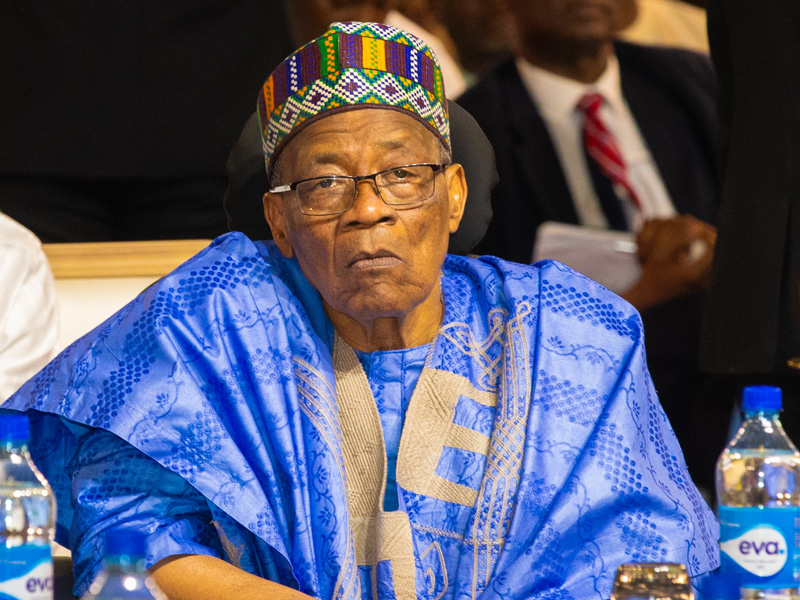
If there is anything the 85th birthday anniversary of the former Military President, General Ibrahim Babangida has achieved apart from the normal goodwill messages, then it is the platform it has provided for a national discuss so that Nigerians can critically examine his years in office as the country’s leader within the context of truth, objectivity and balance.
This has become very important because Nigerians and historians need to separate facts from fictions in the future because journalism is the first draft of history.
Before General Babangida became Military President between August 27, 1985 and August 26, 1993, there were many challenges confronting the country already.
For example, in 1983, Nigeria faced severe economic collapse, widespread political corruption and violent electoral fraud that eventually ended the Second Republic.
In the same vein, the country ran out of foreign exchange, forcing factories to shut down and losing half of the nation’s industrial capacity.
Government borrowing soared, leading to massive national debt, unpaid workers salaries and soaring prices for basic goods with it’s attendant consequences on families and households.
The country was pushed to the survival mode and life expectancy was drastically reduced as most Nigerians were living without hope for tomorrow.
Weak government institutions, rampant cases of frauds, embezzlement of public funds, personal aggrandizements, inflated contracts and elite corruption worsened public hardship while leaders prioritized personal gain over democratic solidarity.
Because of the terrible economic realities of that time, Nigeria embarked on mass expulsion of immigrants from the country in what was then known as ‘Ghana Must Go.’
For example, in early 1983, the government expelled roughly over two million undocumented West African immigrants—mostly Ghanaians—hoping to ease local economic pressure, but the move failed to solve the country’s high unemployment rate.
Uncertainties pervaded the atmosphere over rising crime rate and hardships as extreme poverty led to increased armed robbery attacks, thuggery and the exploitation of jobless youths by dubious politicians for electoral crimes and gerrymandering.
Hospitals, schools, and basic infrastructures deteriorated sharply due to the lack of funding and severe mismanagement as our hospitals in particular became mere consulting clinics without drugs.
According EBSCO Research, the country witnessed severe revenue losses. The losses were huge that it affected the country’s food production and supply chains.
For instance, “The national agricultural program known as the Green Revolution was grievously mismanaged and this situation was further aggravated by unmanageable natural disasters such as insect pests, rinderpest epidemic and drought.”
The report continued, “To make matters worse, the government faced a crisis of mounting debt from 1.1 billion naira in 1977 to 7.7 billion naira in1983.
On the political front, a disputed election results sparked deadly protests and many court battles, deeply dividing the country and eroding public trust in President Shehu Shagari’s administration.
So by December 31th, 1983, a regime change was effected as a result of the frustration caused by the economic freefall and corrupt political class.
That was when the then senior military officers led by Major General Muhammadu Buhari overthrew President Shagari’s civilian government and subsequently launched the War Against Indiscipline in a bid to sanitise the system.
Before that, President Shagari had presented his budget speech on December 29, 1983, and then retired to his lodge in Abuja for the holiday season but on that day, a coup d’état was planned by a few senior military officers.
Shagari initially escaped arrest because of the death of the conspirators’ ringleader Brigadier Ibrahim Bako at a roadblock on his way to arresting the president.”
On December 31, at 7:00 AM, Brigadier Sani Abacha announced the “change of leadership” carried out by the armed forces to save the nation from what he described as “the grave economic predicament and uncertainty which an inept and corrupt leadership had imposed on the nation for the previous four years.”
That evening, Major General Muhammadu Buhari was declared the new head of state.
His administration started with a public campaign against the rampant and ubiquitous disorderliness with the launch of the War Against Indiscipline (WAI).
These were some of the challenges Nigeria faced before Babangida came to power in 1985.
So the idea that Babangida is the cause of Nigeria’s problem is truly a violation of logic which the rational mind cannot understand.
For example, in Abacha’s speech of 1983, he said our hospitals were mere consulting clinics.
In any case, I don’t want to say that our hospitals are consulting clinics but during the war against COVID-19, Nigeria had more than 10,000 Primary Healthcare Centres across the 774 Local Governments but non was functional enough to be used as isolation centre.
This was what necessitated the need for the building of emergency isolation centres by the Presidential Taskforce on COVID-19 for contact tracing among others.
Therefore, I believe that instead of vilifying a particular leader who did his best for the good of the nation with the purest of intentions, I think we should invest that same energy in finding solutions to the problems that have been there before some of us were even born.
This is because history will only remember us for the solutions we provide and not the criticisms we made.
After all, a critics is one who knows the way but cannot drive.
Comrade Edwin Uhara is a United Nations-trained Negotiator and Public Policy Analyst