
Africa
CPC Designation: Why President Tinubu Should Act Swiftly! -By John Kokome
President Tinubu must act swiftly, not out of fear of sanctions, but out of duty to protect the ideals of freedom, justice, and equality that define our nation.

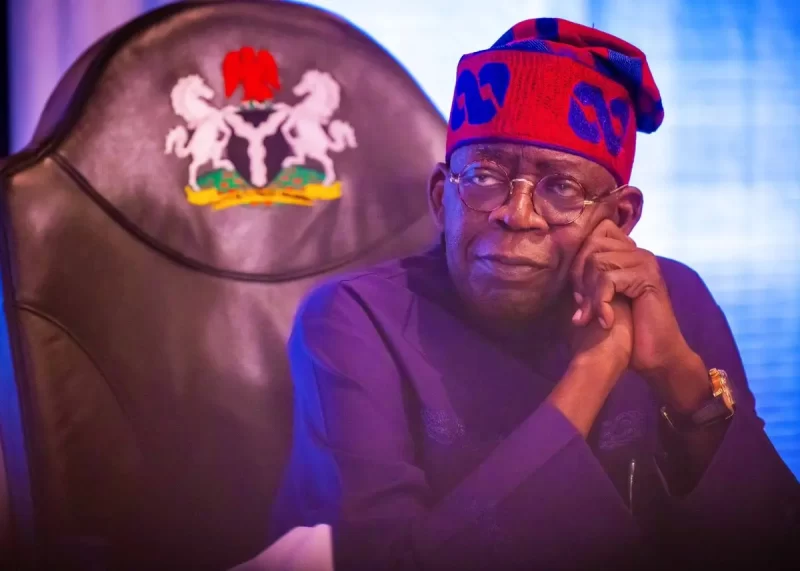
When the United States recently redesignated Nigeria as a Country of Particular Concern (CPC) over alleged violations of religious freedom, the news reverberated across diplomatic, political, and religious circles. The designation, made under the International Religious Freedom Act, is reserved for countries whose governments are deemed to have “engaged in or tolerated systematic, ongoing, and egregious violations of religious freedom.” For Nigeria, a country constitutionally founded on the principles of secularism and religious tolerance, this is a serious diplomatic indictment that must not be treated with panic or political posturing, but with deliberate, strategic action.
President Bola Ahmed Tinubu’s administration cannot afford to ignore the implications of this designation. The CPC tag, if left unaddressed, risks harming Nigeria’s international reputation, threatening foreign investments, and complicating relations with key partners, especially the United States. It sends a negative signal at a time when the government is trying to rebrand Nigeria as open for business, attract global capital, and restore confidence in governance.
But more importantly, the designation speaks to the need for Nigeria to confront, once and for all, its deep-seated challenges around religious coexistence, security, and justice. President Tinubu must act swiftly, not merely to appease Washington but to demonstrate that Nigeria remains committed to upholding the rights and freedoms of all citizens, irrespective of faith.
A Reputation at Stake
Nigeria’s inclusion on the CPC list is not unprecedented. The Trump administration designated Nigeria as a CPC in 2020, citing violations against Christians and other religious minorities. However, in 2021, the Biden administration removed Nigeria from the list, arguing that there had been progress, or at least that the situation did not meet the threshold of “systematic and egregious” violations. That Nigeria has again returned to the list suggests that the international community perceives a regression.
This perception, whether entirely accurate or not, matters. In diplomacy, perception often shapes policy. A CPC designation can trigger sanctions, restrict access to military assistance, and affect bilateral cooperation. It could also embolden extremist narratives and deepen existing mistrust between faith communities. For a country already battling violent extremism in the North-East, farmer-herder clashes in the Middle Belt, and ethno-religious tensions across regions, this is the last label Nigeria needs.
Beyond Denial: A Call for Honest Introspection
The first step in addressing the CPC designation is to resist the instinctive urge to deny or dismiss it as foreign meddling. While sovereignty must be respected, responsible governance requires honest introspection. The reality is that religious freedom challenges do exist in Nigeria, sometimes fueled by weak institutions, sometimes by local prejudices, and often by the state’s failure to protect victims or prosecute offenders.
From attacks on churches and mosques to mob killings justified under blasphemy allegations, too many Nigerians have suffered violence in the name of religion. The government’s slow or inadequate response to such incidents only deepens impunity and erodes trust. These failures, documented by human rights groups and global observers, feed into the narratives that inform designations like the CPC.
What Tinubu Must Do
President Tinubu should see this moment not as an embarrassment but as an opportunity for reform and reaffirmation. Nigeria’s multi-religious fabric is both its strength and its fragility; managing it wisely is key to national stability.
First, the Federal Government should immediately establish an inter-ministerial task force led by the Ministry of Foreign Affairs comprising the Ministries of Justice, Interior, and Information to engage with the U.S. government and relevant stakeholders. This task force should prepare a factual report detailing steps Nigeria is taking to protect religious freedom, prosecute hate crimes, and strengthen interfaith harmony. Diplomatic engagement must be proactive, evidence-based, and transparent.
Second, the government must show visible domestic action. Strengthening the capacity of law enforcement to respond swiftly and impartially to religiously motivated violence is essential. Where individuals or groups commit crimes under the guise of religion, justice must be swift and fair. Too often, cases of mob killings, church attacks, or mosque burnings end without accountability.
Third, Tinubu’s administration should deepen collaboration with the Nigerian Inter-Religious Council (NIREC) and other faith-based organizations to promote national dialogue and community-level peace building. Religious leaders remain powerful voices in shaping public attitudes, and their buy-in is vital.
Finally, communication is key. The government must take control of the narrative through consistent, transparent communication that clarifies its commitment to human rights and religious tolerance. Silence or defensiveness will only reinforce negative perceptions.
A Moment for Leadership
Nigeria’s diversity is a gift, not a curse. Yet, without deliberate leadership, diversity can become a source of division. President Tinubu has the political capital and moral responsibility to lead a national conversation on religious tolerance and civic responsibility. Swift, decisive action will not only help remove Nigeria from the CPC list but will also strengthen our social fabric and restore confidence in governance.
History will not judge this government by the designation itself, but by how it responds to it. The mark of strong leadership is not the absence of criticism, but the courage to turn criticism into opportunity. The CPC designation is not a verdict, it is a wake-up call.
President Tinubu must act swiftly, not out of fear of sanctions, but out of duty to protect the ideals of freedom, justice, and equality that define our nation.
John Kokome
A Communications Strategist and Public Affairs Analyst writes from Lagos
kokomejohn@yahoo.com























You must be logged in to post a comment Login