
Africa
US Threat on Christian Freedom: The Hypocrisy, The Essence and The Balance -By Olatunbosun Onaopemipo Olalekan
The hypocrisy of the United States must be exposed, but so too must the failure of any Nigerian leader who allows it to thrive. I stand for a balanced truth: that Christian freedom matters deeply, but freedom without sovereignty is slavery in disguise. The tweet that inspired this reflection revealed more than policy, it revealed an old pattern of global hypocrisy. The task before us is to rise above it, to build a Nigeria strong enough to defend its citizens and wise enough to see through the world’s disguises.

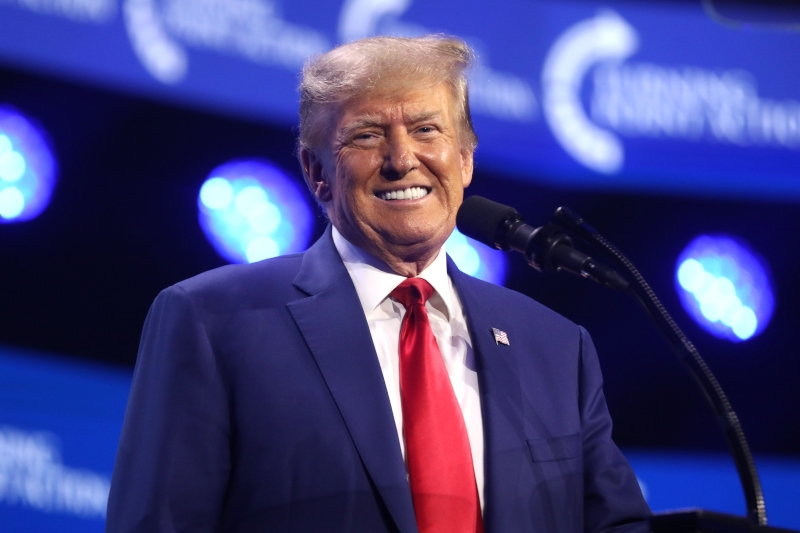
I have tried not to make public comment because th topic is somehow a moral quandary for me as a staunch supporter of both Trump and Tinubu but it is evident I can not hold my breath any longer. I have read enough opinion here and there, but truth is, most opinion I have read put a big question on whether or not some of us really love Nigeria and her sovereignty. I am Nigerian first before anything. When I first saw the recent tweet by Dr. Walid Phares advising the Trump administration to establish a military base in Port Harcourt to protect Christians in Nigeria, I could not help but pause. The language appeared compassionate, the tone urgent, but beneath it lay something disturbingly familiar, the blending of moral rhetoric with geopolitical ambition. Trump’s own statements threatening to cut aid and “act militarily” if Nigeria failed to protect Christians reignited a troubling debate. I write not only as a Nigerian who cares deeply about faith, justice, and sovereignty, but also as one who believes that while Christian freedom deserves protection, the hypocrisy of the U.S. cannot go unchallenged.
There is no denying that Nigeria faces genuine tragedy. The killings in the North-East and Middle Belt have persisted for too long. Boko Haram and its offshoots have targeted churches, razed villages, and slaughtered families in the name of distorted ideology. Reports from Borno, Adamawa, and Plateau State speak of grieving Christian communities who feel abandoned by both state and society. And yet, these same reports often note that Muslims, too especially those who reject extremist teachings, suffer similarly. Many moderate or anti-sharia Muslims have been executed by the same jihadist groups that massacre Christians. The data compiled by the Armed Conflict Location & Event Data Project confirms that much of Nigeria’s violence is multi-dimensional, driven not only by religion but also by ethnic tension, herder–farmer conflicts, and resource competition. So, when Washington frames this as a “Christian genocide,” it oversimplifies a painful complexity that Nigerians live with every day.
Still, I must affirm the essence of this concern. I cannot dismiss the fear and despair of families in Jos or Maiduguri who attend Sunday service knowing it might be their last. Freedom of worship is the soul of human dignity. President Bola Ahmed Tinubu’s government, which I strongly support, has insisted that no community should feel unprotected because of faith, and this must remain our collective responsibility. Yet, to safeguard freedom, we must also guard against external manipulation masked as compassion. Nigeria cannot afford to become a testing ground for another global power’s conscience or its convenience.
The hypocrisy of the U.S. is glaring. When Trump and his advisors speak about “saving Christians,” they do so with selective outrage. The same U.S. government that turns a blind eye to human-rights violations in some of its allied states suddenly discovers moral urgency in Nigeria. Walid Phares’s tweet goes beyond humanitarian advice; it explicitly suggests establishing an “emergency base” in Port Harcourt, the heart of Nigeria’s oil economy and a gateway to the Biafra region. This is not coincidence. It is strategy dressed as sanctity. Whenever America mixes military ambition with humanitarian rhetoric, nations bleed and resources flow, not to the liberated, but to the liberators. I have watched similar narratives unfold in Iraq, Libya, and parts of Syria, where “freedom” turned into prolonged instability and external control.
The more one studies the pattern, the clearer it becomes that this is not merely about faith. It is about power, energy, and minerals. Nigeria is Africa’s largest oil producer, and Port Harcourt remains its most strategic port city. More recently, Nigeria has become a promising hub for rare-earth materials, lithium, and other critical minerals that the world increasingly depends upon. With China tightening export controls on rare-earth elements and the United States scrambling for alternative sources, Nigeria has appeared on the global radar in new ways. I cannot ignore that this sudden American passion for “Christian freedom” arrives at the exact time Nigeria is negotiating rare-earth partnerships worth hundreds of millions of dollars. When China restricts export of critical minerals, and Washington begins to issue “moral” statements about a mineral-rich African nation, one must read between the lines.
I must confess that I find Trump’s tone dangerously reminiscent of past interventions that devastated nations under noble pretenses. We have seen how the United States, in its self-appointed role as global liberator, invades countries in the name of justice, only to leave behind deeper instability. Nigeria must never fall into that pattern. We must acknowledge our internal failures, the weakness of security institutions, the slow judicial response to attacks, the marginalization that fuels resentment, but we must fix them ourselves. President Tinubu, to his credit, has reiterated that while Nigeria welcomes cooperation, it will not surrender its sovereignty. That is the kind of assertive leadership we need: one that accepts partnership but rejects domination.
At the same time, I will not excuse our own complacency. Protecting Christian freedom in Nigeria cannot remain a rhetorical exercise. The world must see that Nigeria values every life, Christian or Muslim, rich or poor. The Tinubu administration must build trust with affected communities through transparent justice, swift punishment of offenders, and equitable security deployment. Every burned church and every bombed mosque diminishes the nation’s moral stature. If the world must discuss religious freedom in Nigeria, let it not be because we failed to uphold it ourselves.
Yet, I return again to the hypocrisy that shadows all this. America’s history of “defending freedom” abroad often aligns suspiciously with its quest for resources. From oil in Iraq to lithium in Afghanistan, liberation has too often come with economic footnotes. Nigeria’s growing importance in global supply chains particularly in oil and rare-earth minerals makes it a prime candidate for moral posturing disguised as strategy. The proposed “emergency base” in Port Harcourt, if it ever materialized, would serve not just to protect Christians, but to secure American access to strategic zones. It is precisely this blending of piety and profit that Africa must resist.
In thinking about balance, I find it necessary to speak directly to fellow Nigerians. We must never trivialize the blood of the innocent, but neither should we outsource our pain to foreign powers. True Christian freedom will not be delivered by drones from Washington; it will be built in classrooms, churches, mosques, and communities that choose coexistence over vengeance. President Tinubu’s government must act decisively to secure every citizen, but it must also articulate a foreign policy that resists being drawn into great-power rivalry. Our faith must be defended by justice, not by proxy wars.
I have come to believe that every discussion about religion in Nigeria must also include economics and governance. Poverty fuels extremism, ignorance sustains prejudice, and injustice breeds vengeance. A foreign intervention may silence a few gunmen, but it cannot heal the wound of inequality. Only governance that prioritizes inclusion can do that. And that is why I support the reform spirit of Bola Ahmed Tinubu
because Nigeria’s answer to external threats must be internal strength.
In the end, the so-called “US threat” on Christian freedom in Nigeria is more than a diplomatic outburst; it is a mirror reflecting how the world sees Africa still as a ground for exploitation, yet too divided to resist. I refuse that image. I believe Nigeria can protect both its faiths and its resources without foreign dictates. Yes, Christians must be safe. Yes, religious minorities must be free. But no, Nigeria must not be manipulated under the pretext of salvation. We have the capacity, leadership, and moral will to defend both God and country on our own terms.
The hypocrisy of the United States must be exposed, but so too must the failure of any Nigerian leader who allows it to thrive. I stand for a balanced truth: that Christian freedom matters deeply, but freedom without sovereignty is slavery in disguise. The tweet that inspired this reflection revealed more than policy, it revealed an old pattern of global hypocrisy. The task before us is to rise above it, to build a Nigeria strong enough to defend its citizens and wise enough to see through the world’s disguises.
God bless the Federal Republic of Nigeria 🇳🇬
Olatunbosun Onaopemipo Olalekan.
03-11-2025
Rome, Italy.


















You must be logged in to post a comment Login