
National Issues
Dangote, Monopoly Power, and Political Economy of Failure -By Blaise Udunze
Nigeria often aspires to emulate Singapore’s refining and petrochemical success. The comparison is instructive. Singapore has no crude oil, yet built one of the world’s most sophisticated refining hubs through consistent policy, investor protection, infrastructure planning, and regulatory certainty.

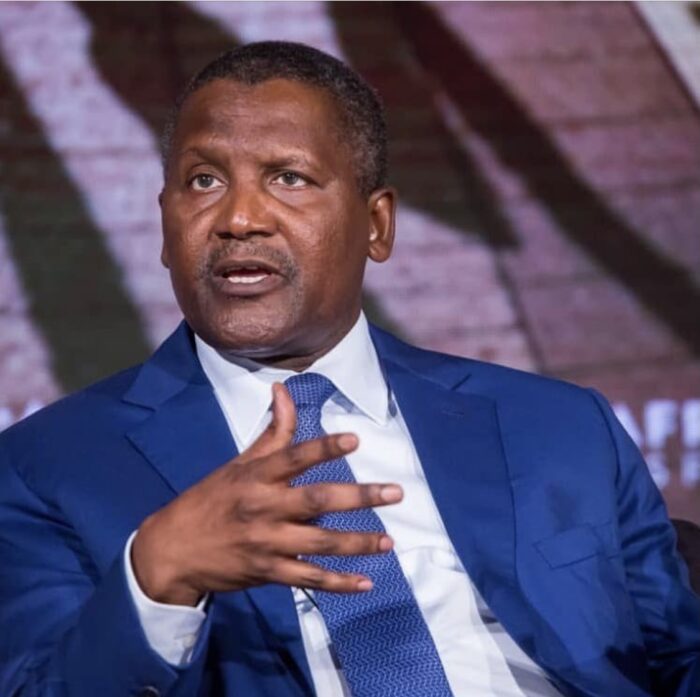
Nigeria’s refining crisis is one of the country’s most enduring economic contradictions. Africa’s largest crude oil producer, strategically located on the Atlantic coast and home to over 200 million people, has for decades depended on imported refined petroleum products. This illogicality has drained foreign exchange, weakened the naira, distorted investment incentives, and hollowed out state institutions. Instead of catalysing industrialisation, Nigeria’s oil wealth became a mechanism for capital flight, rent-seeking, and institutional decay.
With the challenges surrounding the refining of crude oil, the establishment of Dangote Refinery signifies an important historic moment. The refinery promises to reduce fuel imports to a bare minimum, sustain foreign exchange growth, ensure there is constant fuel domestically, and strategically position Nigeria as a regional exporter of refined oil products if functioned at full capacity. Dangote Refinery symbolises what private capital, technology, and ambition can achieve in Africa following years of fuel queues, subsidy scandals, and global embarrassment.
Nigerians must have a rethink in the cause of celebration. Nigeria’s refining problem is not simply about capacity; it is about systems. Without addressing the policy failures and institutional weaknesses that made Dangote an exception rather than the rule, the country risks replacing one failure with another, this time cloaked in private-sector success.
For a fact, Nigeria desperately needs the emergence of Dangote refinery, and its success is in the national interest. Hence, this is not an argument against the Dangote Refinery. But history warns that structural failures are not solved by scale alone. Over the year, situations have shown that without competition and strong institutions, concentrated market power, whether public or private, can undermine price stability, energy security, and consumer welfare.
The Long Silence of Refinery Investments
Perhaps the most troubling question in Nigeria’s oil history is why none of the global oil majors like Shell, ExxonMobil, Chevron, Total, or Agip has built a major refinery in Nigeria for over four decades. These companies operated profitably in Nigeria, extracted their crude, and sold refined products back to the country, yet never committed capital to domestic refining.
Over the period, it has been shown that policy incoherence has been the cause, not a matter of technical incapacity, such as price controls, resistant licensing processes, subsidy arrears, frequent regulatory changes, and political interference, which made refining an unattractive investment. Importation, by contrast, offered quick returns, lower political risk, and guaranteed margins, often backed by government subsidies.
Nigeria carelessly designed a system that rather rewarded importers and punished refiners. Dangote did not succeed because the system improved; he succeeded despite it. His refinery exists largely because of the concessions from the government, exceptional financial capacity, political access, and a willingness to absorb risks that institutions should ordinarily mitigate. This raises a deeper concern; when institutions fail, progress becomes dependent on extraordinary individuals rather than predictable systems.
The Tragedy of NNPC Refineries
If private investors stayed away, Nigeria’s state-owned refineries should have filled the gap. Instead, the Port Harcourt, Warri, and Kaduna refineries became monuments to mismanagement. Records have shown that between 2010 and 2025, Nigeria reportedly wasted between $18 billion and $25 billion, over N11 trillion, just for Turn Around Maintenance and rehabilitation. Kaduna Refinery alone is estimated to have consumed over N2.2 trillion in a decade.
Despite these expenditures, output remained negligible. This was not merely a technical failure but a governance one. Contracts were poorly monitored, accountability was absent, and consequences were nonexistent. In functional systems, such outcomes trigger investigations, sanctions, and reforms. In Nigeria, the cycle simply repeated itself, eroding public trust and deepening dependence on imports.
Where Is BUA?
Dangote is not the only Nigerian conglomerate to announce refinery ambitions. In 2020, BUA Group unveiled plans for a 200,000-barrels-per-day refinery. Years later, progress remains unclear, timelines have shifted, and execution appears stalled.
This pattern is revealing. When multiple large investors struggle to translate plans into reality, the issue is not ambition but environment. Refinery projects in Nigeria appear viable only at a massive scale and with extraordinary political leverage. Smaller or mid-sized players are effectively crowded out, not by market forces, but by systemic dysfunction.
Policy Failure and the Singapore Comparison
Nigeria often aspires to emulate Singapore’s refining and petrochemical success. The comparison is instructive. Singapore has no crude oil, yet built one of the world’s most sophisticated refining hubs through consistent policy, investor protection, infrastructure planning, and regulatory certainty.
Nigeria chose a different path: price controls, subsidies, weak contract enforcement, and politically motivated policy reversals. Refineries became tools of patronage rather than productivity. Capital exited, infrastructure decayed, and import dependence deepened. The outcome was predictable.
The Cost of Import Dependence
For years, Nigeria spent billions of dollars annually importing petrol, diesel, and aviation fuel. This placed constant pressure on foreign reserves and the naira. Petrol subsidies alone were estimated at N4-N6 trillion per year, often exceeding national spending on health, education, or infrastructure.
Even after subsidy removal, legacy costs remain: distorted consumption patterns, weakened public finances, and entrenched interests built around importation. These interests did not disappear quietly.
Who Really Benefited from the Subsidy?
Although framed as pro-poor, fuel subsidies disproportionately benefited importers, traders, shipping firms, depot owners, financiers, and politically connected intermediaries. Smuggling across borders meant Nigerians subsidised fuel consumption in neighbouring countries.
Ordinary citizens received marginal relief at the pump but paid far more through inflation, deteriorating infrastructure, and underfunded public services. The subsidy system functioned less as social protection and more as elite redistribution.
The Traders’ Dilemma
Why did major fuel marketers like Oando invest in refineries abroad but not in Nigeria? Again, incentives explain behaviour. Importation offered faster returns, lower capital requirements, and political insulation. Domestic refining demanded long-term investment under unstable rules.
In an irrational system, rational actors optimise accordingly. Importation thrived not because it was efficient, but because policy made it so.
FDI and the Confidence Problem
Sustainable Foreign Direct Investment follows domestic confidence. When local investors, who best understand political and regulatory risks, avoid long-term industrial projects, foreign investors take note. Capital flows to environments with predictable pricing, rule of law, and policy consistency.
Nigeria’s challenge is not attracting speculative capital, but building conditions for patient, productive investment.
Dangote and the Monopoly Question
Dangote Refinery deserves credit. But scale brings power, and power demands oversight. If importers exit and no competing refineries emerge, Dangote could dominate refining, pricing, and supply. Nigeria’s experience with cement, where domestic production rose but prices soared due to limited competition, offers a cautionary tale.
Markets function best with competition. Without it, price manipulation, supply risks, and weakened energy security become real dangers, especially in countries with fragile regulatory institutions.
The Way Forward: Competition, Not Replacement
Nigeria does not need to weaken Dangote; it needs to multiply Dangotes. The goal should be a competitive refining ecosystem, not a replacement of a public monopoly with a private monopoly.
This requires transparent crude allocation, open access to pipelines and storage, fair pricing mechanisms, and strong antitrust enforcement. State refineries must either be professionally concessional or decisively restructured. Stalled projects like BUA’s should be unblocked, and modular refineries should be supported.
The Litmus Test
Nigeria’s refining crisis was decades in the making and cannot be solved by one refinery, however large. Dangote Refinery is a turning point, but only if embedded within systemic reform. Otherwise, Nigeria risks trading one form of dependency for another.
The true test is not whether Nigeria can refine fuel, but whether it can build fair, open, and resilient institutions that serve the public interest. In refining, as in democracy, excessive concentration of power is dangerous. Competition remains the strongest safeguard.
Blaise, a journalist and PR professional, writes from Lagos and can be reached via: blaise.udunze@gmail.com






















You must be logged in to post a comment Login