National Issues
Day of the African Child 2026: Need for House Help Protection Laws Across Nigeria -By Prof. Uche Ewelukwa Ofodile
…no Nigerian child deserves to live and die in agony and misery in the name of child domestic work, foster care, or traditional guardianship. Poor children and children in rural areas deserve decent schools and economic opportunities and should not have to sell their very soul to eat, receive education, or access other basic social services.

Chiziterem, a 9-year-old boy from Ukehe, Igbo-Etiti, in Enugu State, is the latest and very sad example of the massive and inexplicable abuse that house helps in Nigeria endure.
On June 14, 2026, the world saw shocking photos of Chiziterem’s swollen hands and body totally covered with wounds, welts, burn and torture marks, and scabs of all shapes and sizes – photos that are so horrific that one can only wonder the type of monster that inflicted the wounds on the poor boy and why no one spoke up until it was almost too late. On January 27, 2026, a 17-year-old salesgirl, Ihechidere Favour Uka, was allegedly stabbed to death by her employer, Mrs. Ibekwe Ezinne Mary, following an argument.
In February 2026, Amah Miracle, a 17-year-old house help, received severe burns on her face, breasts, arms, and laps when her ‘madam’, Mrs. Osinachi Edeh, used a hot iron on her. Mrs. Juliet Igwe, a businesswoman, is currently facing murder charges for allegedly putting five-year Onyinyechi Madueke’s hands in boiling water and scalding her body with candle wax. In March 2026, Mrs. Bassey, a mother of four, was arrested for brutally assaulting her five-year-old niece who serves as a nanny for her youngest child.
In January 2025, Ihsanatu Shaaiby was arrested for allegedly physically abusing Fa’iza Bala, a 5-year-old girl in her care, and causing grievous injuries. In November 2021, Mrs. Oluchi Chinedu Nkemjika was arrested for allegedly pouring hot water on her 9-year-old house help, causing severe burns to her back and buttocks.
The voice of Ochanya Elizabeth Ogbanje cries for justice – from the grave. Sent at the age of six to live with her aunt in order to get a better life, Ochanya was repeatedly raped and sexually violated from the age of 8 to the age of 13 allegedly by her aunt’s husband, Andrew Ogbuja (a lecturer at Benue State Polytechnic), and his son, Victor Ogbuja. In 2018, at just 13 years, Ochanya died due to complications from vesicovaginal fistula and severe infections caused by the long-term abuse she endured. These are by no means isolated incidents.
Referred to as house maids, house helps, domestic servants, foster children, and child domestic workers (CDW), across Nigeria, thousands of children live in servitude, are exploited and are routinely subjected to severe physical, sexual, emotional, verbal and psychological abuse. Turns out that slavery is still alive and well in many parts of Nigeria and Africa. Sadly, although a few high-profile cases make the news, most cases of exploitation and abuse of CDWs are invisible, undetected and unreported.
Day of the African Child: Justice for House Helps in Nigeria
June 16 is the Day of the African Child (DAC), a day dedicated to celebrating the rights and welfare of children across the African continent. On this DAC 2026, I call on the Nigerian Government as well as state and local governments to step up and protect CDWs. I call on the society at large to end the silence and impunity around the exploitation and abuse of CDWs. As a woman and a mother, I call on my fellow Nigerian women to say “no” to the widespread inhuman and degrading treatment of CDWs. Children who live with you and serve you deserve your love, respect, and protection and not abuse, exploitation and trauma. It is morally and criminally wrong and pure evil to capitalize on other people’s poverty and predicament to brutalize their children and destroy childhood all in the name of foster care, guardianship, or child domestic work. Let us collectively resolve to end one of Nigeria’s darkest secrets – the exploitation and abuse of CDWs.
Comprehensive nation-wide data on the number of CDWs in Nigeria is limited. The 2023 Global Slavery Index estimates that 1.6 million people in Nigeria were living in modern slavery in 2021, or 7.8 per 1,000 people, placing Nigeria fifth in Africa and 38th globally in prevalence. According to Nigeria Child Labour Survey 2022, about 25 million children 5 to 17 years old (39.2%) are in child labour. Of all the children in child labour in Nigeria, 22.9% (about 14 million) are in hazardous work.
Abused By All. Abandoned by All. Collective Complicity
Most CDWs are from rural areas in Africa where life is difficult and educational and economic opportunities are few or non-existent. Most CDWs are from poor families – families struggling to eat and survive in the face of
House girls receive extremely harsh treatment from female employers and are further subjected to sexual abuse by male employers. Female employers view their house girls with deep suspicion and frequently accuse them of attempting to snatch their husbands or destroy their marriage. Girls who are raped and impregnated by their bosses are typically beaten, degraded and summarily dismissed.
The system is sustained by society’s complicity, complacency, and cooperation. The collective silence and indifference within African communities continue to fuel the abuse of CDWs in Nigeria. Most people simply mind their business and turn a blind eye to abuse of CDWs except in the most glaring and horrifying circumstances.
The system is convenient in a country that lacks basic social safety net. The result is that the vast majority of CDWs in Nigeria are children whose parents voluntarily send to live with guardians and relatives in order to get a better life. Unfortunately, while Africa’s traditional foster care system may have enabled some children to receive some education or become productive members of society, many fall through the cracks and end up in the underbelly of society. With time children lose touch with their parents, many forget where they come from, and most do not have the will or resources to find their way home making escape from horrific abuses almost impossible.
Laws Exist But ….
The problem is not that Nigeria does not have laws against child labour and domestic abuse. Rather, the problem is that existing laws are weak, are not comprehensive enough, and are not effectively implemented or enforced.
Nigeria was among the first countries in Africa to enact anti-trafficking legislation and establish a national agency to tackle human trafficking. Originally passed in 2003 and amended in 2005 and 2015, the Trafficking in Persons (Prohibition) Enforcement and Administration Act 2015 (“Trafficking Act”) criminalizes and punishes the employment of children under the age of 12 as domestic workers and inflicting harm on them. The Trafficking Act also prohibits the act of trafficking in persons (art. 13), establishes Transit Shelters for rescued trafficked persons (art. 64), and creates a right to compensation for trafficked persons (art. 65). The Violence Against Persons (Prohibition) Act, 2015, prohibits and criminalizes all forms of violence against persons in private and public life, including physical, sexual, psychological, and economic abuse.
Nigeria has also ratified treaties that prohibit abusive child labor and enshrine the principle of the best interest of the child such as the United Nations Convention on the Rights of the Child and the African Charter on the Rights and Welfare of the Child. Treaty ratification only tells a small part of the story, however. To be effective, treaties must be fully domesticated and implemented, and rights holders must know their rights
Weak Implementation. Few Arrests. Few Prosecutions. Few Convictions
Zero monitoring, few arrests, prosecutions, and convictions, and mild punishments are a big part of the problems. Child welfare departments in Nigeria, where they exist, are understaffed and lack the resources needed to effectively protect the most vulnerable children in the country.
Parents, guardians and other custodians are rarely prosecuted and punished for the abuse of CDWs. Men are rarely if ever prosecuted and punished for raping and molesting their house helps. Adachukwu, the lawyer that allegedly brutalized her 5-year-old house help, is still at large despite a ₦2 million-naira bounty placed on her. The Ogbuja duo, the father and son that reportedly raped Ochanya, are free men in Nigeria today. Interestingly, Ochanya’s aunt, Felicia Ogbuja, was tried and convicted of negligence and was sentenced to a mere 5 months in prison.
Data on CDWs is extremely limited or non-existent, making tracking, monitoring and enforcement extremely difficult. We simply do not know n how many children work as CDWs in Nigeria or how many are in abusive or exploitative situations. Individuals who recruit children for child domestic work are not required to register with the state or federal government making it impossible to track them and hold them accountable when abuses surface.
Policy. Prevention. Protection. Prosecution.
Prevention is always better than cure. As a country, it is imperative that we address causal factors and exacerbating factors that are necessary for CDW to thrive. The causal factors are many and include – poverty, ignorance, the absence of social safety nets and services, lack of economic and educational opportunities particularly in the rural areas, conflicts, displacements, porous borders and discrimination. Basic education should be totally free and accessible to all children. How to eliminate or significantly reduce ancillary costs such as textbooks, meals, uniforms, utility bills, PTA levies, is an issue that must be urgently addressed.
Protection is absolutely necessary. Legal protection must be comprehensive and effective. Gaps in the law must be addressed. For example, while it is a criminal offence to employ, recruit, transport, harbour, receive or hire any human being in Nigeria that is less than 12 years old as a house-help, maid, domestic worker, apparently, it is not illegal to employ children above the age of 12 as domestic workers. In the context of corruption and extremely weak law enforcement, a child between 12 – 18 years could be held in slave-like condition for years without detection Mandatory reporting laws are therefore urgently needed. It should be unlawful for individuals to fail to report abuse that they have witnessed.
Prosecution/Punishment. Offenders must face the full weight of the law. We must normalize prosecuting and punishing all persons involved in maintaining this horrible system including parents who knowingly “sell” their children into slavery, those who unlawfully recruit, transport, harbour, receive or hire child domestic workers, and child welfare officers who fail to do not do their job. Life imprisonment and other forms of punishment should not be off the table. In February 2026, in Puntland, a semi autonomous region of Somalia, a 34-year-old Hodan Mohamud Diiriye was found guilty of beating her domestic helper to death and was executed.
There is Good News! There is Bad News!
There is some good news. Neighbours and bystanders, not law enforcement or child welfare officers, are usually the ones that bring cases of extreme abuse to light. Some state governments are stepping up action to protect children from abuse. On February 5, 2026, the Imo State Government filed a murder charge against Juliet Igwe, for burning her 6-year-old maid’s private parts, immersing her hands in hot water and scalding her bodies with candle wax. In February 2026, the Anambra State Government confirmed that Osinachi Ede will be arraigned for allegedly torturing a 17-year-old house help with a hot electric iron. On Chiziterem’s case, the Anambra State wasted no time in swinging into action resulting in the timely arrest of the couple that tortured the poor boy.
Conclusion and Recommendations
In conclusion, no Nigerian child deserves to live and die in agony and misery in the name of child domestic work, foster care, or traditional guardianship. Poor children and children in rural areas deserve decent schools and economic opportunities and should not have to sell their very soul to eat, receive education, or access other basic social services. The voice of Ochanya, Chiziterem, and thousands of other children who have suffered as a result of abuse and exploitative CDW disguised as child fostering beckons us all. I call on the local, state and federal government of Nigeria and the Nigerian society to:
• Immediately pass federal and state house help protection laws;
• Seriously consider adopting mandatory reporting rules for those whose work brings them in contact with vulnerable children including doctors and teachers;
• Establish law review commissions to identify loopholes in existing federal and state laws and regulations designed to protect children;
• Impose stiffer punishment on those who unlawfully recruit, transport, harbour, receive or hire CDWs and those who abuse CDWs;
• Establish and fully operationalize national and state-wide social service system specially targeting children and other vulnerable groups;
• Sensitize the public on the provisions of laws and services designed to protect children from abuse;
• Establish specially equipped and trained child protection units in all police departments;
• Create dedicated simple response lines for all abused and trafficked children;
• Provide prompt and free medical treatment and psychological counsel for all abused and trafficked victims; and
• Address economic and social barriers to education and justice for children, particularly in rural areas.
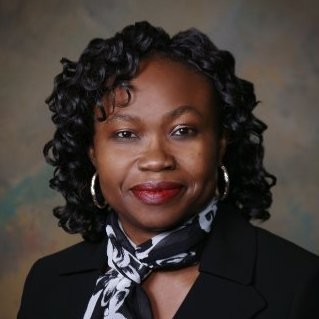
*Professor Ofodile is a UN Expert, a renowned law professor and an award-winning author. Ofodile won the 2009 Human Rights Essay Award for her paper ‘The Universal Declaration of Human Rights and the African Child Today: Progress or Problems?’