Global Issues
Doctors, Algorithms, and Nobody Liable: The Global Legal Fraud of Medical AI -By Fransiscus Nanga Roka
It was not the intervention of AI that scandalised medicine. The scandal is that law has quietly given way as corporations, hospitals and governments construct a system with the explicit intent of channeling benefit up while directing responsibility nowhere at all. We want to know who is responsible if a doctor hurts a patient. When a hospital goes wrong, we look for blame. When the injury is mediated by an algorithm, however, philosophy and technique suddenly become inconveniently elusive.

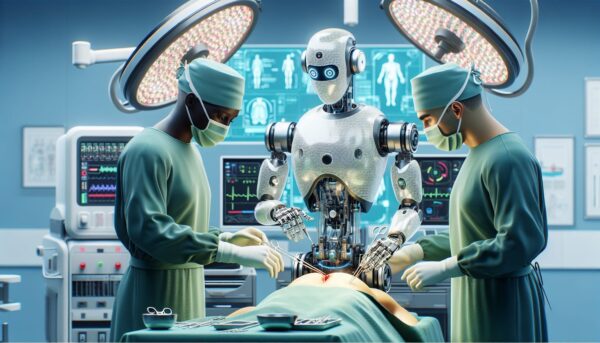
The medical profession around the world has adopted AI with gold-rush zeal and about as much legal maturity as a kid playing with firecrackers. And now AI is entering diagnosis, triage, imaging medical records and patient data systems; under the banner of efficiency: more innovation equal with better health care modernaize. Yet that slick rhetoric hides a scandal that too few governments are prepared to face: as soon as medical AI does harm, no chain of responsibility is clear, the legal remedy often incoherent and cross-border accountability rarely serious. This is not a regulatory gap. It is a legal fraud.
It all starts with the myth of neutrality. AI in medicine is sold to us as objective, data-driven and less likely than human judgment. But no algorithm comes down from the clouds. Corporations create them, train the systems on biased data sets, influence what exactly they do (or don’t) understand by implicit assumptions and set deploy inside health care structures that have already been damaged through inequality. When those systems misfire there is a story that patients are told: The machine only “augmented” the clinician; The clinic simply used an algorithm as one of many tools at their disposal; The hospital purchased state approved software, and so forth each actor removed from culpability for producing any clinical truth in favor of probabilistic output. Everyone touched the decision. Nobody owns the harm.
This is the central obscenity with medical AI governance. Liability vanishes exactly where power converges. The software developer hides behind intellectual property and contractual disclaimers. Procurement policies run amok will mask the harm caused by a hospital. That burden of ethical blame is thrown on the provider, who now has to grapple with a decision he or she had little hand in designing and cannot interrogate fully. And the patient the only fish in the pipeline who did not select that architecture, write that code or take a profit on its rollout must be the one to suck up those risks. That is not innovation. That is organized irresponsibility.
The language used to justify this model is (literally) engineered deception. We are all made to believe of course that this is a “decision-support tool” as if that’s somehow supposed to be more neutralizing than using the word AI. But in overstretched hospitals, with time pressures or structural incentives for speed and standardisation of care, decision support easily becomes a case where decisions are dominated. Indeed, the clinician technically retains a final say in treatment course but institutional pressures often conspire to push for deference to algorithmic outputs. A machine-generated recommendation that is entered into the record does not sit quietly. It exerts authority. It shapes treatment. It narrows dissent. It disciplines judgment.
This is the reason behind, how risky a legal vacuum may be in cross-border contexts. Why is this paralysis happening: Medical AIs are built in one country, trained on data from another, hosted on servers in a third and shipped off to patients sitting safely inside of their fourth. What law will apply when harm is wrought? Which regulator has jurisdiction? Who can demand that you disclose the model architecture, training biases, audit trail or update history for your models? Which patient knowledgeable enough to understand the chain of transnational code, vendors cloud infrastructure and hospitals & subcontractors can realistically challenge an injury? In far too many instances, the answer is blunt in its simplicity: no one can not effectively.
Which renders this global order one we cannot abide. Out of fear to lose out on the technology, financial and geopolitical fields many states are competing in promoting AI for medicine. Health ministries want efficiency. Hospitals want automation. Investors want scale. Technology companies are trying to seize the market for politicians can slow them. Legality goes out the window in this stampede, and patient protection becomes a ceremonial slogan. The outcome is a model of global innovation, instantaneous deployment and evanescent accountability.
Advocates for fast adoption argue that regulators will prevent lifesaving tools from coming into use. This is the oldest trick in your deregulatory playbook stigmatizing due diligence by weaponizing urgency. Certainly there can be products in the therapeutic areas of medical AI. In some contexts, it will enhance imaging analysis by flagging anomalies and optimizing workflows, while widening access. But there is no blanket exemption from law for useful technology. Rather, the More Clinically Meaningful is Tool then Greater Must Be Accountability. Stethoscopes would not require an audit trail. An opaque algorithm affecting the diagnosis, for sure.
What is most sinister though, is how consent has been emptied. Patients find themselves in a nebulous position to know when AI has impacted their care, how their data flows across borders and where patients even have recourse if the system is erred. The illusion of informed consent remains on the paper as the real architecture of digital medicine becomes ever more opaque. And we have constructed a world in which patients are ever more subject to judgement, sorting, surveillance and medical manipulation by unseen systems they cannot contest or legally resist. That is not modern medicine. It is automated asymmetry.
Rather than ban medical AI, we need to force it out of its legal adolescence. Binding liability rules from states, external audit requirements (from experts who are independent), human review required for every application using AI that can make or assist in clinical decisions, cross-border jurisdictional agreements addressing what happens if there is a problem; mandatory explainability and measures to ensure patient rights over data use/contestation should be implemented. Hospitals should not be able to use black-box systems for high-stakes treatment while avoiding responsibility. Do not let vendors hide behind the fog of complexity when their products are a matter of life and death. And regulators should stop acting as PR managers of tech determinism.
It was not the intervention of AI that scandalised medicine. The scandal is that law has quietly given way as corporations, hospitals and governments construct a system with the explicit intent of channeling benefit up while directing responsibility nowhere at all. We want to know who is responsible if a doctor hurts a patient. When a hospital goes wrong, we look for blame. When the injury is mediated by an algorithm, however, philosophy and technique suddenly become inconveniently elusive.
That obscurity is not accidental. It is protection for power. Medical AI will not democratize healthcare except when it is broken. It will globalize unanswerable harm.
Fransiscus Nanga Roka
Faculty of Law University 17 August 1945 Surabaya Indonesia