Forgotten Dairies
Ebola in Congo Must Be Stopped Before Africa Pays the Price -By Fransiscus Nanga Roka
Ebola in Congo Must Be Stopped Before Africa Pays the Price -By Fransiscus Nanga Roka

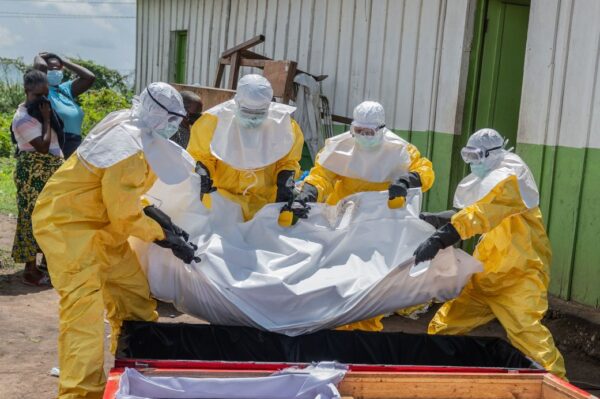
The return of Ebola in the Democratic Republic of Congo came back May 2026 is not just a local health scare. That is a political cautionary, governance diagnostics and continental warning. Either the outbreak is treated as yet another Congolese emergency and Africa, once again, pays to shield a more developed world from illnesses it has long suffered labouring under poorly resourced areas of health system with limited access to even basic care or not meaning in delay after malabariously failed co-option.
This is a worn path for the world. There’s a new Ebola outbreak in Central or West Africa, officials turn to the cameras and ‘humanitarian’ language pours forth across broadcast media as global shutters creak open while literally hushing collaboration. All of that until a virus mutates faster than the bureaucracy created to apprehend it. The price, by the time a serious response is forthcoming from around the world will have been counted in graves, fear and regional destabilisation.
Congo carries a cruel burden. It is the landscape in which the world relearns Ebola, controls Ebola and pledges to learn from Ebola but never learns enough. That is not just unfortunate. It is scandalous.
Let me emphasize again, Congo should not take the blame for being at the center of multiple Ebola outbreaks over time. The great scandal is the structural conditions that render outbreaks so difficult to control: a lifetime of insecurity, underfunded surveillance systems, distrust in public institutions and infrastructure built for fragility more than resilience. Ebola does not exist in a vacuum. It throbs on in peddling political, institutional and international weakness.
And that vulnerability has reach far past the borders of Congo. The continent of Africa in 2026 is stronger integrated than luxury outbreaks vintage Population mobility coupled with porous borders, urban vulnerability and uneven emergency preparedness conditions provides the breeding ground in which a local outbreak can rapidly escalate into regional risk. This is a fantasy that no virus respects, let alone any government who thinks this only concerns Congo.
We need to do much more than send out emergency teams after panic’s already started if we want to stop Ebola. Meaning prompt casefinding, contact tracing and isolation capacity; community based risk communication; safe burials; rapid laboratory confirmation and ring vaccination if admissible. However, technical tools will not suffice. Community mistrust in the arrival of masked men, uniform or plain clothed soldiers and vehicles with written government logos can cause an outbreak to fail whatever one does. A place where the state is either absent, feared or discredited cannot sustain public health.
And that is why the answer to Ebola in Congo has to be as much political as it is medical. This outbreak is not a remote humanitarian episode, it ought to be treated as a continental security issue by governments across Africa. We must bolster surveillance on our borders in a new effort to avoid an act of folly. Such regional health coordination should happen before cases emerge across frontiers, rather than in reaction to them. It is not charity, it is prudent: investment in local health workers and clinics with locally based credibility. It is your first line of defence against the cross-border spread.
We must move faster than the virus and louder than complacency; African Union, Africa CDC & neighbouring states! Continuous preparedness is the frontline: it cannot be a ceremonial phrase to repeat after every outbreak and cross-off before another. Stacking weapons, watchful patterns of disentanglements at happenstance and training staff for crises should have been outbuilt in like way above ground systems on outreaching authorities interreigning. If they aren’t, then Ebola isn’t the problem. The problem is in surprise because this surprise is the result of a circle on neglect.
The international community should face stricter scrutiny. Except when African outbreaks threaten international travel or cross northern borders, wealthy states and global institutions talk of “global health security” but behave as if they care about them more urgently. That is not solidarity. It is selfishness masquerading as humanitarianism.
The Ebola outbreak in Congo May 2026 should compel a brutally frank conclusion: Africa is still too vulnerable because the world continues to accept an asymmetrical system of health protection urgency for some, delay for others. If Ebola is not swiftly stomped out in Congo it could go beyond the pangs of one nation. They could reveal a continent wide susceptibility and one more instance of preventable failure.
It has a simple lesson; the consequences are harsh. End Ebola where it starts, swiftly and seriously scale up support to Congo build a response rooted in trust not theatrics. It won’t be because the virus was too powerful, if Africa ends up paying the price for this outbreak. It will be for the sheer cowardliness, one more horrendous response.
Fransiscus Nanga Roka
Faculty of Law University 17 August 1945 Surabaya Indonesia