National Issues
Economic Hardship Drives Nigeria and Africa’s Youth Into Survival Migration, Seeking Dignity Amid Xenophobia in South Africa -By Daniel Nduka Okonkwo
Groups like Operation Dudula have intensified campaigns against undocumented migrants, calling for mass deportations and restricting access to public services. These actions reflect deeper structural issues rooted in the legacy of apartheid, a system that entrenched inequality and economic exclusion. Although apartheid officially ended in 1994 with the election of Nelson Mandela, its economic imbalances persist, leaving South Africa among the most unequal societies globally.


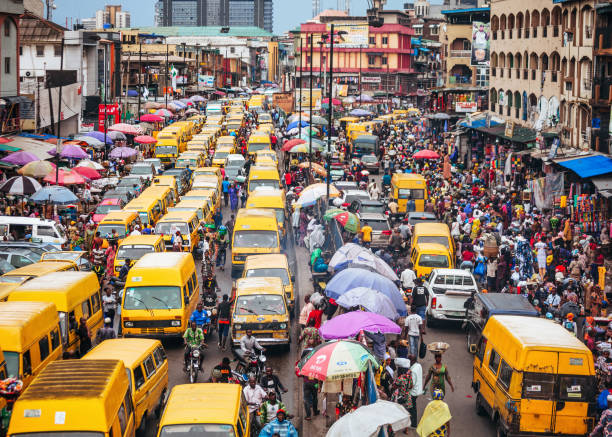
A restless generation of African youth is rewriting the meaning of movement, not as an act of escape, but as a bold declaration of survival and ambition. From crowded urban streets to the conflict-scarred regions of the Horn of Africa, millions are crossing borders in search of dignity, opportunity, and a future their home economies have failed to provide. This is not migration by choice alone; it is migration shaped by necessity, driven by unemployment, inequality, and instability. Yet within this movement lies a powerful narrative, one of courage, resilience, and a generation determined to defy limitation and reclaim its destiny.
Across Nigeria and much of the continent, persistent high unemployment and deepening poverty continue to push young people outward. For many, the promise of better wages and employment opportunities in relatively stronger regional economies outweighs the risks of displacement. Informal cross-border trade has also become a lifeline, with thousands navigating porous borders daily to access larger markets and sustain livelihoods that are no longer viable at home.
Beyond economic pressures, the search for stability remains a defining force. Armed conflicts, political persecution, and state repression in countries such as Nigeria, Ghana, Somalia, Sudan, and the Democratic Republic of Congo have triggered mass displacement, forcing millions into uncertain futures. Nations like Uganda have become critical refuge points, hosting large populations of displaced persons fleeing violence and insecurity. At the same time, Africa’s demographic reality, where nearly 60 percent of the population is under 25, continues to strain already limited access to jobs, education, and essential services, further accelerating migration.
The implementation of the African Continental Free Trade Agreement has begun to reshape mobility across the continent, offering new economic pathways and encouraging movement toward regions with expanding trade opportunities. However, stark regional inequalities persist, limiting the agreement’s full potential and leaving many young Africans with few viable options at home.
Despite growing hostility toward migrants, South Africa remains a key destination, largely due to its comparatively stronger economy. For many African migrants, however, arrival does not guarantee safety or opportunity. Instead, they are often met with xenophobic violence and social exclusion. In 2026, provinces such as Gauteng and KwaZulu-Natal have witnessed renewed waves of anti-immigrant attacks, with foreign-owned businesses looted and burned amid rising tensions.
Groups like Operation Dudula have intensified campaigns against undocumented migrants, calling for mass deportations and restricting access to public services. These actions reflect deeper structural issues rooted in the legacy of apartheid, a system that entrenched inequality and economic exclusion. Although apartheid officially ended in 1994 with the election of Nelson Mandela, its economic imbalances persist, leaving South Africa among the most unequal societies globally.
High unemployment rates, particularly among Black South Africans, have intensified competition for scarce resources, fueling resentment toward migrants who are often scapegoated for broader systemic failures. This tension has given rise to what many now describe as “Afrophobia,” a troubling phenomenon where African nationals target fellow Africans in a cycle of blame and violence.
Historically, migration within Southern Africa was shaped by labor systems that moved workers across borders for mining and agriculture. These routes remain active today, reinforcing patterns of mobility even as conditions evolve. For migrants from countries like Zimbabwe, the journey has become a form of survival migration, driven by overlapping economic collapse and insecurity at home.
Yet, the story of African migration in 2026 is not defined by hardship alone. It is equally a story of resilience and determination. Across borders, young Africans are building networks, creating businesses, and redefining identity in unfamiliar environments. Whether through entrepreneurship, education, or informal trade, they continue to assert agency in the face of adversity.
This generation stands at a critical junction. The challenges are undeniable, but so too is the potential. The future of Africa will not be shaped solely by policy or external intervention, but by the ingenuity and resolve of its youth. Migration, in this context, becomes more than movement; it becomes a statement of possibility.
For young Nigerians who are forced to flee Nigeria because of insecurity, killings, hardship, and fear of kidnapping, and for African youths more broadly, the message is clear: the journey may begin in struggle, but it does not end there. Within this wave of movement lies the power to transform not only individual lives, but the trajectory of an entire continent. The dream is not merely to escape hardship, but to build an Africa where migration is driven by ambition, not survival, where dignity is not sought beyond borders, but secured within them.
In the end, what has Nigerian leadership done to secure the future and the pride of the youths they claim are the leaders of tomorrow?
Daniel Nduka Okonkwo is a Nigerian investigative journalist, publisher of Profiles International Human Rights Advocate, and policy analyst whose work focuses on governance, institutional accountability, and political power. He is also a human rights activist, human rights advocate, and human rights journalist. His reporting and analysis have appeared in Sahara Reporters, African Defence Forum, Daily Intel Newspapers, Opinion Nigeria, African Angle, and other international media platforms. He writes from Nigeria and can be reached at dan.okonkwo.73@gmail.com.