
Forgotten Dairies
Insecurity Crisis in Nigeria: Beyond the Gun, Towards Better Governance -By Dr Olaleke Alao
The problem in Nigeria is then greater than a war of insurgency, banditry and kidnaps. It is about restoring the capacity of the State, re-building the trust of citizens in public institutions, and building a society where all Nigerians irrespective of their ethnic, religious, and regional backgrounds can live in peace and safety to pursue their dreams.

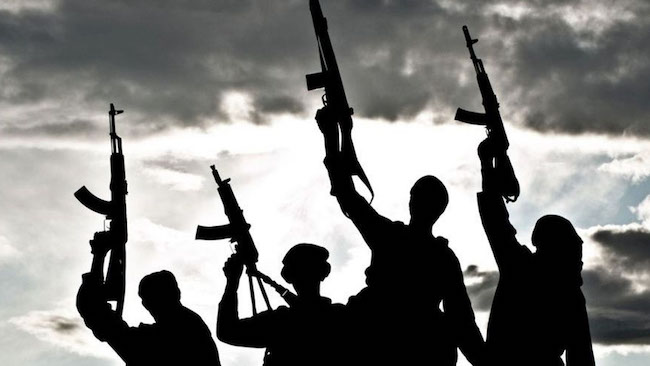
No problem in the contemporary world can pose a larger threat to the future in Nigeria than insecurity. The problem was initially area-based, insurgency in the North-East, communal conflicts in the Middle Belt and militancy in the Niger Delta but has now expanded to become a national problem affecting all parts of the federation. Safety has become a major problem in Nigeria, as banditry in the North-West has become the norm and kidnapping and violent offences have increased in the South-West regions. International security observers and domestic security agencies have all recently found that terrorist incidents, banditry, kidnapping and communal violence have continued to cost the lives and livelihoods of many people, at a very high price. Many people have lost their lives, millions have become homeless, farms have been left behind, schools have been closed, businesses have been affected, and investor confidence has been damaged. Although the statistics differ from agency to agency, there is a clear picture: insecurity is one of the most critical crises in Nigeria today.
However, criminality and military operations are not the only lenses through which the crisis can be viewed. Violence as we have it today is often a result of the governance failures, that have been entrenched over decades. The security challenges in Nigeria are multi-faceted and multi-dimensional. Although military efforts have been ongoing in the North-East, factions of Boko Haram and the Islamic State West Africa Province (ISWAP) are still taking advantage of rough terrain and ungoverned areas. Security forces in Nigeria have had some notable successes in the past, such as recapturing areas previously held by the insurgents and weakening their ability, and the demise of some key commanders. But the continued attacks prove that military victories have failed to bring long-term peace.
The threat in the North-West and parts of the North-Central region is different but equally at risk. The kidnapping business has become a very profitable criminal business for armed bandit groups. Communities live in constant fear of people being kidnapped, extortion and violent attacks. In certain regions, illegal mining activities have emerged as an additional source of income for organised crime groups, paving the way for an alarming overlap between criminality, arms trade and insecurity. There are still farmer-herder clashes in some states. Typically, these conflicts are framed in ethnic terms, but these are often more about competition over access to land, water, grazing routes, and less effective conflict-resolution systems. These pressures are exacerbated by growth, desertification, climate change and the reduction of natural resources. In addition, criminal elements have also entered into both farming and pastoral communities further aggravating peaceful co-existence.
The South-West, which has always been regarded as one of the relatively safe places in Nigeria, is no exception to these developments. An increase in high way kidnappings, crimes committed in forest reserves and sporadic school kidnappings have created a high level of concern among the public. Insecurity also seeped into major cities across the country, many of which are now feeling the impacts. The immediate drivers for insecurity are fairly apparent. Porous borders aid arms and fighters to move across the Sahel. The intelligence gathering in the country is weak, making it difficult to stop attacks from happening. Inter-agency coordination issues may hinder effective responses. The ransom payment, which is lucrative, has created a criminal economy that in turn provides an incentive to ransom payments.
Many rural communities have had little state presence in them for decades. In many areas of the country basic infrastructure, quality education, health-care, agricultural support, and economic opportunities are still limited. Those who perceive that they are not being supported by public services are more likely to be recruited by violent networks, criminal groups and extremist organisations. Issues of youth unemployment and underemployment continue to be a major concern. Millions of young Nigerians have great potentials but are not afforded adequate opportunities for economic engagement. This is not an issue of any particular region; it is actually a problem that is prevalent across the country resulting in frustration and social unrest.
Educational crisis needs to be taken up too. There are millions of children who are not in the formal educational system in the country. Many of these children are part of the Almajiri system whose vulnerability is not due to religious education per se, but due to chronic neglect, poverty and weak social protection. There is a need for inclusion in all its forms to be a key component of any longer-term security strategy.
The security initiatives are also marred by corruption. Training, intelligence, welfare and equipment resources do not always result in increased operational capability. If citizens feel that their security is being addressed, not solved, then lost of public confidence.
In the political landscape in Nigeria, there are actors who have used ethnic, religious and regional feelings for short-term political ends. This undermines the unity of the nation and diverts focus from the problem of governance. Analysis of security issues is often framed within an ethnic or sectional narrative, which makes it harder to make objective assessments.
It is not to take anything away from the role of identity in Nigerian politics. Resentment can arise due to a feeling of lack of representation and unequal resource distribution, and from a sense of marginalisation. The South-East, the Niger Delta and the Middle Belt are areas where the grievance over governance issues can overlap with identity politics, as evidenced in separatist movements, tensions over pastoralism, and previous grievances. But to say that it is only an ethnic conflict would be a mistake. Insecurity is the perils of all Nigerians irrespective of their ethnic, religious and regional background. However, the real problem is not between communities, it is between good governance and bad governance.
Solving the crisis, then, calls for a holistic approach that goes beyond military action.
Firstly, Nigeria needs to change its security structure. The issue of state police must be taken on board. Advocates state that local policing can enhance the collection of available information, response time and accountability. Feedback from regional security activities like Amotekun indicate that community-based strategies can supplement federal strategies.
However, there are concerns of potential abuse by state governments, nonetheless.
Constitutional protection, autonomous supervision bodies, professional recruitment requirements and robust human rights protection are therefore necessary to complement state police systems. The objective should be to establish a more responsive and coordinated security framework, rather than to supplant federal security institutions.
Second, the issue of intelligence reform is one that should be a national priority. If the security system works well, it is able to ward off attacks before they even happen. Investments in these technologies such as surveillance, data analysis, biometric identification systems, drones, communications intelligence and early-warning networks can make a substantial impact on operations. Just as important is enhancing the flow of information between agencies that are often siloed.
Thirdly, Nigeria needs to beef up the justice institutions. Arresting suspects is not the end of the story. Swift investigations, efficient prosecution, witness protection and accountability of the judiciary are required to hold the perpetrators to account. One of the greatest enablers of insecurity is impunity.
Fourth, there is a need to pay more attention to the local government administration. Local governments are the most local form of government in many rural communities. However, many councils are not organisationally able, resourced, or empowered to effectively respond to local challenges. Local governance can be enhanced to deliver better services, prevent conflicts and engage with communities.
Fifth, there is a need for the economic and social interventions to accompany the security interventions. Criminal networks thrive when conditions are right, such as rural poverty and unemployment, and lack of youth labour market opportunities. Targeted poverty reduction and agricultural development measures can help mitigate those conditions. Resource-based conflicts can also be lessened by implementing climate-smart agriculture and good land-management practices.
Sixth, there is need for more transparency and accountability in security financing. Nigeria has invested significantly in security, but individuals frequently feel that they are not getting a proportionate benefit. A clear security funding mechanism, overseen by legislative scrutiny and free from audit, will contribute to enhancing public trust and value for money.
Finally, cooperation at a regional level is still a must. Both the arms trade and cross-border criminal activity, and irregular migration are all direct consequences of the instability in the Sahel that affects Nigeria. Increased efforts in strengthening border security and intelligence sharing with neighbouring countries will be essential to counter these transnational threats.
Insecurity crisis in Nigeria is not natural and cannot be impossible to overcome. It is a result of many failures: governance, institutional, economic, sometimes political. The positive side is that such issues can be solved with purposeful policy decisions and long-term leadership. When people are afraid of the roads they travel, of farms they till, of the markets they frequent, and of the schools they send their children to, no nation can be prosperous. Security does not just mean the lack of violence, it means the presence of effective institutions, economic opportunities, justice and public trust.
The problem in Nigeria is then greater than a war of insurgency, banditry and kidnaps. It is about restoring the capacity of the State, re-building the trust of citizens in public institutions, and building a society where all Nigerians irrespective of their ethnic, religious, and regional backgrounds can live in peace and safety to pursue their dreams.
This is hard, but possible. The only other option is more bloodshed, economic downturn, and greater division, and the country can no longer afford it.
Dr Olaleke Alao
Secretary, Centre for Convention on Democratic Integrity (CCDI), Maryland, USA






















You must be logged in to post a comment Login