
Forgotten Dairies
Dìbò k’ó se’bẹ̀ and the Raw Reality of Politics – (1) -By Abiodun KOMOLAFE
Dìbò k’ó se’bẹ̀ is a temporal trap. It forces the voter to live entirely in the immediate present – the empty stomach – amputating their ability to conceive of a future. By keeping the populace locked in a state of perpetual survival, the elite insult our collective intelligence, ensuring that no citizen has the luxury of long-term planning, organized action, or generational hope.


The current state of what we call “politics” in Nigeria throws one back in time. One is reminded of Nigeria if, after decades, someone goes back to read the treatise by the revolutionist and founder of the now-rested Union of Soviet Socialist Republics (USSR), Vladimir Ilyich Lenin.
In his 1902 famous handbook of political activism, What is to be Done?, Lenin made a puzzling point: he argued, strangely at first reading, that “revolutions do not occur during times of mass, grinding poverty; they occur during times of relatively rising prosperity.” To justify this seemingly contentious position, he looked back into history to present examples backed by data.
The Nigerian political elite seem to have misinterpreted Lenin’s position entirely. From “Dìbò k’ó se’bẹ̀” (Vote and be sure to cook soup), to “Aṣáàjẹun” – those who live for the next meal – the prevailing playbook assumes that mass poverty is a sufficient deterrence against revolution.
To all intents and purposes, Dìbò k’ó se’bẹ̀ is a national condition, not a party problem. From the local government chairman to the governor to Abuja, the mantra is: “Vote and make soup.” No policy. No manifesto. Just rice, garri, empty noise, wattages of lies, and N5,000. Obviously, the goal is to keep the majority in bondage.
As Lenin observed, only those with at least a half-filled stomach possess the physical and mental fitness to sustain large-scale trouble. Changing this mindset among the Nigerian political elite is the defining political issue of our time. Without such a shift, the country will only sink deeper into a sea of disenchantment and hopelessness – the very ingredients required to do insecurity a favour. We are entirely left uncompetitive in global development – from human capital to production – precisely because of this.
Dìbò k’ó se’bẹ̀ is a temporal trap. It forces the voter to live entirely in the immediate present – the empty stomach – amputating their ability to conceive of a future. By keeping the populace locked in a state of perpetual survival, the elite insult our collective intelligence, ensuring that no citizen has the luxury of long-term planning, organized action, or generational hope.
Dìbò k’ó se’bẹ̀ is not just a political problem, it is a bad club to which the Yoruba identity has been chained. What should be the ọmọlúàbí ethos of service and communal responsibility has been twisted into a scheme for greedy accumulation. By making scarcity a way of life, this transactional creed’s purveyors hollow out the idea of citizenship, thereby reducing the public to a group of desperate supplicants.
This turns our political sphere into a marketplace where the only currency is the belly, not policy or conviction. It also turns governance into a fake show, tethering the masses to the power-holder, not by the promise of development, but by the hunger for the next meal. It is not just bad economics, it is a calculated strategy of demographic pruning.
In a Dìbò k’ó se’bẹ̀ ecosystem, “a farm of consumers”, not “a nation of citizens” is built. The system ensures loyalty by reducing democratic relationships to a crude barter between master and servant. In this setup, the political actor plays the “master of the feast” – a gatekeeper who doles out state resources as personal favours to demand total loyalty. This process strips citizens of their dignity, forcing them to play the beggar at the table of the powerful. Here, the democratic ideal of the “stakeholder” is cast aside, replaced by a populace whose right to participate depends on surrendering their independence to the whims of the provider. Inevitably, this turns our democracy into a cycle of survival rather than true progress.
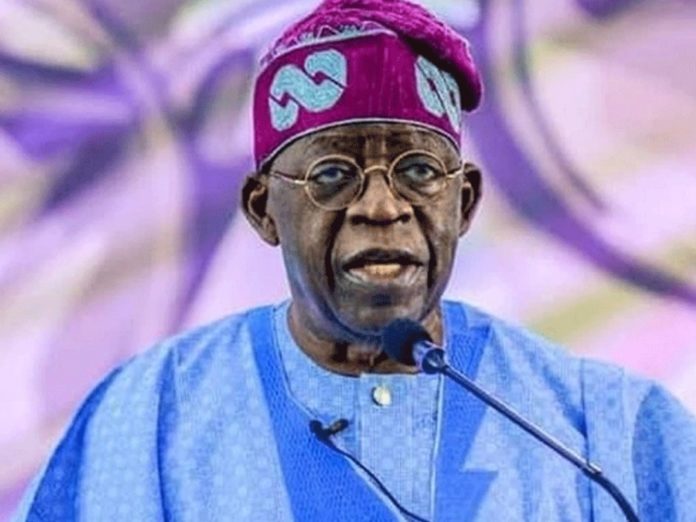
The dependency syndrome and the patron-client relationships induced within this context, coupled with our quasi-federalist distortions, cannot propel the country towards an economy of sustainable production – a shift so vitally needed to lift tens of millions out of poverty. Thankfully, this dilemma is being sensibly addressed by the devolution policies laudably initiated by the Bola Ahmed Tinubu administration. However, it remains a long way to uhuru. It will be a difficult path, especially given the necessity to wean the political elite off a dependency model that has served their interests for so long.
Dìbò k’ó se’bẹ̀ is a system where intercession and service are forgotten the moment a meal is secured. This mindset has birthed a brand of politics that is devoid of philosophical thrust or ideological depth. It is the root cause of political activity stripped of the dividends of democracy and, more disturbingly, an economic paradigm rooted in jobless growth. Without doubt, this failure of vision has led the country into a bind. A change is necessary, if only for the self-preservation of the political elite itself.
“Stomach infrastructure” is no mere transaction; it is the weaponisation of hunger, forcing a self-destructive trade. It mathematizes responsibility even as it myonises the resources and pillages the rewards with terrifying velocity. Amidst the fury of blaring megaphones and the sensory chaos of the campaign ground, the crowd melodiously chants praises of “Baba rere, bàbá kẹ̀” (their benevolent father and supreme provider), anointing the highest bidder all for a mess of pottage.
Like Esau, blinded by the immediate pangs of starvation, the modern followers mortgage their civic birthright – dignity, security, and collective future – for the fleeting pottage. With a tired heart, the follower keeps forgiving. He strains his muscles with exhausting regularity, only to return to his own vomit with a ‘penitent’ heart. There he settles in the shade, his belly empty and his pride wounded.
Within this cycle of exploitation, the politician poses as a seasonal provider to secure a permanent hold on power. This, of course, lays bare a classic political messianic complex – the tragic comedy of a hungry population forced to sin for their supper. But again, if returning to the “vomit” is a rational choice riddled with questions and speculations, at what point does the cost of the pottage outweigh the birthright? Even if the follower were to flee with every ounce of speed his species is famous for, would that steady the ship between his opportunities and probabilities? Indeed, that is the messy reality of the world we live in!
Regional differences are a reality in any situation, and solutions will naturally vary across what we in Nigeria call geopolitical zones. For instance, the Southwest should revitalize the cooperative system that once granted the erstwhile Western Region a solid competitive advantage. These cooperatives, working in tandem with the sadly now-defunct Western Region Cooperative Bank, made a decisive intercession in revitalizing rural areas and fostering an urban lower middle class. This spurred an increase in the region’s purchasing power, enabling the Action Group government, led by the illustrious Chief Obafemi Awolowo, to sustain a minimum wage higher than those of the Eastern and Northern Regions.
The minimum wage in the Western Region was decisive in attracting investment, as increased consumer purchasing power stimulated the local manufacturing industry. Other regions were simply forced to play catch-up. If the political elite are not too intoxicated by the easy, delusional path of “stomach infrastructure”, they owe it to the people of the Southwest to return to the model of the 1950s and 1960s – a framework that proved its worth by elevating development and creating generational wealth.
If we may ask: of those vying for offices in our states today, how many would have been entrusted to run a region in 1952? Unfortunately, ours has devolved into a beggarly economy, where the political establishment now prides itself on “stomach infrastructure” as if that were a feat worthy of a Nobel Prize.
- To be concluded.
Email: ijebujesa@yahoo.co.uk.
Mobile: 08033614419 SMS only.















You must be logged in to post a comment Login