
Forgotten Dairies
The Veto of Terror: How School Banditry is Erasing Nigeria’s Future -By Umar Abdullahi Abba-Aji
If the government continues to rely on routine expressions of sympathy rather than decisive security reforms, it will effectively allow armed groups to exercise a veto over the constitutional right to education. Protecting schools must become a national security priority supported by concrete policies, adequate funding, and localized protection strategies. A nation that cannot defend its classrooms risks surrendering its future, one school at a time.

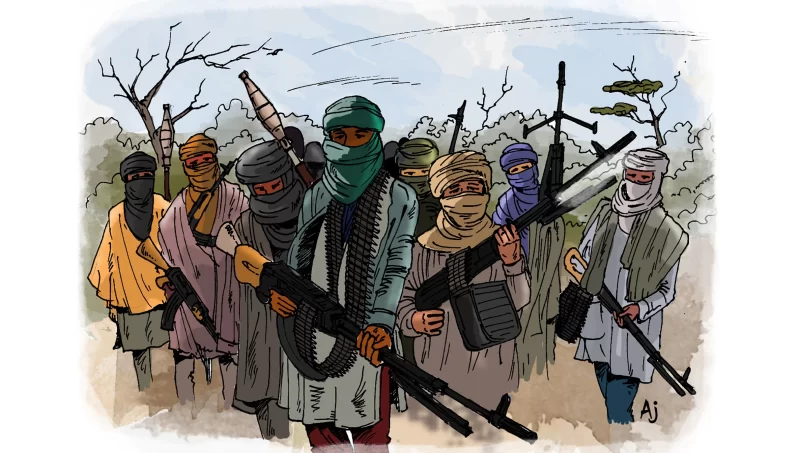
The school bell was once a universal symbol of routine, structure, and hope. It signaled the beginning of learning and the promise of a better future. Today, across many communities in Nigeria, that same symbol carries a different meaning. For countless parents, teachers, and pupils, schools have become places of fear rather than centers of opportunity, as armed bandits continue to target educational institutions with alarming frequency.
What was once considered an exceptional tragedy has gradually evolved into a recurring national emergency. The abduction of the Chibok schoolgirls in 2014 shocked the world and exposed the vulnerability of schools to terrorist attacks. More than a decade later, school abductions are no longer isolated incidents. They have become a persistent feature of Nigeria’s security landscape, reflecting a dangerous erosion of state authority and public confidence.
The disturbing spread of this threat became evident on May 15, 2026, when attacks on schools occurred in different regions of the country on the same day. In Borno State, dozens of schoolchildren were reportedly abducted during school hours, while in Oyo State, pupils and teachers were similarly taken from multiple schools. These incidents demonstrate that the tactics once associated primarily with insurgency in the Northeast have now spread beyond their original geographical boundaries.
The significance of these attacks extends far beyond the immediate victims involved. When criminals can invade schools, abduct children, and escape with little resistance, the issue ceases to be merely a security challenge. It becomes evidence of a weakening social contract in which citizens can no longer rely on the state to provide basic protection for life and education.
The Nigerian Constitution clearly states that the security and welfare of the people shall be the primary purpose of government. Likewise, the Universal Basic Education framework guarantees access to education for every child. Yet these guarantees lose practical meaning when schools cannot provide safety. Education cannot be compulsory where survival itself is uncertain.
The result is a growing wave of psychological de-enrollment across affected communities. Parents increasingly face an impossible choice: send their children to school and risk abduction, or keep them at home and sacrifice their educational future. In many cases, fear has become more influential than public policy, forcing families to prioritize immediate safety over long-term opportunity.
The protests organized by members of the National Union of Teachers should therefore be understood as more than professional demonstrations. Their message is simple but powerful: education cannot function under constant threat. When teachers publicly declare that they cannot safely perform their duties, they are exposing a crisis that affects the future of the entire nation.
Beyond the classroom, the consequences ripple through entire communities. Schools close, teachers relocate, families flee, and economic activities decline. Communities that once viewed education as a pathway to development begin to see it as a source of risk. In such circumstances, criminals gain more than ransom payments; they gain influence over the social and economic direction of affected regions.
If the government continues to rely on routine expressions of sympathy rather than decisive security reforms, it will effectively allow armed groups to exercise a veto over the constitutional right to education. Protecting schools must become a national security priority supported by concrete policies, adequate funding, and localized protection strategies. A nation that cannot defend its classrooms risks surrendering its future, one school at a time.
Umar Abdullahi Abba-Aji
Faculty of Law
University of Maiduguri






















You must be logged in to post a comment Login