Education
Education And Side Hustles: The Grade Versus The Paycheck -By OSEJI Ebubechi Eileen
Side hustles are not the enemy of education. Desperation and poor planning are. The students who win are not the ones who abandon class for cash or abandon cash for class. They are the ones who understand sequence. Get the degree, because it is still the cheapest way to buy long-term options in Nigeria. Use the side hustle to survive the process and to learn how money works. But never let the side job pay for today at the price of tomorrow.

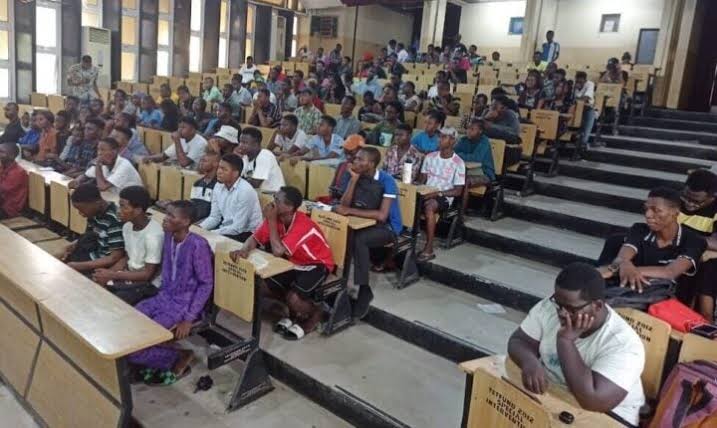
The question for many Nigerian undergraduates is no longer whether to get a degree. It is whether they can afford to get one without a side hustle. With upkeep allowances shrinking and parents stretched thin, students are running POS stalls in front of hostels, designing flyers on Canva for small businesses, selling thrift clothes on WhatsApp, and tutoring secondary school students after lectures. Education is still the main job. But the side hustle is now the salary that makes the main job possible.
Side hustles keep students in school, and that is the strongest argument for them. A 200 level student at UNILAG who makes 15,000 naira weekly from braiding hair can buy data, print assignments, and pay for transport without calling home. That independence reduces the kind of financial pressure that forces people to drop out or defer semesters. Beyond money, the right side hustle teaches skills that classrooms rarely cover. A student who manages a small thrift page learns inventory, customer service, negotiation, and basic bookkeeping. A campus graphic designer learns deadlines, client revisions, and how to price creative work. These are not abstract “life skills.” They are employable skills that show up on CVs before graduation.
But the cost is real, and it shows up on transcripts. Not all side hustles are equal. A freelance writer who works at night can schedule around classes. A student running a food spot from 7 a.m. to 10 a.m. will miss 8 a.m. lectures consistently. When the business controls the clock, school becomes the side activity. The result is predictable. Assignments are rushed, group projects suffer, and test prep starts the night before. Data from a 2024 informal survey by a student press club at ABU showed that 6 out of 10 students who ran time-bound physical businesses reported a drop in GPA the semester they started. Burnout is common. Juggling lectures, a business, and the pressure to remit money home leaves little room for rest. The body gives out, then the grades do.
The deeper risk is a shift in values. When the alert from a customer hits faster than the reward from a 70 in a test, school starts to feel optional. Some students begin to see lectures as a distraction from money. That mindset is dangerous because the earning power of most student side hustles has a ceiling. A POS kiosk can pay bills today, but it rarely scales into a career without the credential, network, and critical thinking that university is supposed to build. In five years, the student who sacrificed 300 level for daily cash may be stuck, while the one who protected their degree has options.
So the question is not “side hustle or school.” It is “which side hustle, when, and how.” The smart approach is to treat education as the main investment and the side hustle as a support structure, not the other way around. That means choosing work that is asynchronous or campus-based. Content writing, coding gigs, design, tutoring, and digital products can be done after classes and during breaks. It means setting non-negotiables. No skipping tests for deliveries. No accepting jobs during exam week. It also means schools need to adjust. Departments can run practical entrepreneurship clinics, not just theory. Student affairs can create verified campus marketplaces so students do not have to leave school to sell. Timetables can be published early so students can plan work around fixed lectures.
Side hustles are not the enemy of education. Desperation and poor planning are. The students who win are not the ones who abandon class for cash or abandon cash for class. They are the ones who understand sequence. Get the degree, because it is still the cheapest way to buy long-term options in Nigeria. Use the side hustle to survive the process and to learn how money works. But never let the side job pay for today at the price of tomorrow.
If you must choose what suffers when time is tight, let it be the extra order, not the extra credit. The paycheck helps you this semester. The certificate, and the competence behind it, has to help you for life.