Opinion
Eid al-Fitr in Nigeria: When, How, and Why to Celebrate -By Abdulkadir Salaudeen
Let me put it this way: if the crescent is sighted about 2,500 miles (4,023 km) away in Saudi Arabia (not in Nigeria) and Nigeria officially commences or ends Ramadan and celebrates, why shouldn’t it end Ramadan and celebrate if the crescent is sighted in its backyard (Niger), just a few hundred kilometers apart? The geographical contiguity, along with some textual understanding (which I’m space-constrained to discuss), is a strong argument for yesterday’s celebrants.

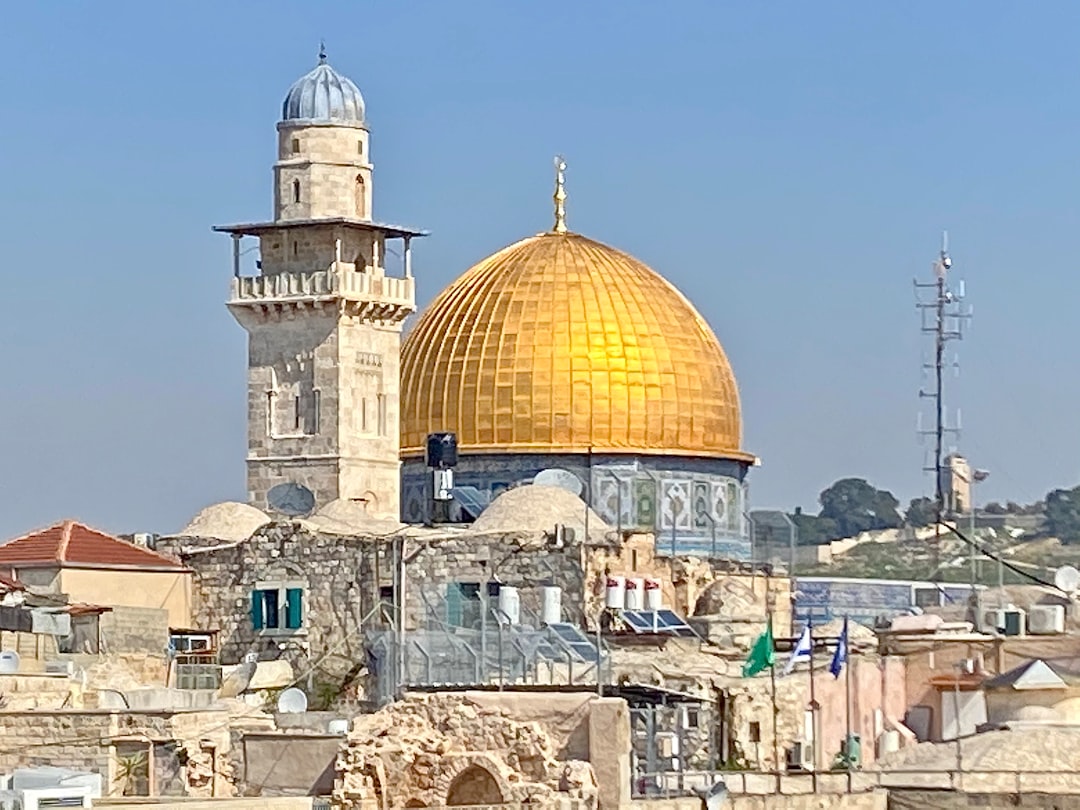
Most countries across the globe are celebrating Eid al-Fitr today, Friday, March 20, 2026. We have reason to thank God. To many, it feels like just yesterday we started, and within a twinkling of an eye, one month has passed. In other words, the days are flying by at the speed of light. But to another category of people, Ramadan is like hell – unbearable, meaningless, and just needs to be over. I will address this shortly.
I intend to discuss three issues reflected in the topic above, starting with “When”. When do Muslims celebrate Eid al-Fitr? It’s simple. The answer isn’t difficult, and even non-Muslims can answer with certainty and accuracy. Muslims celebrate Eid al-Fitr when the crescent moon is sighted. It’s as simple as that!
One can also elaborate further: Muslims celebrate Eid al-Fitr when the crescent is sighted, either on the 29th or 30th day of Ramadan. It’s in this additional information that a seed of controversy was planted – and it was planted over a thousand years ago. The seed has germinated, it has grown, and the fruit of the seed is the jurisprudential controversy that, in my opinion, can’t be resolved.
If we agree it can’t be resolved, it means we’re ready to live in peace and tolerate one another. We can then insist on our differences (because it’s impossible to forget them), but with the mutual understanding that these differences are religiously legitimate. We can then politely agree to disagree and disagree to agree without disparaging each other.
What am I alluding to? I am referring to what many describe as a ‘defiant’ celebration of Eid al-Fitr yesterday (Thursday, March 19, 2026) in Nigeria by Sheikh Musa Lukuwa and his followers in Sokoto State. How could he dare act against the Sultan of Sokoto’s declaration that Eid al-Fitr would be celebrated, in line with Saudi Arabia’s, on Friday? It’s worth noting that the Sultan isn’t only the Sultan of Sokoto; he’s also widely acknowledged as Sarkin Musulmai (Muslims’ spiritual leader) in Nigeria.
Can we say important figures aren’t always valued at home? That’s how some people view Lukuwa’s ‘deviance’. I can’t contest the view that the Sultan and Sheikh Lukuwa, both from Sokoto, aren’t on good terms. But was celebrating Eid al-Fitr yesterday (Thursday) outrageous? I struggled and still struggle to find it outrageous. Though I am celebrating today (Friday) along with the Sultan – that’s to say, I am celebrating with the majority of Nigerian Muslims (and, I should add, majority of Muslims across the globe).
Yet, I don’t see anything nullifying the celebration of those who chose to celebrate yesterday. Only Allah has the ultimate say. We can’t know (because it’s humanly, scientifically, religiously, and philosophically impossible to know) Allah’s position on this until we stand before His Majesty in the Hereafter — if actually one party is wrong and the other is right.
What’s most likely is that neither party is wrong if we truly agree that disagreeing to celebrate Eid al-Fitr on different days among Muslims is a legitimate jurisprudential disagreement (especially if the disagreement is based on textual evidence).
Here, I am not talking about those who prefix when Ramadan starts and ends as if they had had a meeting with Allah where they were assigned as His Majesty’s PAs and spokespersons. For instance, no one can predict with certainty and absolute knowledge that Ramadan will commence on a particular day. This is rivalling Allah with a claim of scholarship. It’s nonsense and a shameless display of crude ignorance.
But when prediction on something that can only be certainly known by Allah is made tentatively, by admitting the limit of human knowledge and couched in probabilistic wordings, this is legitimate – scientific and scholarly. For instance, one can say, based on some astronomical calculations, that Ramadan would likely begin and end on a particular day. This is legitimate.
Back to my argument, those who celebrated Eid al-Fitr yesterday (Thursday) aren’t wrong if the crescent was indeed sighted in Niger, as claimed. From my search (and anyone can verify), Afghanistan, Mali, and Niger OFFICIALLY celebrated Eid al-Fitr yesterday (Thursday). If the crescent is officially announced to have been sighted in these three Muslim-majority states, what should stop Muslims in adjoining states from celebrating?
Let me put it this way: if the crescent is sighted about 2,500 miles (4,023 km) away in Saudi Arabia (not in Nigeria) and Nigeria officially commences or ends Ramadan and celebrates, why shouldn’t it end Ramadan and celebrate if the crescent is sighted in its backyard (Niger), just a few hundred kilometers apart? The geographical contiguity, along with some textual understanding (which I’m space-constrained to discuss), is a strong argument for yesterday’s celebrants.
If we think Lukuwa and his followers’ actions in Sokoto (and other states) fracture Muslim unity and religious harmony, it means we’ve deliberately chosen to narrow our understanding of unity and harmony. If we agree that observing Friday prayers at 1:00 pm in some mosques, 1:30 pm in others, and 2:30 pm in others isn’t a sign of disunity among Muslims, let’s learn to agree that not celebrating Eid al-Fitr on the same day can’t disunite Muslims and isn’t a symptom of disunity.
Besides, what should settle the case is the fact that Ramadan fasting, as legislated by the Law Giver (Allah), is actually to be observed for 29 days. The 30th day of fasting isn’t the primary legislation – it’s circumstantial, conditional upon not sighting the crescent on the 29th day of Ramadan. What’s the issue if Lukuwa and his followers fasted for 29 days and celebrated on the claim that they (or some others) sighted the crescent? I honestly don’t understand why this legitimate disagreement is being problematized — turned to an issue and hyperbolized.
On a lighter note, I heard some Christians online saying it gives them the opportunity to start eating Sallah food from their Muslim friends beginning Thursday (instead of Friday). That’s a healthy joke that always gets my attention and makes me smile.
I have spent much time on ‘when to celebrate’. Now, how do we celebrate Eid al-Fitr or any religious festival in these hard times when many Muslims are suffering in kidnappers’ dens? If they’re aware we are in a festive season, the season means nothing to them. It’s possible many aren’t even in their right senses to be aware.
How will the family and friends of those who lost their lives in Maiduguri a few days ago celebrate Eid al-Fitr? What about those who are seriously injured and can’t distinguish between right and left or day and night? Some don’t even know if they’re alive or dead.
What about the families, wives, and children of soldiers brutally killed during Ramadan? The killings in the concluded month of Ramadan seem like a Muslim genocide – a genocide against Muslims by trigger-happy, bloodthirsty allies of Satan — but no one seems to be talking about it. Even top Muslim government officials, including the the First Man (President) and the First Lady, didn’t see the need to stay home and mourn the victims. They are with King Charles III of Britain for a state visit, dining and wining, while the country burns.
So, why celebrate when insecurity grips Nigeria, making life not only “solitary, poor, and nasty,” but also ” brutish, and short” (apologies to Thomas Hobbes)? We celebrate because it’s a religious rite, and Eid al-Fitr isn’t postponable. If we assume it is postponable, then till when? Unless God intervenes miraculously, when will Nigeria find peace with rulers who see insecurity as the masses’ problem, not theirs?
May God restore peace to Nigeria. We must celebrate, but with mindfulness and compassion. Let’s be easygoing, avoid over-celebrating, and use this period to reach out to those in pain, helping to assuage their suffering so they don’t feel abandoned. Let’s pray for peace and god-fearing leaders.
Eid UL Mubarak. Taqabbalallahu Minna Wa Minkun.
Abdulkadir Salaudeen
salahuddeenabdulkadir@gmail.com