Economy
Government Has a Legal Duty to Provide Cash Transfers and Grants to Poor Citizens, Falana Says -By Daniel Nduka Okonkwo
Against that backdrop, Falana warned that any failure by the Federal Government to adequately fund poverty reduction programmes in the 2026 fiscal year, as required under the National Social Investment Programme Agency (Establishment) Act, 2023, would be challenged in court.

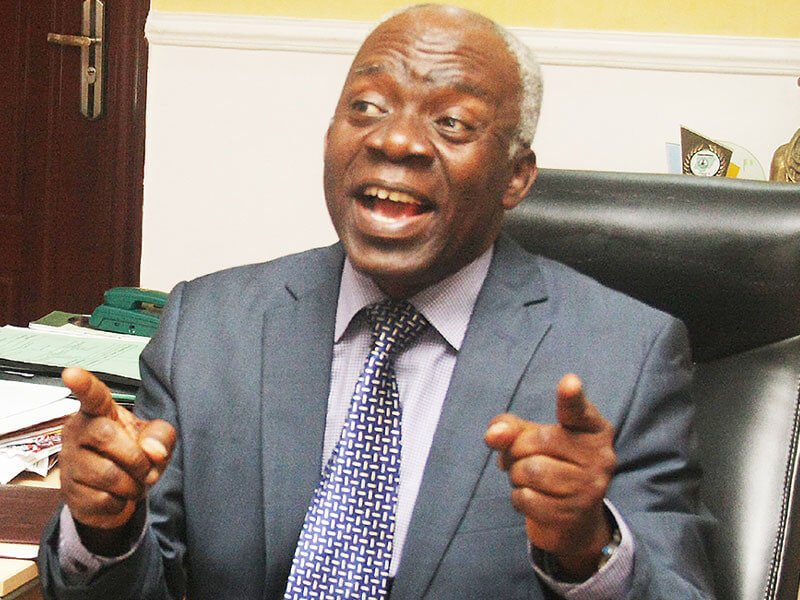
Human rights lawyer and Senior Advocate of Nigeria, has stated that the Federal Government is under a legal obligation, not a discretionary political choice, to provide cash transfers, grants, and other social protection interventions for poor and vulnerable Nigerians under the National Social Investment Programme Agency (Establishment) Act, 2023.
In a statement released on Sunday, Falana said public discourse on poverty alleviation should be guided by the provisions of the law rather than by charity or goodwill.
His remarks follow comments by Nigeria’s First Lady, who recently urged Nigerians not to lose hope despite the country’s economic challenges. She said small-scale businesses such as selling akara, roasting corn, and producing kulikuli require relatively little capital and can provide sustainable livelihoods. According to the First Lady, her empowerment initiatives have focused on providing grants instead of loans to enable beneficiaries to establish small businesses.
However, the remarks have attracted widespread criticism from many Nigerians, who argue that such informal businesses alone cannot address the country’s deepening poverty crisis.
Falana said the debate underscores the need to draw public attention to the National Social Investment Programme Agency (Establishment) Act, 2023, which, he argued, imposes a statutory duty on the Federal Government to reduce poverty and unemployment. The provision of grants to poor and vulnerable citizens is no longer a matter of political discretion, Falana said, adding that it is a legal obligation owed by the government to its citizens rather than an act of charity or generosity.
He explained that the National Social Investment Programme Agency, established under the Act, is mandated to provide support for vulnerable persons, young people, and small business owners through four principal programmes. These are N-Power, a job creation and skills development programme for Nigerians aged 18 to 35; the Conditional Cash Transfer Scheme, which provides direct financial support to the poorest and most vulnerable households; the Government Enterprise and Empowerment Programme, which includes TraderMoni, MarketMoni, and FarmerMoni to support petty traders, market women, and young entrepreneurs; and the National Home-Grown School Feeding Programme, designed to provide free meals for pupils in public schools while improving school enrolment and addressing child hunger.
Falana further noted that the Agency is required to work with State Social Investment Programme Agencies to implement poverty reduction and social protection initiatives across the federation.
He also referred to concerns over the management of the Social Investment Programme during the administration of former President, stating that allegations of widespread fraud prompted the President to forward legislation to the National Assembly seeking to transfer the administration of poverty reduction programmes from the Ministry of Humanitarian Affairs and Poverty Reduction to the Presidency. According to Falana, the proposed amendment is intended to strengthen transparency and improve beneficiary targeting through the National Social Register.
Pending the passage of the National Social Investment Programme Agency Amendment Bill, Falana called on the Ministry of Humanitarian Affairs and Poverty Reduction to regularly account to the public for its activities. He also urged Nigerians to demand periodic reports from State Social Investment Programme Agencies on poverty reduction initiatives within their respective states.
Falana further argued that the National Social Investment Programme Agency (Establishment) Act, 2023, was enacted to give effect to Section 16 of the Constitution of the Federal Republic of Nigeria, which directs the Nigerian State to organise and manage the national economy in a manner that promotes the welfare, freedom, and happiness of all citizens.
Citing official and independent projections, he noted that the National Bureau of Statistics estimates that about 133 million Nigerians live in multidimensional poverty, while PwC Nigeria projects that the figure could rise to approximately 141 million people, around 62 per cent of the country’s population.
Against that backdrop, Falana warned that any failure by the Federal Government to adequately fund poverty reduction programmes in the 2026 fiscal year, as required under the National Social Investment Programme Agency (Establishment) Act, 2023, would be challenged in court.
He disclosed that the Alliance on Surviving COVID-19 and Beyond intends to institute proceedings before the Federal High Court should the government fail to comply with its statutory obligations.
“The refusal of the Federal Government to adequately fund poverty reduction programmes in the 2026 fiscal year, in accordance with the provisions of the National Social Investment Programme Agency (Establishment) Act, 2023, will be challenged before the Federal High Court by the Alliance on Surviving COVID-19 and Beyond,” Falana said.