Forgotten Dairies
Henry Okah’s Fight From Prison to Correct the Court Record After Alleged Filing Block -By Daniel Nduka Okonkwo
Whether the differences identified between the two judgments ultimately provide a basis for any further judicial consideration remains a matter for the appropriate court to determine, based on the arguments and evidence properly placed before it. A separate issue, however, concerns the practical ability of a person serving a lengthy prison sentence to bring a constitutional application before a court without legal representation. That issue raises broader questions about access to justice and the procedural challenges faced by unrepresented prisoners who must navigate court requirements and administrative processes without the assistance of counsel.

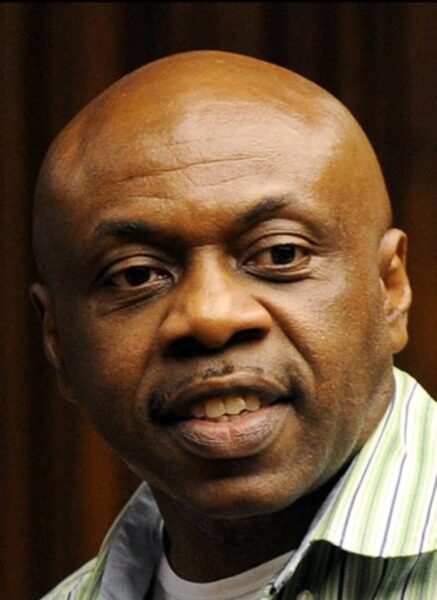
Henry Emomotimi Okah, the Nigerian militant leader serving a long prison sentence in South Africa over the 2010 Abuja and Warri bombings, has taken his fight over the record of his own criminal trial to the Deputy Judge President of the Gauteng Division of the High Court, after court officials twice refused to accept an urgent application he says goes to the heart of why his final appeal was dismissed. Okah, who is incarcerated at Zonderwater Maximum Correctional Centre in Cullinan, Pretoria, is representing himself in the matter, citing his lack of funds to retain a lawyer. In a letter dated 10 August 2026 addressed to Deputy Judge President R. Sutherland, he asks the court to intervene directly and order that his application be accepted for filing and placed before a duty judge as a matter of urgency, invoking both his right of access to court under section 34 of the Constitution and the inherent power of the court under section 173 to protect and regulate its own process.
The application itself seeks to correct what Okah describes as a patent contradiction on the record of case number SS94/11, the trial in which he was convicted on 21 January 2013 of terrorism, conspiracy, and related offences. The dispute traces back to a ruling this court delivered from the bench on 21 November 2012, when it was weighing a defence application to postpone proceedings so that witnesses detained in Nigeria could be secured for trial. According to Okah’s account of that ex tempore ruling, the court remarked that the obstacles involved were almost insurmountable and pointed to a lack of cooperation from the Nigerian government in assisting the court. That ruling was never reduced to a separate written judgment, so Okah says the certified transcript of that day’s proceedings, which he has attached to his application as an annexure, is the only record of what the court actually found.
Okah’s papers lay out in detail why he says securing those witnesses was never realistically possible. He states that Claassen J, the trial judge, had been informed that if the court relocated to Nigeria to take evidence on commission, a Nigerian High Court order would first be required to produce his witnesses, a process that could take six months or longer. To pursue evidence on commission under the International Co-operation in Criminal Matters Act, his counsel would have needed commissioned affidavits from the witnesses, but Nigerian law required their physical presence before a court for that purpose, and Okah says the Nigerian government, despite having funded the transport of the state’s own witnesses from Nigeria, refused to transport his witnesses to a Nigerian court and insisted he first obtain a Nigerian court order, a process the trial judge was told could itself take up to six months. He also cites the trial transcript in which Claassen J, responding to defence counsel, questioned what purpose a letter of request would even serve given that the witnesses had already been indicated as unable to travel to South Africa.
Okah says the written judgment the court issued on 20 March 2013, dealing with his separate application under section 317 of the Criminal Procedure Act for special entries on the record, flatly contradicted what the court had found four months earlier. At paragraphs 24, 36, 37, and 38 of that judgment, he says the court held that the absence of his defence witnesses was due to his own clear and unqualified election not to call them, and that no irregularity had occurred, with paragraph 24 specifically stating that an invitation to secure evidence from Nigeria was not taken up. Okah disputes this characterisation directly, and the stakes of the disagreement became clear five years later. When the Constitutional Court dismissed his final appeal on 23 February 2018, under case numbers CCT 315/16 and CCT 193/17, it leaned on paragraph 24 of the 20 March 2013 judgment as, in the court’s own words, the clincher for that dismissal, stating that the trial court had found Okah did in fact receive some assistance from Nigerian authorities and that those findings of fact were never challenged before it.
It is that word, clincher, sitting atop what Okah calls a demonstrable contradiction between two accounts from the same court of the same events, that anchors his section 173 application. His notice of motion asks for an order declaring that paragraphs 24, 36, 37, and 38 of the 20 March 2013 judgment do not accurately reflect the court’s own ex tempore findings of 21 November 2012, and a further order directing that the written judgment be corrected to reflect the court’s original finding of a lack of cooperation from the Nigerian government in securing his witnesses. He grounds the application in the established principle that a court retains inherent power under section 173 to correct a patent error on its own record independently of any statute, and argues, citing a line of authority including recent Constitutional Court and KwaZulu-Natal High Court decisions, that where a judgment is delivered ex tempore, the transcript of that judgment constitutes the record and may be used to correct a later written judgment that departs from it. He stresses that the correction he seeks would not disturb his conviction or sentence, only the accuracy of the record as it relates to a single, material factual finding.
Okah also addresses head-on why this application is only coming now, more than a decade after his conviction. He says he did not fully appreciate the materiality of the contradiction until he studied the Constitutional Court’s 2018 judgment closely and saw paragraph 24 identified as the clincher for his appeal’s dismissal. Before that, he says his efforts were focused on the substantive appeal itself and on the irregularities raised in his original section 317 application, and he acknowledges that he wrongly assumed for some years that the Constitutional Court itself could correct the error on the trial court’s behalf, a belief he says cost him time pursuing what turned out to be the wrong avenue before the Constitutional Court ultimately barred him from filing further applications for rescission there. He argues there is no prescribed time limit for a section 173 application and that the interests of justice, not the calendar, should govern whether the record is corrected, adding that his lack of funds to engage a competent legal practitioner further contributed to the delay.
Whatever the merits of that argument once it is finally heard, its path to a courtroom has itself become a story of an incarcerated litigant colliding with the ordinary machinery of court administration. His first attempt to file through the CaseLines electronic system was rejected, with officials citing a rule that incarcerated litigants must file physically rather than online. He then tried again in person at Office 002, only to be turned away a second time, this time on the basis that the matter had somehow become civil in nature and that both the Minister of Justice and the Registrar of the Constitutional Court would first need to be joined as parties before the application could be accepted, a requirement Okah disputes given that the application concerns the record of his own criminal trial and is directed at the National Director of Public Prosecutions as respondent, not at any civil dispute. It was that second rejection which finally pushed him to escalate the matter over the heads of registry staff and directly to the Deputy Judge President, attaching both rejection notices and the application itself, and asking for nothing more than that the gate be opened so a duty judge can decide the application on its merits.
That question has taken on new urgency in the days since the letter to Sutherland was sent. According to sources close to Okah, he was moved into solitary confinement this week, an act they allege was intended to stop him from pursuing the court application and to leave him unable to oppose a separate move by the South African Revenue Service against his property. The same sources allege that a prison registrar attempted to steer him into filing what they describe as the wrong application before this latest incident, and that officials are now citing a phone allegedly found in his possession a month ago to justify his transfer to solitary confinement.
Whether the differences identified between the two judgments ultimately provide a basis for any further judicial consideration remains a matter for the appropriate court to determine, based on the arguments and evidence properly placed before it. A separate issue, however, concerns the practical ability of a person serving a lengthy prison sentence to bring a constitutional application before a court without legal representation. That issue raises broader questions about access to justice and the procedural challenges faced by unrepresented prisoners who must navigate court requirements and administrative processes without the assistance of counsel.
Daniel Nduka Okonkwo is an investigative journalist, human rights advocate, and policy analyst based in Abuja, Nigeria. He is the publisher of Profiles International Human Rights Advocate, a platform focused on accountability journalism, governance reporting, and the documentation of human rights issues across Africa. His work examines the intersection of political power, institutional accountability, systemic failure, and the human impact of corruption, with particular focus on Nigeria and the wider African continent.
Okonkwo’s reporting and analysis have been published in Sahara Reporters, African Defence Forum, Daily Trust, Vanguard, Daily Intel, Opinion Nigeria, African Angle, Local Newsbreak, and other international media outlets. His work is driven by a commitment to transparency, democratic governance, and justice. He also collaborates with Daniels Entertainment on human rights initiatives, extending his advocacy beyond traditional journalism into broader public engagement.
He is based in Abuja, Nigeria, and can be reached at dan.okonkwo.73@gmail.com.