
Opinion
Africa Is Burying Its Dead From Ebola. The World Has Barely Noticed -By Damian Ugwu
There are people working, often with too little and against long odds, to change this: Congolese health workers, MSF teams, WHO responders on the ground in Ituri and beyond. They deserve more than sympathy. They deserve the same global mobilisation , funding, vaccine trials fast-tracked, sustained media attention that any outbreak of this scale would command anywhere else in the world.

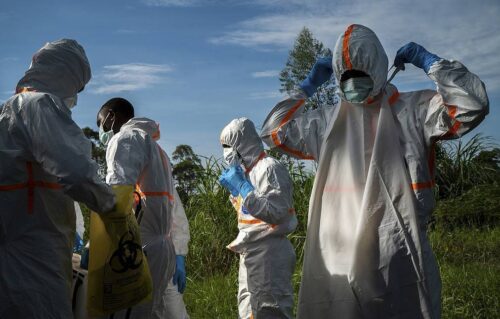
There is a particular kind of silence that settles over the world when the people dying are African. It is not the silence of ignorance; the facts are documented, updated weekly by the World Health Organization and reported, if briefly, by the wire services. It is the silence of indifference: a quiet, collective decision that some deaths simply matter less than others.
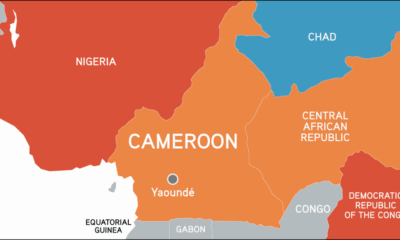
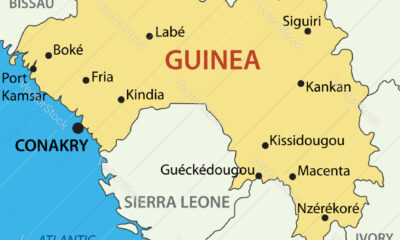
The Democratic Republic of the Congo is now living through the largest Ebola outbreak in its history, the seventeenth the country has endured, arriving barely five months after the last one ended. What began in February in a remote corner of Ituri province as a cluster of unexplained deaths has metastasised into a public health catastrophe. By early August, more than 4,300 cases had been confirmed across five provinces, and the death toll had passed 2,000, with at least 1,000 of those deaths recorded in just the last three weeks. Health officials now describe it, without exaggeration, as the fastest-growing Ebola outbreak ever recorded, second in scale only to the West African epidemic of 2014–16 that killed over 11,000 people.
This time the culprit is the Bundibugyo strain of the virus, a rarer and less studied cousin of the Ebola species that devastated West Africa a decade ago. Crucially, there is no licensed vaccine and no approved treatment for it. The tools that helped bring earlier outbreaks under control largely do not apply here. Health workers are dying alongside the patients they are trying to save. And still, the outbreak took three months to surface publicly after it began, a delay the WHO itself has acknowledged, and one that speaks to how thin surveillance and health infrastructure remain in the region.
And yet, scroll through the world’s front pages and you would be forgiven for not knowing any of this is happening. International attention remains locked on the wars in Ukraine, Gaza and Iran, all conflicts that deserve coverage, but none of which explains why a disease outbreak killing thousands of Africans barely registers as news. When the story does surface, it is often as a footnote: a mention that a European aid worker was evacuated, or that a case was flagged in Israel, framed as reassurance to Western readers that “the risk to you remains low.” The Congolese and Ugandan dead become backdrop to someone else’s peace of mind.
This is not a new pattern. It is the same instinct that, in June, drove violent protests in Nanyuki, Kenya, after residents learned of plans for a US-run Ebola quarantine facility at Laikipia Air Base. Kenya has recorded no Ebola cases of its own, yet its citizens found themselves fearing that they would be made to absorb the risks of a crisis the rest of the world was otherwise content to watch from a safe distance; Africa as both the source of contagion and its designated containment zone, but never quite the subject of anyone’s urgency.
Contrast this with the global response to Covid-19. Within weeks of the virus emerging in China, and well before deaths reached even a fraction of what DRC has now suffered, the machinery of international concern shifted into overdrive. Borders closed. Economies were locked down. Vaccine development was funded at a scale and speed without precedent, and delivered in under a year. The world, in that instance, treated the threat as universal and acted accordingly, because, this time, the early victims were not African.
None of this is to diminish the toll of Covid-19, which was real and global. It is to ask why a disease with a case fatality rate as high as 40-50%, ravaging health workers and emptying villages across the Congo, has not summoned anything like the same urgency, not in funding, not in vaccine development, not in headlines. The WHO declared this outbreak a public health emergency of international concern back in May. Declarations, it turns out, are cheap. Sustained global attention and resourcing are not, and Africa keeps finding itself on the wrong side of that ledger.
There are people working, often with too little and against long odds, to change this: Congolese health workers, MSF teams, WHO responders on the ground in Ituri and beyond. They deserve more than sympathy. They deserve the same global mobilisation , funding, vaccine trials fast-tracked, sustained media attention that any outbreak of this scale would command anywhere else in the world.
Until that changes, the question that should trouble anyone watching from outside is not simply “why doesn’t the world care?” It is what that indifference tells us, still, about whose lives are treated as an emergency, and whose are treated as routine.

















You must be logged in to post a comment Login