
Forgotten Dairies
Dubai’s Safe Haven Era Just Hit a Wall -By Fransiscus Nanga Roka
But to cheer one great extradition would be dangerously premature. A leader comes, and a leader goes, one until the other. Capital moves freely- to the point of freezing one bank account. Even if one jurisdictional loophole is closed, the sophisticated networks will just look for another.

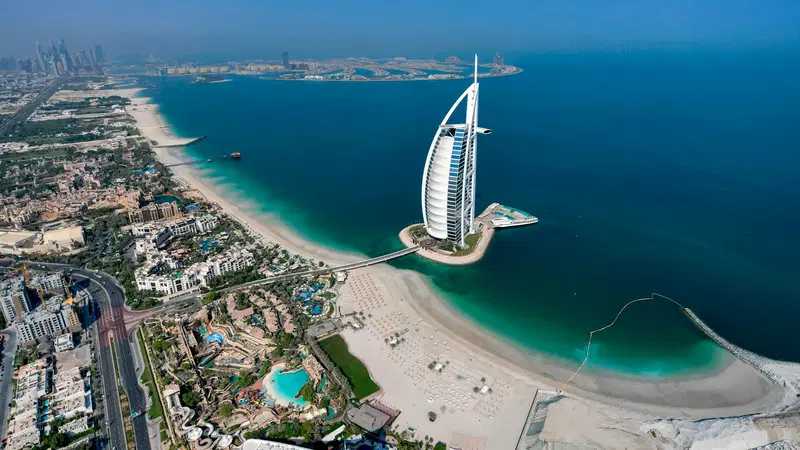
From luxury Dubai to maximum security jail in Ireland, the extraordinary fall from grace of alleged cartel boss Daniel Kinahan It is a global infrastructure pinprick stressing transnational organized crime: geography is less and less a defense against justice.
Kinahan, 49, claimed by international law enforcement authorities to be a senior figure in the Kinahan Organized Crime Group where arrested in Dubai during April 2026 on foot of a warrant issued from Ireland. On 9 August, he was flown to Casement Aerodrome adjacent[4] to Dublin aboard an Irish government aircraft, having lost his challenge of extradition. He was brought to Ireland’s non-jury Special Criminal Court under tight security and was accused of directing the activities of a criminal organization between October 2015 and April 2017. He remains legally presumed innocent.
The question is not just: who Kinahan is, what he allegedly did, when has he been returned to where did he allegedly work and how have the Irish finally got him?
The important question is, why did it take so long?
For a long time Kinahan seemed to embody one of the real, nastier paradoxes of globalisation: that but for borders law enforcement was more or less helpless whereas criminal capital crossed the globe with almost no friction.
The Kinahans were alleged by Irish authorities and others to have operated internationally, trafficking cocaine, arms, racketeering U.S. Kinahan himself was blatantly living in Dubai while building deep ties in the world of boxing. But Washington imposed sanctions, offered multimillion dollar rewards for high ranking members of the organisation and its coup-proofing seems to have been slowly collapsing.
Kinahan would not find himself going before Irish judges on sanctions alone. Diplomacy did.
An extradition treaty with Ireland and the United Arab Emirates (UAE) was reached in 2025. In April 2026, Kinahan was also arrested followed by his extradition four months later. The realization that advanced criminals can elude capture because police cannot find them, is a bitter pill to swallow. That is, they endure because international law cannot always touch them.
Which makes it at least one man bigger than this case.
Dubai has long since evolved into one of the worlds leading trade hubs. As jaws drop at the sheer amounts of money, property and international business that flow there legitimately, authorities also face a huge burden of making sure global connectivity does not turn into criminal connectivity.
Kinahan’s extradition thus relayed a crucial message: sovereignty must not become sanctuary.
But to cheer one great extradition would be dangerously premature. A leader comes, and a leader goes, one until the other. Capital moves freely- to the point of freezing one bank account. Even if one jurisdictional loophole is closed, the sophisticated networks will just look for another.
On their part, governments should therefore pursue a four-pronged approach.
First, extrication mechanisms must, at the start, be enlarged between European states and jurisdictions which are generally abused by globally mobile suspects. Second, on a new financial intelligence pipeline that allows moves to be made nearly as quickly as criminal money flows including the integration of beneficial ownership totals, suspicious-transaction reporting and cross border asset tracing. Third, prosecutors should focus on criminal ecosystems not simply faces by going after financiers, professional enablers, shell companies and laundering infrastructure. Fourth, governments need multinational asset recovery teams that can freeze alleged proceeds of crime before they vanish across borders.
There is a lesson too for Washington, Brussels and Dublin and even Abu Dhabi: sanctions, intelligence, diplomacy, extradition and prosecution are most potent when used as part of one framework rather than as discrete tools.
Kinahan is in custody at Portlaoise Prison and will now appear again in court on 5 October. Courts not headlines have to finally determine his guilt or innocence.
American politicians and scholars are still grappling with these questions.
It was not bringing one alleged crime lord in chains.
It was showing how’ the safest spaces in the world can be made unsafe.
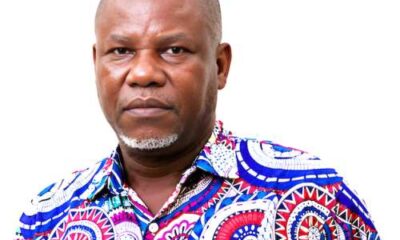
Fransiscus Nanga Roka
Faculty of Law University 17 August 1945 Surabaya and Managing Partner Law Firm Victorious Indonesia

















You must be logged in to post a comment Login