
Politics
How To Make INEC Truly Independent -By SKC Ogbonnia
The idea of a neutral electoral body is superficially attractive. But recruiting people from a cadre of pliant Nigerian institutions and expecting them to be impartial is no different from perceiving a stench as an aroma. Not surprisingly, the university recruits are always accused of partiality or being wholly subservient to the parties in power either at the states or the federal level.

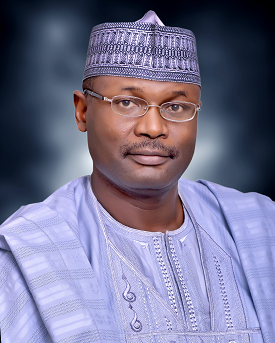
It is a common knowledge that the root cause of Nigeria’s problem is lack of good leadership. Yet, the leaders appear to make no serious efforts towards concrete solutions. Instead, they make the leadership process so deceitful, dishonest, and deadly. To that end, politics is abandoned to a small clique of the corrupt class. The most shameless in the Nigeria’s leadership process is the Independent National Electoral Commission (INEC).
As the name suggests, the INEC was envisioned as an independent organization in line with item F,14(2c) of the Third Schedule of the 1999 Nigerian Constitution (as amended). This section states unequivocally that any of its members must “be nonpartisan and a person of unquestionable integrity.” The Constitution also vests the appointment of principal INEC officials with the president of the country. Unfortunately, most of the appointees have been neither nonpartisan nor independent.
An alarming flashback is the case of Lorretta Onochie, who was once nominated as a National Commissioner for the INEC. To begin with, she was at the time a rabid promoter of the ruling All Progressives Congress, APC, and equally the Senior Special Assistant on Social Media to President Muhammadu Buhari. Even worse, Onochie was a virally controversial figure, an extremist rabble-rouser, who used to clown around the country parading offensive, partisan fallacies as federal decrees.
The objective motive behind Onochie’s nomination, therefore, was to wreak havoc and stoke controversies within the INEC at the expense of the opposing parties.
Despite Onochie’s shaming reputation and uproar within the civil society, Buhari still damned the consequences and continued to push her case. The saving grace was that the Senate yielded to public outcry and managed to find a hole to nail her nomination. The Upper House explained that questionable integrity notwithstanding, her nomination violated the Federal Character Principle. There was already a serving National Electoral Commissioner from her home state of Delta State, Barr. Mary Agbamuche-Mbu.
But the partisan intrigue within the INEC did not start nor end with Muhammadu Buhari and the ruling APC. Former presidents Olusegun Obasanjo, Goodluck Jonathan, and the Peoples’ Democratic Party were no different. Not surprisingly, President Bola Tinubu is already trending in a similar direction.
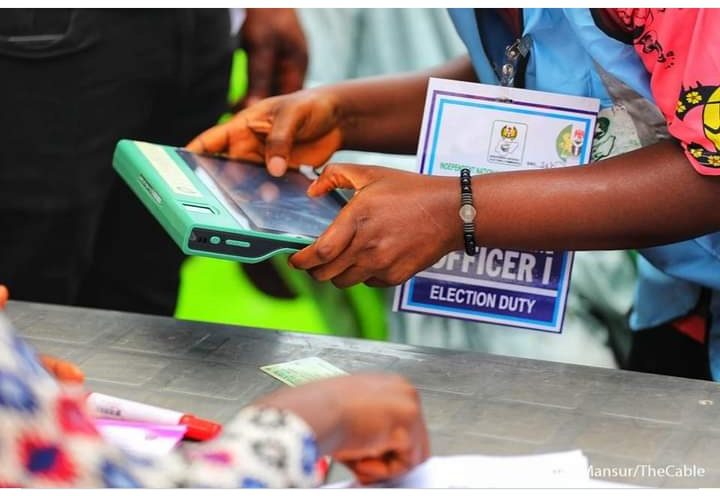
Such open partisan and dictatorial grip of the INEC has been a major reason Nigerian elections cannot be mentioned in the same breath with the term “free and fair.” That is a major reason potential good leaders but who have no connection to the corrupt class always shy away from politics. However, instead of placing the blame squarely where it belongs, the INEC Chairman is typically the scapegoat.
For instance, as the country geared for the 2011 election, the debate centered on Maurice Iwu, a renowned Professor of Pharmacognosy, who served as the INEC boss in the controversial elections of 2007. To many Nigerians, Mr. Iwu was the problem, and the problem was Mr. Iwu.
It was generally believed that a mere change in leadership of the INEC was the sole panacea for a free and fair election in the country. Accordingly, President Goodluck Jonathan appointed a new chairman in Professor Attahiru Jega, another astute intellectual, a move widely hailed. Yet, after the 2011 general elections, despite the fact that its conduct showed significant improvement, the opposition groups claimed that the ruling party colluded with the INEC to falsify electoral results.
In the words of Muhammadu Buhari, who was the main opposition candidate in the 2011 elections, the magnitude of malpractices “eclipsed all the other elections in the depth and scope of forgery and rigging. Initially, there were high hopes that after 2003 and 2007 a semblance of electoral propriety would be witnessed. The new chairman of INEC, Professor Jega, was touted as competent and a man of integrity. He has proved neither.”
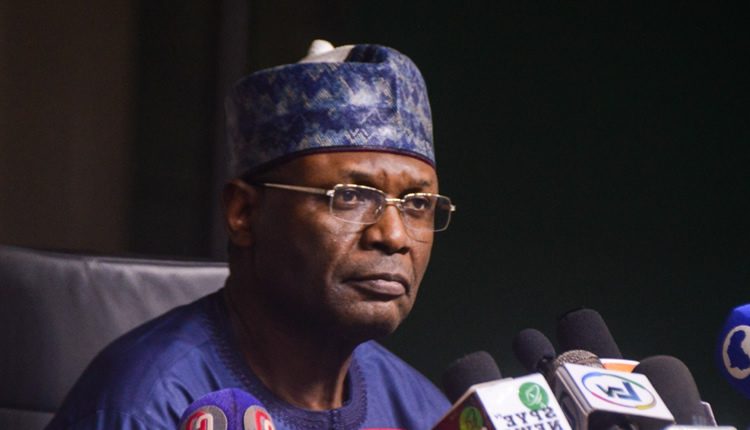
Upon gaining power in 2015, President Buhari quickly ousted Jega and brought in an equally distinguished professor, Mahmud Yakubu, who would go on to oversee the 2019 and 2023 elections. But the situation only seemed to worsen.
In rejecting the results of the 2019 presidential elections, Atiku Abubakar, the runner-up candidate, remarked as follows: “the electoral fraud perpetrated by the Buhari administration this past Saturday cannot produce a government of the people for the simple reason that it does not reflect the will of the Nigerian people.”
In his reaction after the 2023 presidential election, Mr. Peter Obi of Labour Party, who came third in the polls, stated that the 2023 exercise “will probably go down as one of the most controversial elections ever conducted in Nigeria. The good and hardworking people of Nigeria have again been robbed by the institutions and leaders whom we trusted.”
A salient factor that has not received adequate attention in the contextual analysis of INEC is that, besides its chairman, the other principal officers who represent the electoral body from the national to the ward levels are typically the sympathizers or card-carrying members of the ruling party. To that end, even where the INEC was able to produce a semblance of a free and fair election, the opposition usually hides behind the partisan shade of the commission to occasion a flood of conspiracies to wash away the credibility of the election. This distrust only goes to undermine the sanctity of the elections, deepen the depth of the disrepute commonly associated with the country’s democracy; and consequently, drive good people away from participation.
To improve the system, Nigeria should explore a multi-party electoral commission. A multi-party structure, with members nominated by the different political parties, will strengthen the needed checks and balances within the commission itself. This approach should extend to the recruitment of electoral officers from the national down to the ward levels and polling booths. A multi-party structure can restore confidence and ensure trust throughout the width and breadth of the commission.
This proposal is not entirely new. It parallels the position of the main opposition party in the 2007 election, the All Nigeria’s Peoples Party (ANPP), where Emmanuel Eneukwu, its National Publicity Secretary at the time, and who is currently the Deputy National Chairman (South) of the ruling APC, canvassed for a review of the electoral laws to include members of the different political parties in the leadership of National Election Commission.
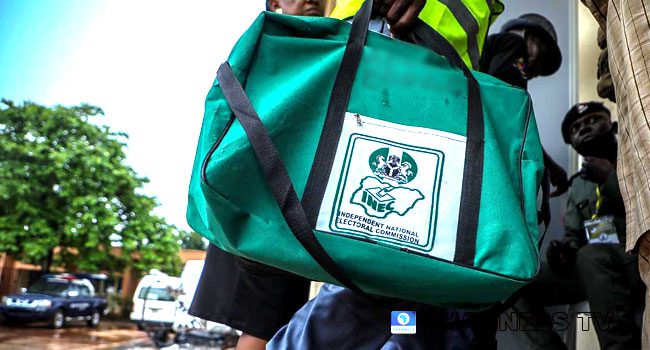
The multi-party electoral model is the core of the American system, which remains a paragon of democracy. Members to both the federal and state election commissions are drawn from the country’s two major political parties. The apparent political equipoise profoundly promotes internal checks and balances within the system. Thus, even if where a questionable character is nominated to an electoral commission in any of the states, the opposition party would reject or counter such nomination accordingly.
The partisan balance within the U.S. electoral system, more than any other factor, accounts for the widely celebrated vitality of the American institutions. It also accounts for why and how President Donald Trump could not succeed in his asinine scheme to compel some state electoral bodies, including those controlled by his party, to overturn the 2020 U.S. presidential election in his favour.
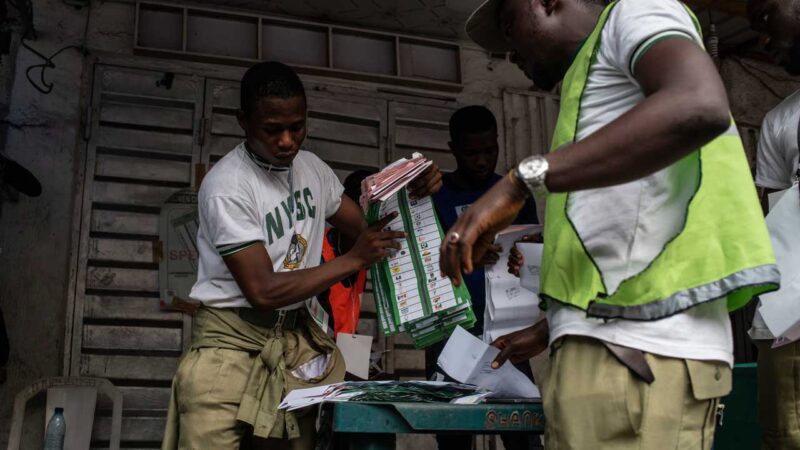
Perhaps Nigeria has explored various strategies over the years to checkmate partisan maneuvers within the INEC. The electoral body has recruited members of the National Youth Service Corps (NYSC) and university professors to assist in recent exercises. There were equally past efforts, for example, the 2008 Electoral Reform Committee (ERC), which proposed, among other things, that a neutral body, particularly the National Judicial Council, should appoint all the INEC officials, including its chairman. The ERC also called for the members of INEC to include representatives of the Nigerian Labour Congress (NLC) and the News Media, etc.
The idea of a neutral electoral body is superficially attractive. But recruiting people from a cadre of pliant Nigerian institutions and expecting them to be impartial is no different from perceiving a stench as an aroma. Not surprisingly, the university recruits are always accused of partiality or being wholly subservient to the parties in power either at the states or the federal level.
Constituting INEC with officials who have clear party identification offers best compromise. Unlike other institutions, the political party has the potential to provoke steadfast allegiance from the people—far more than tribe, religion, and even more than blood relationships, especially in Nigeria, where prebendal politics dictates the content and character of socio-economic wellbeing. True independence or neutrality of INEC is more attainable in an environment where two or more independent parties can checkmate each other from acting contrary to the stated objectives.
This proposal is no rocket science. But it is clear the problem with INEC is willful. In my conversation with then Senate President, Ken Nnamani, in 2005, he regrated that most Nigerian leaders know what to do to improve the system but choose to do otherwise. They becloud themselves with an assumption that “no party wants to kill itself”, he said. In other words, improving the system would engender true competition and chances of defeat. But I leave us with this admonition from a former U.S. president, John F. Kennedy “Those who make peaceful revolution impossible will make violent revolution inevitable.”
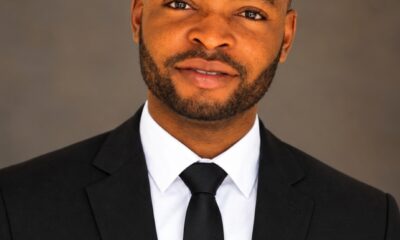
SKC Ogbonnia, a former APC Presidential Aspirant, writes from Ugbo, Enugu State, Nigeria.

Continue Reading

















You must be logged in to post a comment Login