
Forgotten Dairies
Justice Peter Lifu And Isah Dashen: The Dangerous Resurgence Of June 12 Jurisprudence -By Vitus Ozoke, PhD
That question should haunt every judge who ascends the Bench. It should weigh heavily on every member of the National Judicial Council. It should trouble every political leader tempted to weaponize the judiciary for partisan gain.

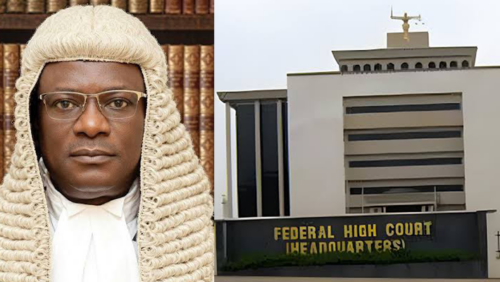
There are moments in a nation’s history when a court judgment ceases to be merely a legal decision and becomes a defining political event with profound constitutional consequences. Nigeria is once again approaching such a moment. Recent rulings by Justices Peter Odo Lifu and Isah Dashen should alarm every Nigerian who remembers June 12, 1993. History has an unforgiving habit of punishing nations that fail to learn from their mistakes.
More than three decades ago, Nigeria plunged into one of the darkest constitutional crises in its history. Countless lives were lost, enormous national wealth was destroyed, democratic progress was violently interrupted, and public confidence in the judiciary suffered a devastating blow. Today, as the nation once again approaches another election cycle, recent judicial interventions evoke an unmistakable sense of déjà vu. The names have changed. The faces have changed. The script, however, remains disturbingly familiar.
Within days of each other, two Federal High Court judges issued rulings directing the Independent National Electoral Commission (INEC) to deregister duly registered political parties. Sitting in Abuja, Justice Peter Odo Lifu ordered the deregistration of several opposition parties, including the ADC. Shortly thereafter, Justice Isah Dashen, sitting in Lokoja, ordered the deregistration of the Nigeria Democratic Congress (NDC). Whether one supports or opposes those parties is beside the point. The constitutional danger lies elsewhere.
One feature of this episode should trouble every serious observer of Nigeria’s judiciary, electoral system, and constitutional democracy. Despite the extraordinary nature of these rulings, the country appears to have simply moved on. The affected political parties have continued to operate, field candidates, and participate in the political process as though the orders had never been issued. The practical effect is that the rulings appear to have been ignored or rendered ineffectual. Yet the judges who issued them remain on the Bench, and little has been said about institutional accountability.
For that reason, I deliberately resisted the urge to comment immediately after the decisions were delivered. I wanted to see what would become of them. Would they be reviewed? Would they be set aside? Would the National Judicial Council examine the constitutional implications of such far-reaching orders? Would there be any institutional reckoning? Apparently, none. That silence should worry every judicial, electoral, and political observer in Nigeria. Judges whose decisions provoke profound constitutional controversy cannot simply test the limits of judicial power, retreat into silence when those decisions unravel, and then carry on as though nothing happened. A constitutional democracy cannot afford to normalize judicial recklessness by allowing it to go unchecked or unpunished.
When judges stretch constitutional provisions beyond their settled meaning, they reopen questions that history settled at enormous national cost. They risk setting Nigeria on the same perilous path that led to the June 12 judicial catastrophe.
The tragedy of June 12 did not begin with soldiers. It began with the politicization of the judiciary. It began when political actors discovered they could use the courts to secure outcomes they could not obtain through the democratic process. It began when judicial discipline gave way to political opportunism, and some judges abandoned constitutional restraint, becoming willing participants in a national political drama.
Every Nigerian should remember the principal actors in that constitutional disgrace. There was the late Chief Arthur Nzeribe, who established the Association for a Better Nigeria (ABN), a political front created to frustrate Nigeria’s democratic transition and perpetuate military rule. Acting on an application brought by the ABN, Justice Bassey Ikpeme of the Abuja High Court, less than forty-eight hours before Nigerians were due to vote, granted an injunction restraining the National Electoral Commission (NEC) from conducting the June 12 presidential election.
Fortunately, the late Professor Humphrey Nwosu, then Chairman of the NEC, demonstrated extraordinary courage. Citing Decree 13 of 1993, which expressly removed civilian courts’ jurisdiction over the transition program, he refused to comply with the injunction and proceeded with the election. Nigerians voted peacefully and spoke decisively. Chief M.K.O. Abiola won convincingly.
But the legal sabotage had just begun. As election returns confirmed Abiola’s overwhelming victory, Arthur Nzeribe and the ABN returned to court. This time, Chief Judge Dahiru Saleh of the Abuja High Court ordered the NEC to suspend the collation and announcement of the election results. What followed remains one of the greatest institutional embarrassments in Nigerian judicial history.
High Courts in Lagos, Benin, Ibadan, and Kaduna issued conflicting orders directing the NEC to disregard the Abuja injunction and continue announcing the results. Courts of coordinate jurisdiction descended into open contradiction. One judge ordered the NEC to stop. Another ordered it to proceed. One commanded obedience to Abuja. Another ordered Abuja to be ignored. The judiciary ceased to speak with one constitutional voice and became an arena for political combat.
General Ibrahim Babangida cynically dismissed the resulting confusion as “judicial anarchy” and cited it as one of the principal justifications for annulling what remains Nigeria’s freest presidential election. The consequences are written across our national history: democracy aborted, lives lost, military dictatorship prolonged, and public confidence in the judiciary gravely diminished.
The tragedy did not end there. As General Sani Abacha consolidated power, another civilian actor emerged to legitimize authoritarian rule. Daniel Kanu, through his organization, Youths Earnestly Ask for Abacha (YEAA), became one of the most visible civilian faces of military dictatorship. His infamous Two Million Man March sought to manufacture public support for Abacha’s self-succession agenda, while the genuine democratic mandate of June 12 lay buried under military rule. History has not been kind to those who traded constitutional democracy for political expediency. It will not be kinder to those who attempt similar adventures today.
Against this historical backdrop, the recent decisions by Justices Peter Lifu and Isah Dashen must be evaluated. Constitutional principles are tested not when they protect our political friends but when they protect those with whom we disagree. Today the controversy concerns the ADC and the NDC. Tomorrow it could concern the APC, the PDP, the Labor Party, APGA, or any other political party.
That is precisely why constitutional limits are important. If one Federal High Court judge in Lokoja can issue an order purporting to determine the nationwide legal status of a registered political party, what constitutional principle prevents another Federal High Court judge in Ogoja from issuing a similar order against the ruling APC? What prevents a judge in Lagos from issuing a contradictory injunction? What prevents another in Kano from nullifying both? The inevitable result is not constitutional government but judicial roulette.
No constitutional democracy can survive when federal law is one thing in Lokoja, another in Ogoja, another in Lagos, another in Kano, and yet another in Port Harcourt. The Constitution cannot mean one thing in one judicial division and something entirely different in another. Once that happens, the rule of law gives way to the rule of judicial geography.
The greatest casualty is public confidence. Citizens begin to lose faith not only in particular judges but in the judiciary itself. They no longer believe that constitutional outcomes are determined by law. Instead, they come to believe that outcomes depend on which courtroom a politically connected litigant reaches first. No democracy can long survive such a perception.
This is why the National Judicial Council cannot afford to remain institutionally silent. The Council exists not merely to appoint judges but to preserve the integrity, discipline, independence, and credibility of the Nigerian Bench. Every day that questionable constitutional adventurism goes unexamined increases the risk of imitation. Judicial indiscipline, like political corruption, spreads when left unchecked. When judicial conduct raises substantial constitutional and ethical concerns, the National Judicial Council must promptly investigate and, where appropriate, invoke its disciplinary powers without fear or favor. Judicial independence was never intended to become judicial impunity. Proper discipline is not the enemy of judicial independence; it is one of its indispensable safeguards.
There is an even more troubling dimension to this. Nigeria has not yet entered the full intensity of the 2027 election season. If constitutional adventurism is emerging now, what should Nigerians expect when political stakes become infinitely higher? If today’s headlines feature Justices Peter Lifu and Isah Dashen, tomorrow’s headlines may feature many more. There will be more litigants seeking more accommodating courtrooms. There will be more contradictory injunctions. There will be more judicial forum shopping. There will be greater pressure on judges to act politically rather than serve as constitutional arbiters. That is exactly how June 12 unfolded. History rarely repeats itself in identical form. It repeats itself by reproducing familiar patterns. Those patterns are beginning to reemerge.
Nigeria today is far more fragile than it was in 1993. The economy is weaker, public trust in institutions is thinner, ethnic and regional divisions are deeper, and insecurity is more widespread. Millions of young Nigerians have lost faith in political leadership. Social media now amplifies outrage with unprecedented speed and reach. If the Nigeria of 1993 barely survived the judicial recklessness that accompanied June 12, one must ask an uncomfortable but unavoidable question: Will today’s Nigeria survive another June 12?
That question should haunt every judge who ascends the Bench. It should weigh heavily on every member of the National Judicial Council. It should trouble every political leader tempted to weaponize the judiciary for partisan gain.
History has already rendered its verdict on June 12. The only question that remains is whether Nigeria has learned enough to avoid rendering that tragic judgment on itself a second time.
Dr. Vitus Ozoke is a lawyer, human rights activist, and public affairs analyst based in the United States. He writes on politics, governance, and the moral costs of leadership failure in Africa.
























You must be logged in to post a comment Login