
Forgotten Dairies
Nigeria At The Crossroads: Bandits, Ballots, Betrayal And Bad governance -By Onovughakpor Europeans
When state institutions are hollowed out by corruption, they become fundamentally incapable of responding to systemic emergencies. This institutional decay explains why early warnings about bandit movements are frequently unheeded, and why judicial processes against captured terrorists drag on for years without resolution. The governance machinery has become self-serving, optimizing for the comfort of the few while administering austerity and grief to the majority.

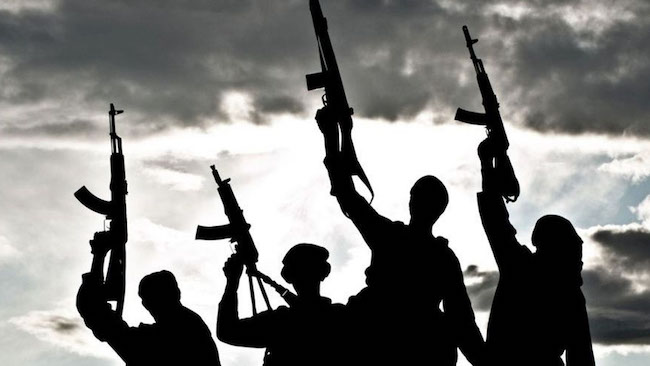
Nigeria today is not suffering from one crisis. It is suffering from a collision of them. Insecurity, rigged politics, broken homes, and failing institutions have fused into one heavy weight pressing on every citizen. As a nation, we often find ourselves caught in a vicious cycle of circular complaints: we ask for peace, but we plant thorns; we demand change, but we reward lies. Until we face all these fronts together, no single solution will hold. The Nigerian dilemma is multifaceted, requiring a deep, unblinking assessment of our socio-political landscape, where the intersections of vulnerable governance and citizen despair meet. To fully grasp the magnitude of this national struggle, one must analyze how physical terror, political manipulation, and institutional collapse work together to maintain a status quo of stagnation.
The physical manifestation of this breakdown is most acutely felt in the rampant wave of insecurity across the nation. Recently, the Northern Elders Forum declared a “national security emergency,” warning that violence, kidnappings, and bandit attacks now threaten Nigeria’s very survival. The geographical spread of this modern terror is staggering. They explicitly listed Zamfara, Katsina, Kaduna, Niger, Plateau, Benue, Kogi, Kwara, Borno, Oyo, Edo, Enugu, and Imo as states still under active attack. This is no longer a localized insurgency or an occasional border skirmish; it is a sprawling, nationwide network of lawlessness that spares neither the savannah of the north nor the forests of the south.
Echoing this profound alarm, the Supreme Council for Shariah recently remarked that Nigerians “wake up daily to reports of violent crimes despite repeated assurances” from the security apparatus. Insecurity has effectively stopped being an “event.” It is now the weather—an inescapable, atmospheric reality within which millions must survive. A farmer in Katsina plants by the movement of armed men, calculating whether his harvest is worth his life. A mother in Niger prays fervently that her child returns from school safely. Mass abductions of schoolchildren are no longer viewed as historic anomalies; they are daily evidence of a structural failure in the state’s most elemental obligation: the protection of its citizens.
Political responses to this crisis often ring hollow against the backdrop of ongoing tragedies. President Tinubu vowed at the 2026 Democracy Day service that his government “will never succumb to terrorism, banditry or any form of criminal intimidation.” Simultaneously, the Secretary to the Government of the Federation maintained that the government “shares in these pains.” Yet, words comfort only briefly while communities continue to report delayed responses, empty outposts, and a severe deficit of successful prosecutions. The gap between political rhetoric and the lived security reality of the average citizen widens with every passing day.
Offering a sobering perspective on the internal dynamics of this conflict, the Defence Minister, Gen. Christopher Musa, recently provided an uncomfortable, yet necessary truth: bandits survive on “oxygen” provided by locals who give food, water, and vital intelligence. This admission highlights that banditry is not merely a failure of guns, tactics, or military hardware; it is a fundamental breakdown of community trust and economic resilience. When local populations feel abandoned by the formal state, some become susceptible to the financial overtures or violent coercion of criminal actors. The Arewa Consultative Forum aptly called this a “state of war” and demanded a “fundamental shift in national priorities.” Indeed, you cannot farm when your field is a battlefield, and you cannot send children to school when classrooms are targets. When fear sets the calendar, governance has ceased to mean anything meaningful to the common man.
This widespread insecurity is deeply intertwined with a profound crisis at the ballot box. Ballots are meant to be instruments of peaceful self-determination, but in the Nigerian context, they have frequently been transformed into mechanisms of betrayal. When elections are marred by logistical failures, vote-buying, and institutional compromise, the democratic process loses its foundational sanctity. The average citizen begins to view the ballot not as a voice, but as a rigged ritual designed to legitimize predatory elite groups who hold no true responsibility toward the public.
This political disillusionment feeds directly back into the security crisis, reinforcing the vicious cycle. Leaders who buy or manipulate their way into power carry no genuine mandate to serve; their primary loyalty remains to the political godfathers and cartels that financed their subversion of the popular will. Consequently, public policies become transactional rather than transformational. The resources meant for equipping the military, developing critical rural infrastructure, and funding functional public education are diverted into maintaining patronage networks. The ballot, which should be a weapon against bad governance, becomes the very seal that locks it in place.
At the core of Nigeria’s current impasse is a deep-seated sense of betrayal that alienates the population from its leadership. There is a total betrayal of the social contract—the implicit agreement where citizens yield certain liberties and pay taxes in exchange for protection, justice, and basic welfare. Today, the Nigerian state demands compliance and economic sacrifice, yet offers little more than inflation, infrastructural collapse, and excuses in return. Recent economic adjustments, though framed as necessary macroeconomic reforms, have pushed millions of households into extreme poverty without a corresponding reduction in the luxury and waste characteristic of the political class.
Bad governance is not an abstract concept; it is visible in the decaying walls of public schools, the empty shelves of primary healthcare centers, and the darkness that blankets the nation due to a perennial grid collapse. When state institutions are hollowed out by corruption, they become fundamentally incapable of responding to systemic emergencies. This institutional decay explains why early warnings about bandit movements are frequently unheeded, and why judicial processes against captured terrorists drag on for years without resolution. The governance machinery has become self-serving, optimizing for the comfort of the few while administering austerity and grief to the majority.
Ultimately, Nigeria stands firmly at a historic crossroads where the current path of managing symptoms while ignoring the underlying systemic rot is entirely unsustainable. To dismantle the syndicate of banditry, the state must starve it of its social and logistical oxygen by rebuilding community trust through active local governance, transparent community policing, and robust economic interventions that provide alternative livelihoods for vulnerable populations. Simultaneously, our electoral systems must undergo a radical, transparent sanitization to ensure that ballots truly reflect the choices of the people, because true national security cannot exist without political legitimacy. The leadership must realize that empty assurances during national services can no longer substitute for concrete accountability and visible protection. Nigeria’s survival depends on our collective willingness to halt the reward of lies, reject the normalization of fear, and demand a governance structure that honors its foundational pledge to the people, turning our battlefields back into fields of harvest and peace.

















You must be logged in to post a comment Login