Forgotten Dairies
Northerners: The Confused Society — Marrying Poverty to Poverty and Calling It “Empowerment” Is Like Pouring Petrol on Fire and Calling It Rain -By Turaki Abdulhamid Yahya
If government spends billions of naira organising weddings, providing dowries, furniture or small amounts of start-up capital, but leaves the underlying problems of illiteracy, unemployment, inadequate healthcare, poor housing and lack of economic opportunities largely untouched, then we must ask whether we are solving poverty or merely postponing it.

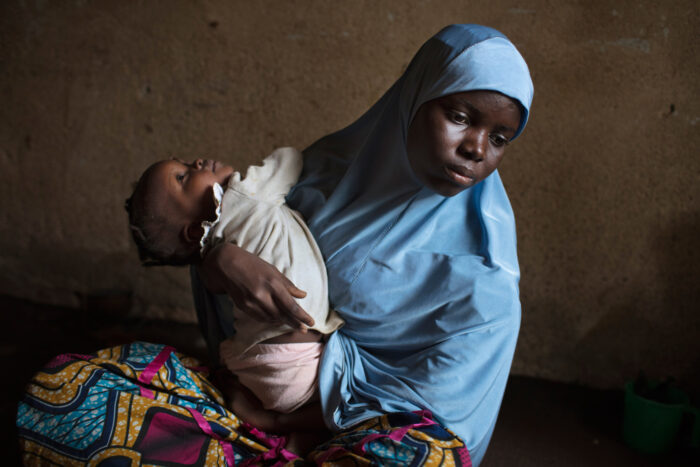
Are We Marrying Poverty to Poverty?
When two young people have little education, no sustainable income and no employable skills, marriage does not magically transform their economic circumstances.
A wedding ring does not create employment.
A marriage certificate does not generate income.
Furniture does not pay school fees.
And a celebration does not put food on the table.
If both partners are economically vulnerable and immediately begin raising children without adequate support, society may unintentionally be reproducing the very poverty it claims to be fighting.
This is not an argument against marriage.
It is an argument for responsible preparation for marriage.
I write this not to insult anyone, ridicule marriage, or diminish the legitimate desire of young people to build families. I write to confront us with a truth that has become too uncomfortable to ignore.
Across Northern Nigeria, population is growing rapidly, yet the infrastructure, education, employment opportunities, healthcare facilities and economic capacity required to support that population are not growing at the same pace.
Marriage is important, Family is important, Religion is important, but marriage alone does not cure unemployment, illiteracy, poverty, trauma or hopelessness. If two economically vulnerable people are brought together without adequate preparation, skills, income and access to basic services, we may simply be creating another household that struggles to survive.
And when that household produces children without the capacity to adequately feed, educate and protect them, the consequences eventually become a problem for the entire society.
The Kano State Government’s mass wedding programme has generated considerable public attention, with government committing substantial public resources to support thousands of couples. Other Northern states, including Katsina and Zamfara, have also introduced similar programmes.
The question we should be asking is not whether these couples deserve support. They do.
The question is:
What kind of support will actually change their lives?
If government spends billions of naira organising weddings, providing dowries, furniture or small amounts of start-up capital, but leaves the underlying problems of illiteracy, unemployment, inadequate healthcare, poor housing and lack of economic opportunities largely untouched, then we must ask whether we are solving poverty or merely postponing it.
Walk through major cities across Northern Nigeria and look carefully.
Children are increasingly visible on streets, at traffic junctions, markets and public spaces.
Some are begging, Some are hawking, Some are simply wandering, Others have never had consistent access to quality education.
These children are not statistics. They are the consequences of decisions made by adults and institutions.
When a family cannot adequately provide food, education, healthcare and protection for its children, the children eventually migrate to the streets in search of survival.
And the street has its own curriculum.
It teaches survival without discipline, desperation without opportunity and sometimes anger without direction.
If we do nothing, today’s neglected children may become tomorrow’s unemployed adults, victims of exploitation, drug users, criminals or recruits for violent groups.
Poverty Eventually Enters the Classroom and the Hospital
A child born into extreme poverty does not begin life with the same opportunities as a child born into a financially secure household.
Give young couples more than a wedding ceremony. Give them skills. Give them education. Give them healthcare. Give them economic opportunities. Give them the capacity to raise their children with dignity. Give them a future.
Because marrying poverty to poverty and calling it empowerment is like pouring petrol on fire and calling it rain.
The North deserves better.
And its children deserve better still.
Turaki Abdulhamid Yahya,
Writes from the Faculty of Communication and Media Studies, Moidbbo Adama University, Yola.