
Politics
Osun 2026: The Hard Truths APC Must Confront After Its Defeat -By John Oyebanji
But if it is courageous enough to look in the mirror, accept where it went wrong and rebuild from the grassroots upward, this defeat could eventually become the beginning of its political recovery in Osun. The Yoruba elder does not merely stand after falling, he looks backwards, and asks for what made him fall. That is exactly what Osun APC must do now.

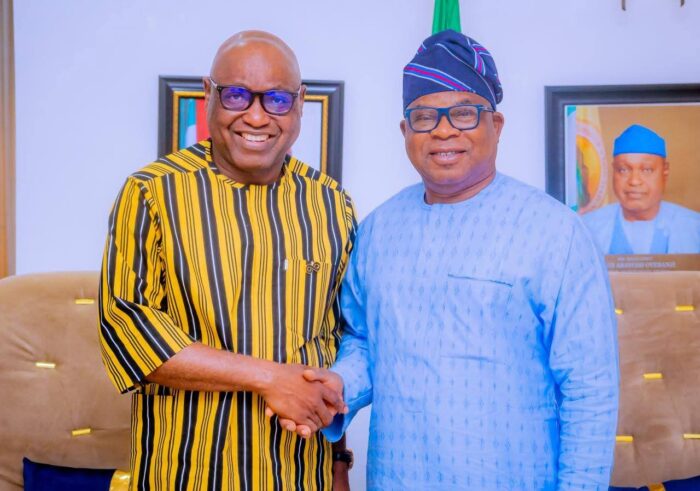
It is time to have some difficult but necessary conversations.
I had anticipated that the Osun governorship election would produce the outcome we witnessed yesterday. In fact, barring any political miracle, it was difficult to see how the APC could have won the election, especially given the mood of the people before, during and after the election.
Anyone who followed the political developments in Osun closely, particularly without strong partisan attachment, would have seen the warning signs. This was not simply an election that the APC lost at the ballot box. It was, in many ways, an election the party had been losing in the minds of the people long before election day.
There is a Yoruba saying that when a child falls and gets up, the first thing he does is look forward. But when an elder falls, he looks backwards to understand what caused the fall. That is the position in which Osun APC finds itself today.
The party needs to look backwards. It needs to ask the uncomfortable questions. It needs to examine its decisions, its leadership, its relationships with the people and, most importantly, the image it has created for itself.
This is why I believe this is not the time to rush into another legal battle simply because the election did not go the party’s way. Every political party has the right to seek legal redress where it genuinely believes that an election was compromised. But beyond that, APC must understand that even the strongest legal argument cannot replace the need for political introspection.
The greater battle is not in the courtroom, it is within the party itself.
APC did not only lose the election; it helped create the opposition against itself. Let us be honest, Osun APC did not lose simply because the people hated the party. It lost partly because, over time, it created an image of itself as a party that was fighting the people, rather than fighting for them.
In the eyes of many Osun people, the party increasingly came across as an oppressor, and once a political party is perceived that way, winning an election becomes extremely difficult.
The Biblical story of Pharaoh comes to mind. Pharaoh became so hardened that he continued on a path that ultimately led to his own destruction. In Osun, the APC appeared to have hardened itself against the warnings coming from the people.
Issues surrounding the local government crisis, allegations of political interference, controversies involving the police, the NURTW saga, the takeover of garages and the repeated perception that the APC was attempting to control institutions that should operate independently all contributed to this image.
Whether you agree to the truth of these allegations or not is another matter. Politics, however, is not only about what is objectively true. It is also about what people believe to be true. And many people believed that the APC was deliberately frustrating Governor Ademola Adeleke and his administration.
As a result, even where the governor’s administration performed poorly, a significant section of the public was willing to excuse those shortcomings as the consequence of political obstruction.
That was a serious political advantage for Gov. Adeleke, and the APC inadvertently turned Adeleke into the underdog. Meanwhile, Nigerians, including Osun people, generally have sympathy for the underdog.
One thing my experience before, during and after the election made clear to me was that Gov. Ademola Adeleke did not win only because of traditional party structures, he also won sympathy.
There were people who voted for him because they genuinely believed he was being politically suffocated. There were people who were not necessarily enthusiastic about every aspect of his administration but still felt that he deserved protection from what they perceived as an aggressive opposition. That is important. You can disagree with it, you can challenge it, but you cannot ignore it.
The APC should therefore ask itself a very simple question, How did we become the side that many people felt they needed to resist?
That is a much more important question than simply asking who rigged what, who influenced which polling unit or which legal argument can be presented in court.
Another major problem was the process that produced the APC governorship candidate. Immediately after the primary election, I wrote about the enormous burden that had been placed on Asiwaju Munirudeen Bola Oyebamiji (AMBO). I warned that the candidate and the party had a difficult road ahead. Unfortunately, the warning appeared to have been drowned by the internal confidence of the party.
The APC seemed more concerned with demonstrating political strength than with rebuilding trust among its own members and the wider public.
I do not subscribe to the argument that the an outcome should be blamed on Senator Iyiola Omisore or that the loss of his polling unit or ward is proof of anything extraordinary. Politicians can lose their immediate political territory; it has happened before and will happen again. But we should also not pretend that political foot soldiers do not matter. Those who worked with Omisore and those connected to his political structure in other polling units, wards and local governments cannot simply be wished away.
More importantly, the primary election left many party members with the feeling that democracy within the APC itself had been compromised. And a party that struggles to convince its own members that they have a voice will find it difficult to convince the general public that it represents democratic values.
Now, the Alhaji Gboyega Oyetola and his leadership factor…
Alhaji Isiaka Adegboyega Oyetola, who has been at the centre of Osun APC leadership, must also take a hard look at his own leadership record.
In my view, the biggest problem is that he has increasingly appeared more like a leader of a political caucus than a leader capable of bringing the entire Osun APC family together. The perception seems to be simple. You are either within the Ilerioluwa political camp or you are outside it. That is dangerous for any political organisation.
A party cannot build a winning coalition by constantly dividing its members into insiders and outsiders.
Oyetola himself could not secure his re-election as a sitting governor in 2022. That fact alone should encourage serious reflection about whether the current leadership structure is capable of building the broad coalition necessary to win Osun.
If a sitting governor could not win his own re-election, the question must be asked, what then makes the same political structure confident that it can deliver a resounding victory for another candidate?
This is not an attack on Oyetola as a person, it is a question of political leadership and results.
The same applies to his role at the federal level. The Ministry of Marine and Blue Economy is an important ministry with enormous potential for Nigeria. It requires innovation, aggressive economic thinking, accountability and visible results. Osun APC should therefore be asking whether its leadership is producing the kind of energy, innovation and broad-based results that the ministry needs, or that the party itself needs.
Moreover, you can’t continue marginalising party members. Look at the recent State and National Assemblies primary elections. There have been widespread complaints that even consensus arrangements were allegedly being altered in favour of preferred candidates associated with particular political interests. Whether every allegation is correct or not, the perception itself is damaging.
A political party cannot continuously tell people who sacrificed for it that their contribution does not matter. It is therefore significant that President Bola Tinubu reportedly met with aggrieved Osun APC elders, including party leaders who had complained about marginalisation and exclusion from political opportunities and benefits. These are not insignificant people, they are people who have built the party.
If such people feel abandoned before an election, it is unrealistic to expect them to suddenly become enthusiastic campaigners when the election arrives. You cannot use people when you need them and discard them when you no longer need them. That is the classic politics of use and dump, and eventually, it comes back to haunt the organisation.
There is a Yoruba wisdom that you cannot walk around fire and expect not to sweat. You cannot continuously offend your people and expect them to sing your praises.
The APC must also examine its communication strategy. Politics should not be built primarily around fear, threats, boasting and the constant projection of political superiority.
Statements attributed to some political figures and representatives of the party, including Senator Francis Fadahunsi and Hon. Oluwole Oke, among others, were threatening and intimidating. Words actually matter. When people already feel threatened, every boast sounds like a threat, every warning sounds like intimidation, every claim of political control reinforces their fear, and when frightened people finally get the opportunity to vote, they may use that vote to protect themselves from what they perceive as a threat.
That, in my view, is part of what happened in Osun. The people simply said “enough.”
The greatest lesson from the 2026 Osun governorship election is not that APC needs a better lawyer, it is that APC needs a better relationship with the people. The party must learn to read the public mood, it must understand that political power is borrowed from the people. The people may give it today and take it away tomorrow.
APC must therefore begin a serious process of rebuilding trust. It must stop sidelining genuine party workers in the name of party supremacy. It must stop treating internal disagreement as betrayal. It must stop confusing loyalty to one political caucus with loyalty to the party. It must reward hard work and competence. It must create space for young people, and also listen to its elders. It must respect its grassroots structures, and above all, it must begin to position itself as a party that is accountable to the people.
APC needs to offer Osun something better than opposition to Adeleke. It needs to offer a compelling alternative. The people should be able to look at the party and say, “These people understand our problems.” They should see a party with credible candidates, credible leadership, credible policies and credible commitments.
At every election, APC should present its best possible candidate, not necessarily the candidate preferred by the strongest caucus. It should ask for who can win the confidence of Osun people, not who controls the party machinery? Those are two very different questions.
The party must also make its campaign promises measurable. Tell the people what you will do, how you will do it, how much it will cost and where the money will come from. Then, when elected, deliver. That is how political trust is rebuilt.
The Osun 2026 governorship election should not simply be remembered as another electoral defeat for APC, it should be treated as a warning, a very loud one. The party needs introspection, it needs retrospection, it needs reconciliation, it needs restructuring, and, most importantly, it needs to reconnect with the people.
If APC chooses to see this election only as a product of electoral manipulation and immediately begins another legal battle without first examining its own weaknesses, it may win an argument and still lose the bigger war.
But if it is courageous enough to look in the mirror, accept where it went wrong and rebuild from the grassroots upward, this defeat could eventually become the beginning of its political recovery in Osun. The Yoruba elder does not merely stand after falling, he looks backwards, and asks for what made him fall. That is exactly what Osun APC must do now.
The election is over, the real work of rebuilding your party has just begun.
—–
John Oyebanji is a Journalist, Social Commentator, and PR Specialist. He writes from Modakeke, Osun State, and can be reached on 09032201075 || thejohnoyebanji@gmail.com





















You must be logged in to post a comment Login