Forgotten Dairies
Persecution Is Worse Than Killing -By Abdulkadir Salaudeen
I use this medium to appeal to Nigerian rulers: rescue all those in kidnappers’ dens and protect the rest of us. Reports claim Sunday Igboho knows those behind the abduction of these innocent children. The government, through the DSS, should invite him and act on any information he provides. He must mention them and the government should act.

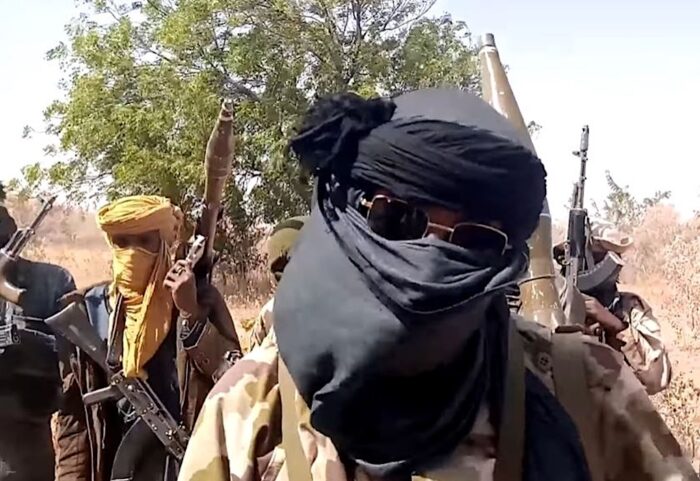
I do not always watch viral videos of Nigerians being tortured by bandits and kidnappers in the country’s vast ungoverned spaces. I do avoid them for my sanity. I prefer to read about their ordeals in newspapers or listen to rescued victims recount their experiences. Watching those viral clips is an assault on the senses that leaves me nauseous for days.
I watched one recently and I am still struggling to feel human again. It leaves the kind of helplessness you feel when you want to act but cannot, and want to help but cannot. I often wish I had the spiritual authority our pastors and sheikhs claim when they say they “hear the voice of God.” I wish I were that man of God who could command God to grant my wish in a blink. Instead, I realize I am as powerless as the tortured captives and millions of other Nigerians. It is painful.
Today, no one is safe. Everyone is vulnerable, except perhaps the president, state governors, and those they choose to protect. We became powerless because our parents and grandparents believed it was ethically and politically right to obey the state. They signed a social contract with the Nigerian state, surrendering their individual power so the state could have a monopoly of force to protect them and their children. In return, they became powerless while the state became absolutely powerful.
Over time, and for reasons we all know, the Nigerian state lost that monopoly of power. Corruption, financial mismanagement, nepotism, tribalism, injustice, double standards in the administration of justice, human rights abuses, do-or-die politics, and religious bigotry hollowed it out. Today, the Nigerian state is rivalled by bandits. It is now debatable which is more powerful: the government or the bandits.
The bandits’ power is different. It is not tied to any conditions or obligations because they seized it. They did not negotiate it. Nigerians did not hand it to them through a social contract, as our grandparents did with the state. Therefore, bandits are under no obligation to protect us. And because untamed, unlimited power intoxicates, especially when it carries no moral obligation, its wielders slide into nihilism.
Do Nigerian bandits fit the description of nihilists? That needs explaining. In Friedrich Nietzsche’s framework, there are three categories of nihilism: passive, active, and incomplete. Incomplete nihilism is the most dangerous of the three. For this article, I will focus on active and incomplete nihilism.
But first, what is nihilism and who are the nihilists? Simply put, nihilism is the rejection of religion, moral principles, legal rules, and other norms, often based on the belief that life has no meaning. A nihilist is one who embraces and promotes that rejection.
From my observation, there are three broad categories of bandits in Nigeria. There are criminal entrepreneurs. These are not nihilists. They are criminals. This group kidnaps for profit. They demand ransom. They appear to be the majority. Successive Nigerian governments indirectly empowered them by failing in their duty to protect citizens due to corruption and the ills mentioned above.
By “government” here, I do not mean only the current administration. I mean successive governments in Nigeria. Insecurity did not start today; it has only reached its lowest ebb under the present dispensation.
Then we have the second category of bandits. They are agents of senseless destruction. This group does not seek money or personal gain. They kill and destroy with no goal, no demands, no conditions. Their aim is destruction itself. When they enter a town or settlement, they burn houses and kill indiscriminately. One wonders why. They are nihilists—specifically, incomplete nihilists in Nietzsche’s categorization.
In the third category are the Boko Haram and Lakurawa. I refer to them as “bandits” for ease of analysis and narrative flow. These are closer to active nihilists. They kill and destroy for a purpose. Their objective is not money but ideology, or so they claim. This is what active nihilists do: they raze the old system to impose a new “value” order. They kill without regard for religion or ethnicity. They spare only those who accept their version of religion.
The Biafran and Yoruba Nation agitators would also be described as nihilists if they resort to killings and wanton destruction of property and state institutions. Their agitations remain legitimate if they pursue the constitutional route to advance their demands, which is a right they are entitled to.
The point is simple: Nigeria is under siege. Nigerians are in chains everywhere. Insecurity of all kinds has engulfed the country. Those privileged not to be in kidnappers’ dens are also mentally besieged. Today, not being kidnapped is not a right in Nigeria; it is a privilege for which one must thank God. Those in kidnappers’ dens deserve our prayers, day and night.
Earlier, I wrote that I wish I had the spiritual powers our pastors and sheikhs claim when they say they “hear the voice of God.” That was to mock the fake holy men who parade themselves as miracle workers. If any cleric can truly communicate with God directly—face to face—and command Him, let them use that power now to intervene for victims who have lost hope of living in kidnappers’ dens.
Let them use their “spiritual powers” to perform miracles and liberate these innocent schoolchildren from the agents of death. If they still claim miraculous powers but refuse to bring these children back, then they are worse than the bandits who have forced us to sleep with one eye open.
I fear we are witnessing the time foretold by the noble Prophet SAW: “By the One in Whose Hand is my soul, a time will come when the killer will not know why he killed, and the one who was killed will not know why he was killed.” Sahih Muslim.
What we are witnessing in Nigeria today is worse than war. “Persecution is worse than killing” Qur’an 2:191. That verse is the title of this column.
I use this medium to appeal to Nigerian rulers: rescue all those in kidnappers’ dens and protect the rest of us. Reports claim Sunday Igboho knows those behind the abduction of these innocent children. The government, through the DSS, should invite him and act on any information he provides. He must mention them and the government should act.
May God help the victims and the rest of us. Nigeria is not safe.
Abdulkadir Salaudeen
salahuddeenabdulkadir@gmail.com