Africa
President Tinubu’s Stumble in Türkiye: He Is Not the First, and He Will Not Be the Last -By Psychologist John Egbeazien Oshodi
A slip of the foot is not a slip of the nation. Leadership must be evaluated through decisions, policies, ethical direction, and institutional impact, not through momentary bodily imbalance. Psychological maturity requires resisting the temptation to confuse spectacle with substance.


The recent footage of Bola Tinubu momentarily stumbling during a ceremonial reception in Ankara, Türkiye, on January 27, 2026, quickly became fodder for ridicule across social media platforms. In Nigeria and across much of Africa, humor often functions as a psychological release valve, a way of processing frustration with leadership, governance failures, and unmet expectations. Yet humor becomes corrosive when it replaces reason, perspective, and emotional maturity.
The core reality remains unavoidable: President Tinubu is a human being. He is governed by gravity, muscle fatigue, balance, age, stress, and physical context just like every other human who walks on uneven ground. The global obsession with his stumble reveals less about his capacity to govern and far more about how societies displace deeper anxieties onto visible, symbolic moments. History shows repeatedly that physical missteps by leaders are common, cross cultural, and politically insignificant when viewed through a rational lens.
The Resilience in Ankara
Leadership is rarely defined by the absence of error. It is defined by response. After the brief stumble during the guard of honour, President Tinubu was immediately assisted, regained his footing, and proceeded with the ceremony without delay or visible disruption. There was no panic, no retreat, no attempt to dramatize or conceal the moment. The visit continued. Diplomatic protocols were maintained. State business moved forward.
This is an important psychological marker. In leadership psychology, resilience is demonstrated not by flawless performance but by adaptive recovery under public pressure. Ceremonial environments are intentionally symbolic and highly scrutinized, which magnifies even minor physical incidents. Tinubu’s continuation signaled composure and task orientation, the capacity to remain focused on diplomatic objectives despite momentary physical vulnerability. In real terms, this is far more relevant to leadership functioning than the stumble itself.
Donald Trump: A Stumble on the World Stage

In June 2025, Donald Trump, a leader who has consistently projected strength, dominance, and physical vitality as core elements of his political identity, stumbled while boarding Air Force One. The incident was captured instantly and circulated globally. There was no geopolitical fallout. No constitutional crisis followed. Governance did not pause.
The significance lies in symbolism. Trump’s political brand has long relied on the perception of invulnerability. Yet the stumble reminded audiences worldwide that image management cannot override biology. Power does not suspend gravity. Political mythology collapses instantly in the face of physical reality. The moment did not diminish Trump’s supporters or define his presidency. It simply affirmed a universal truth: leadership does not eliminate human limitation.
Joe Biden: Multiple Missteps

Joe Biden provides perhaps the clearest modern illustration of how societies selectively exaggerate physical incidents. Biden has experienced several well publicized falls, including repeated stumbles on aircraft stairs and a significant fall during a 2023 graduation ceremony at the U.S. Air Force Academy. These moments were amplified endlessly by media outlets and political opponents eager to frame physical vulnerability as cognitive or leadership incapacity.
Yet during this same period, the United States continued to function as the world’s largest economy, navigated complex global conflicts, and maintained institutional continuity. The contrast reveals a psychological distortion common in public discourse: conflating bodily incidents with intellectual or executive failure. This distortion reflects societal discomfort with aging, power, and mortality rather than any evidence based assessment of leadership competence.
Gerald Ford: The “Stumbling” Athlete
In 1975, Gerald Ford fell down the wet steps of Air Force One in Austria. The irony was profound. Ford was one of the most physically fit presidents in American history, a former collegiate football star known for discipline and athleticism. Yet the image of his fall followed him persistently in media narratives.
The Ford example is psychologically instructive. Even demonstrable strength does not immunize leaders against momentary physical accidents. Public memory, however, often detaches incidents from context and exaggerates their symbolic weight. The fall became a caricature not because it mattered, but because societies often hunger for simplified narratives that reduce complex leadership roles into easily digestible images.
Vladimir Putin: A Fall on the Ice

In 2019, Vladimir Putin, a leader whose public persona is meticulously curated around toughness, endurance, and physical dominance, fell on the ice during a public hockey game. Despite heavy state media control, the footage circulated widely. The moment pierced the carefully constructed image of invulnerability.
This incident underscores a global truth: no political system, authoritarian or democratic, can fully shield leaders from human exposure. The body eventually asserts itself. Power can manage narratives but cannot erase physical reality. Putin’s fall did not weaken his political authority, nor did it redefine Russian governance. It simply reminded observers that even the most controlled images are fragile.
A Psychoafricalytic Reflection
From a Psychoafricalytic perspective, the obsession with leaders’ physical missteps reveals collective psychological displacement. Rather than confronting systemic issues such as governance quality, economic structure, institutional trust, or civic responsibility, societies redirect emotional energy toward symbolic incidents that feel safer to ridicule.
African village wisdom offers a corrective lens. An elder’s worth is not measured by never stumbling, but by composure, dignity, and commitment to communal duty after the stumble. Ridicule of physical vulnerability reflects immaturity, not accountability. It distracts from the deeper work of nation building and psychological development.
A slip of the foot is not a slip of the nation. Leadership must be evaluated through decisions, policies, ethical direction, and institutional impact, not through momentary bodily imbalance. Psychological maturity requires resisting the temptation to confuse spectacle with substance.
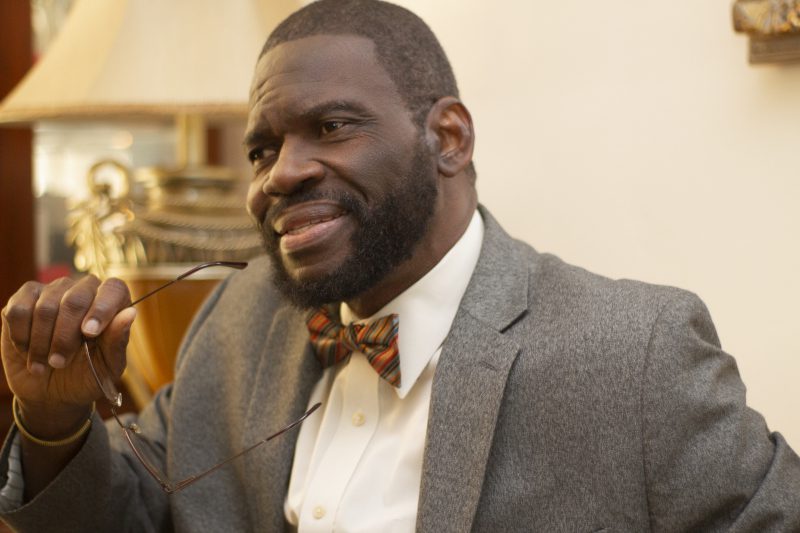
Professor John Egbeazien Oshodi, Clinical/Forensic Psychologist
About the Author
Prof. John Egbeazien Oshodi is an American psychologist, an expert in policing and corrections, and an educator with expertise in forensic, legal, clinical, and cross-cultural psychology, including public ethical policy. A native of Uromi, Edo State, Nigeria, and son of a 37-year veteran of the Nigeria Police Force, he has long worked at the intersection of psychology, justice, and governance. In 2011, he helped introduce advanced forensic psychology to Nigeria through the National Universities Commission and Nasarawa State University, where he served as Associate Professor of Psychology.
He teaches in the Doctorate in Clinical and School Psychology at Nova Southeastern University; the Doctorate Clinical Psychology, BS Psychology, and BS Tempo Criminal Justice programs at Walden University; and lectures virtually in Management and Leadership Studies at Weldios University and ISCOM University. He is also the President and Chief Psychologist at the Oshodi Foundation, Center for Psychological and Forensic Services, United States.
Prof. Oshodi is a Black Republican in the United States but belongs to no political party in Nigeria—his work is guided solely by justice, good governance, democracy, and Africa’s development. He is the founder of Psychoafricalysis (Psychoafricalytic Psychology), a culturally grounded framework that integrates African sociocultural realities, historical awareness, and future-oriented identity. He has authored more than 500 articles, multiple books, and numerous peer-reviewed works on Africentric psychology, higher education reform, forensic and correctional psychology, African democracy, and decolonized models of clinical and community engagement.