Forgotten Dairies
Professor Lily Golden: Unforgettable African-Russian Academic and Social Influencer, by Kestér Kenn Klomegâh
As a natural fate and as God directed, Tanzanian Abdul Kassim Hanga met Lily Golden for the first time during the 1957 Moscow International Youth Festival. They married three years later when he went back to Moscow to study for a degree in economics at the then newly-opened Peoples’ Friendship University, named after the assassinated Congolese prime minister, Patrice Lumumba.

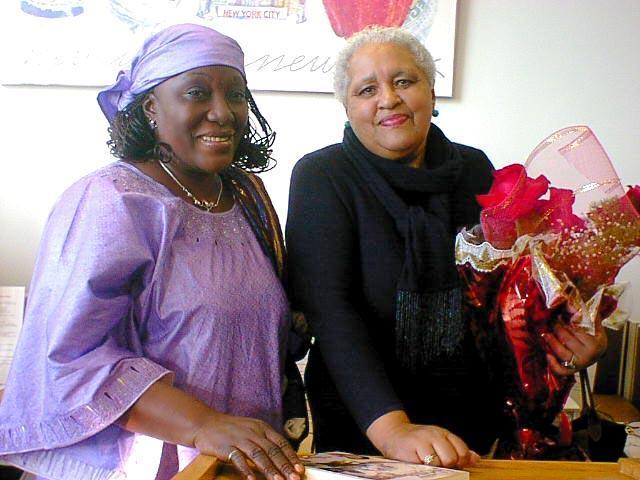
African-Russian Professor Lily Golden and her excellent thoughtful academic works have been in the historical realm, still considered as foundations to multifaceted relations from the Soviet times until today. During the Soviet era, at the height of political tensions between the West and East, was the period when many African states were in dire need and support for their liberation struggle against deep-seated and widespread colonial tendencies across the continent.
It was the establishment of liberation allied institutions such as the Soviet Afro-Asian Solidarity Committee, and the Soviet Associations Union of Friendship and Intercultural Relationship that enlisted the active participation of Africans from different spheres including including politics, academia, youth and women, culture and sports. African leaders including Julius Nyerere (Tanzania), Nelson Mandela (South Africa), Kwame Nkrumah (Ghana) Sekou Toure (Guinea) Anwar El-Sadat (Egypt) Muammar Gaddafi (Libya) and many others played incredible roles.
In addition, there were worthy activists and academics, who contributed tremendously towards consolidating ideas of political liberation and were at the fore-front educating the majority of the young people and the middle-class across Africa. The primary aim was to enhance their understanding of preserving the post-independence political ideals, the necessity to strengthen the relations between Soviet Union/Russia with Africa.
Lily Golden’s Background
Born in Tashkent, capital of the republic of Uzbekistan, Professor Lily Oliverovna Golden (1934-2010) was a prominent black Russian social activist, scholar, and mother of Russian TV star Yelena Hanga. She was a daughter of Oliver Golden and Bertha Golden, who immigrated to the Soviet Union from the United States in 1931. Lily’s father died when she was 6 years old. After her father’s death, Bertha Golden and Lily had planned to return to United States, but due to World War II and Bertha’s lingering fears of racism in the United States, they never left Uzbekistan.
Golden’s father, an active member of the American Communist Party, brought a group of 16 black agricultural experts to Tashkent in 1931 to help modernize cotton farming in the rugged, sun-parched fields of Central Asia. The little outpost of African-American emigres was well known and visited by the likes of Langston Hughes and Paul Robeson. Eventually, some of the participants returned to the United States. But others like the Goldens stayed, even though they never found the socialist paradise they had envisioned.
Lily Golden first graduated from high school and attended music school at the Tashkent Conservatory. Later, studied at Moscow State University and graduated in 1957 as a historian majoring in African American History. She dedicated her life to teaching and researching in that field. After graduating from Moscow State University, she worked for the Institute of Oriental Studies in a department that focused on African Studies. In 1959, the Soviet Academy of Sciences opened the African Studies Institute where Golden worked for over 30 years, rose through the professional career to become acting director. She published books on Africans living in Russia, African music, and written hundreds of articles.
As a natural fate and as God directed, Tanzanian Abdul Kassim Hanga met Lily Golden for the first time during the 1957 Moscow International Youth Festival. They married three years later when he went back to Moscow to study for a degree in economics at the then newly-opened Peoples’ Friendship University, named after the assassinated Congolese prime minister, Patrice Lumumba.
In the course of developments, Abdul Kassim Hanga was appointed vice-president of the “revolutionary” government. He later became minister for union affairs in the interim union government of Tangan- yika and Zanzibar following the merger between the Republic of Tanganyika and the People’s Republic of Zanzibar on 26 April 1964.
Golden married Abdul Kassim Hanga who was a former vice-president of Tanzania in 1960. Abdul and Lily were married for 8 years until Abdul was severely tortured and killed in 1968 by Zanzibar Police. During their marriage, they had one daughter, Yelena Hanga.
According to biographical records, in 1988, Lily Golden moved to the United States and became famous as a black Russian activist, fighting for minority causes and racial harmony. In 1992, she began teaching at Chicago State University in Illinois, where she worked for more than 10 years.
Golden finally returned to Russia in 2003 to be closer to her newly-born granddaughter. She continued to be active in several public organizations. Throughout the remainder of her life, Golden lectured in many countries including Africa, Asia and Europe. In 2003, she published an autobiography about her life as a dark-skinned Russian struggling against changes in Soviet Union called My Long Journey Home.
Landmark Contributions to Russian-African Relations
While back to Moscow, Golden contributed a lot, in terms of, addressing high-level Russian-African conferences and meetings, utilizing the platforms and the opportunity to experience some of the common sentiments of supporting Africa to attain economic sovereignty. In public talks and interactions, she particularly emphasized continental integration and African unity, and invaluable efforts in improving the welfare of the impoverished segments of the population.
On most trips to Africa, she consistently dissipated her energy and willingly shared her experiences, lectured or narrated broadly on aspects of life during turbulent political changes in the Soviet Union under glasnost and perestroika. Golden, with her unusual combination of African, native American and Russian ancestry, became a tower of strength for those fighting against racial bigotry. She contributed to many monographs and academic papers and books, most probably still in the library of the Institute of African Studies.
In 2008 when this article author, as a guest, interacted with Golden in her private apartment, which has a resemblance of an African museum, she explained that “the presence of blacks in Russian culture dated back centuries,” began with the arrival of the black American group to Uzbekistan and further citing an example the father of Russian literature, Alexander Pushkin, who was of African descent. Pushkin’s great-grandfather Hannibal was an Ethiopian prince who served Peter the Great as a general.
Golden seriously advocated for the creation of the Parliamentary Group for the interaction of African legislators, that was during the State Duma chairmanship of Boris Gryzlov. During one of the Parliamentary Friendship Group’s meetings, she presented a comprehensive report which approvingly became part of the main parliamentary working document with Africa. That meeting was attended by Anna Brazhkina and Igor Sid, both co-founders of the first African media portal – AfricanaRu – set up to document Russia-African information. That State Duma meeting was also attended by the founder of the “African Unity” association Aliou Tounkara, trained at St. Petersburg State University. Tounkara is currently a member of parliament in the Republic of Mali.
Parliamentarian Georgy Boos, a Russian businessman and politician, headed this State Duma’s Russia-African Friendship Group which made several trips to African countries, including South Africa, Zimbabwe, Angola, Mali, Ethiopia and Egypt. Boos became a close ally of Mayor Yuri Luzhkov of Moscow, and later drifted from Luzhkov’s centrist Fatherland Party to join United Russia Party.
Golden, with her unusual combination of African-Russian connectivity, became a tower of strength, hope and source of inspiration for African diaspora in the Russian Federation. This experience was helpful to many Africans who suffered racism in the early stages after the collapse of Soviet Union and during the Mayorship of Yury Luzhkov whose discriminatory policy propaganda “Moscow for Moscovites” fueled the rise and activism of nationalists in Moscow city and in St. Petersburg. Racial attitudes and intolerance was at its highest in post-Soviet Russia. Golden, as a result, consistently opposed the slow change of public education, public perceptions through the media to inculcate cultural tolerance and talk against aggressive conservatism.
In comparative terms, Sergei Sobyanin, with pride and selfless zeal for practical transformation, initiated a lot of reforms, tolerating divergent discussions and continue to encourage social-ethnic interactions, these geared towards creating multipolar environment. Sobyanin illustrated his point of an overarching modern city, diversity of multi-ethnic culture, and enforcing the advantages of multiculturalism and cosmopolitanism.
The Last Truthful Words
Interestingly, in those later years before her death, Golden’s daughter was the only black on TV screen. Yelena Hanga had become Russia’s most popular black television host, at least projecting the blackness and mixed African-Russian skin-colour to Russian thousands of TV audience in the Russian Federation and external viewers. Without much doubts, this has added integrative content to the Russian-African relations.
A distinguished scholar in residence at Chicago State University, Lily is an active member of the board of directors of both the Russian-African Business Council and the San Francisco-based Centre for Citizen Initiatives and Intercultural Black Women’s Studies Institute. She has represented these organizations several times at the UN. Back in Moscow she founded the Golden Foundation of Russian-African Culture.
Golden enjoyed the privileged of upbringing and training that helped to become a leading Soviet academic, and further played various roles in shaping the social and cultural aspects of early stages of the Russian-African relations between 2000 and 2010. Therefore, she has to be credited for outstanding contributions to the socio-cultural aspects of bilateral partnership. Professor Lily Golden has a special place in history of the relations between Russia and Africa.
In an account of her experiences, Golden provided an unbreakable connection between the contemporary and historical relationships of Africa to Russia. She offered a distinctively different and refreshing experiences of Russia in her often alluring and romantic, sometimes bitterly painful, yet always vivid and intimate details of her family life as a dark-skinned Russian surviving in and struggling against turbulent changes. Similarly, Yelena Hanga transmitted an indelible impact on the African diaspora.
Ultimately these symbolic narratives, as mentioned above, challenge the readers of this article to refresh insights and make an positive accessment into building and strengthening future bilateral relations by time and geography. Professor Lily Golden left behind her rich historical tales with charmed (un)erasable policy implications for contemporary Russia and Africa.
*Kestér Kenn Klomegâh has a diverse work experience in the field of business intelligence and consultancy. His focused interest includes geopolitical changes, foreign relations and economic development related questions. As a recipient of awards and honors, he has several media publications and policy monographs and handbooks.