Health and Lifestyle
Public Health for Sale: Stericycle’s $10 Million Medical Waste Bribery Scandal -By Fransiscus Nanga Roka
Assuming the claims are substantiated, this will serve as a damning indictment of how quickly public protections can be undermined when law is regarded merely as an obstacle to overcome rather than another boundary. The worst part of all is not only that bribes were allegedly paid. The actual scandal is the systems responsible for life were weak enough to sell out.

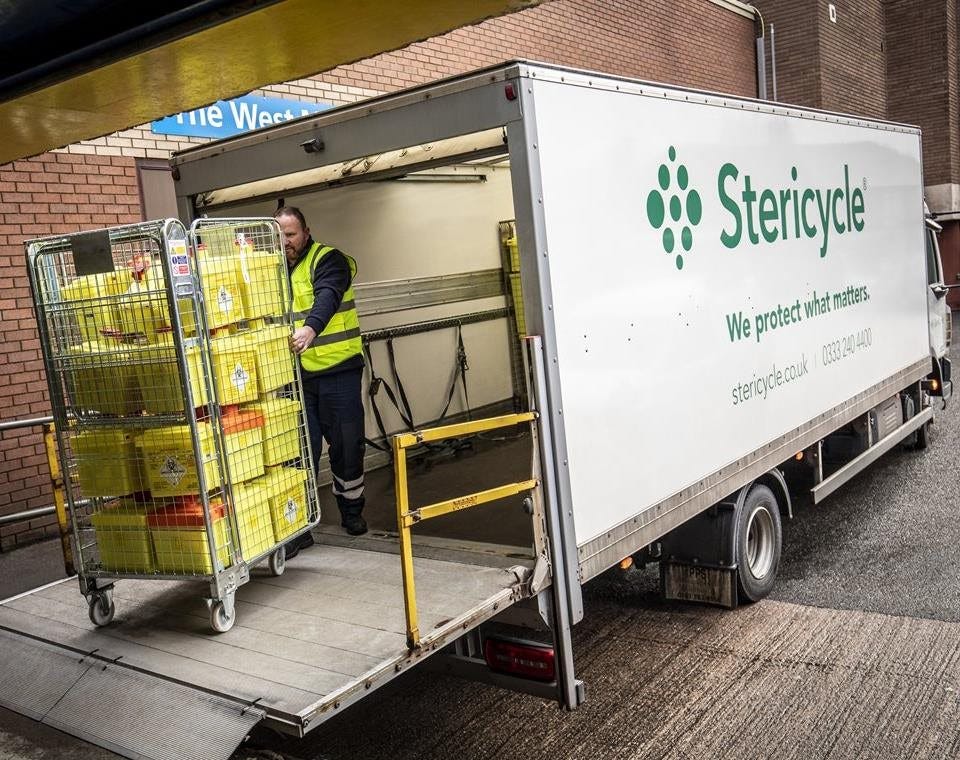
This Stericycle bribery scandal is not just another case of corporate compliance gone wrong. An ugly example of how public health systems are sold off in bundles to the biggest bidders conquistar technical services contracts. The issue is no longer just the isolated misconduct of a former Chief Financial Officer who has been indicted for alleged role in an $10 million dollar bribery scheme involving public officials in Mexico, Brazil and Argentina. It has to do with the criminal usurpation of state integrity.
Waste management of medical waste is not a regulating function on the outskirts. It occupies a unique space at the intersection of public health, environmental safety and human dignity. Hospital waste is infectious, toxic or hazardous and should be managed with pinpoint accuracy, transparency and stringent legal scrutiny. The impact of procurement abuses is even more severe when contracts for these sorts of services are won through bribery instead of merit. Perhaps most importantly, corruption in this sector taints governance itself.
The alleged conduct of Stericycle lays bare a deeply troubling reality: for much of the country, “healthcare services” can be a euphemism concealing an ugly market driven by influence-peddling, collusion and institutional capture. Scandal implies public health was not a legal obligation or moral trust but something to be bought. They didn’t just buy a contract. It was privileged access to state power, administrative discretion, and the silence of accountability.
It is, for this reason, that the Stericycle case should not read as a simple bribery prosecution but rather evidence of structural corruption at cross-border business. Bribery of this scale does not occur in a vacuum. It needs pliable bureaucracy, obedient elites, limited control and a corporate culture ready to put legality below profit. So the issue is not just about one amphetamine plant or an entire corporation, it does go beyond a single miscreant executive. Much deeper, however, is a pathology that arises from the fact that hazardous waste can become an embodiment of dangerous governance.
Yet there is a heartless irony at the core of this scandal. Medical waste is a product of societies grappling with life preservation, infectious disease treatment and the protection of vulnerable populations. But that waste management was reportedly converted to a bribery pipeline. Or more plainly a sector meant to promote public health became an avenue for corrupt enrichment. That is not just unethical. It is politically obscene.
The scandal also shatters the comforting fiction that multinational corporations are by their very nature, spreading better standards of legality and professionalism. More often than not, they export something altogether different: high end corruption in the guise of legal departments and slogans about compliance along with impeccably produced sustainability reports. When the practice of bribery becomes a central part of market expansion strategies, corporate globalization shifts from being an agent for modernization to one that facilitates transnational predation.
In this tale, Madame Latin America must never be reduced to the corrupt geography beholding her. Mexico, Brazil and Argentina are not just places where bribery occurred. These are jurisdictions that corporate actors used to take advantage of political and administrative vulnerabilities, as they have allegedly desired. That distinction matters. The lesson is not that corruption is the monopoly of the Global South, but rather that global capital often engineers itself around and then profits from holes in public power.
What, then, should follow? Not another theatrical compliance reform. Do not need another shiny statement of corporate ethics Stericycle offers up an opportunity for strong enforcements, international prosecutorial coordination, and public procurement bans as well the type of transparency that the medical waste dead end contracts they buy must mandate be made public. More profoundly, it requires an ethical transformation: the public health enterprise needs to cease being a vending machine for bribed middlemen and commercial air traffic controllers.
Assuming the claims are substantiated, this will serve as a damning indictment of how quickly public protections can be undermined when law is regarded merely as an obstacle to overcome rather than another boundary. The worst part of all is not only that bribes were allegedly paid. The actual scandal is the systems responsible for life were weak enough to sell out.
And that is not the waste hospitals threw away, but what corruption has left behind inside state limits, Stericycle’s most toxic exposure.
Fransiscus Nanga Roka
Faculty of Law University 17 August 1945 Surabaya Indonesia