Africa
Remembering Shehu Musa Yar’adua -By Zayd Ibn Isah
Ultimately, it reminds us that the work Shehu Musa Yar’adua started remains unfinished, and that the responsibility of completing it now rests on all of us. Not too long ago, the Shehu Musa Yar’adua Foundation publicly launched an anthology themed “Letters To The Union We Hope To Become”. This anthology drew beautiful writing from a range of Nigerians who, like the icon which it honours, overlooked present circumstances and dared to believe in Nigeria.

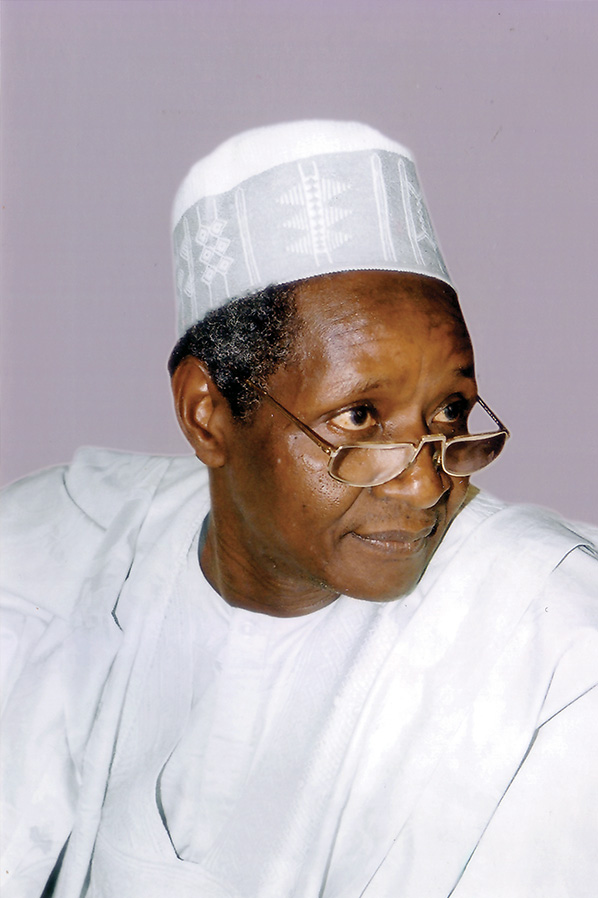
I have visited the magnificent architectural edifice that is the Shehu Musa Yar’adua Centre on several occasions, and only a few of those visits were for events rather than courtesy calls on my elder brother and mentor, Olusegun Adeniyi. Curiously, despite my frequent visits, he never took me to the Shehu Musa Yar’adua Museum, until the day I came with my wife.
It was almost as if he had been waiting for me to get married before granting me the privilege of a peep into the life of Yar’adua. When I complained that all the while I had been coming there he had never given me a tour of this historical monument, Mr. Adeniyi jokingly replied that he did not know me. Na so my elder brother take deny me o.
I must admit that I never even knew there was a museum inside the Centre. In all honesty, it was my wife’s curiosity, about the Centre, how it came about, who owns it, and whether it belongs to the government or the Yar’adua family, that eventually led us there.
At the museum, Mr. Adeniyi told the curator to give my wife a tour of the place; he specifically mentioned my wife. That was when I knew that na only me waka come, as we say in pidgin. The curator welcomed us to the Shehu Musa Yar’adua Museum and began by explaining the early life of the late sage: the primary school he attended, his early military career, his foray into politics, his imprisonment, and his eventual death in custody. Indeed, the museum is an encapsulation of Shehu Yar’adua’s remarkable life. I was struck by an epiphanous sense of what a good writer could write merely by visiting the place: an inspired biography.
Here’s a bit of national history to ponder on. Shehu Musa Yar’adua was incarcerated alongside former President Olusegun Obasanjo by the then military ruler, General Sani Abacha, over alleged coup fears. There was immense pressure from the international community on Abacha to release them. Several local and international bodies wrote letters of solidarity urging their freedom. One letter that stood out for me was Yar’adua’s letter of appreciation to former United States President Jimmy Carter, who made tireless efforts to secure their release.
From that letter, one could clearly see that Shehu Musa Yar’adua was more concerned about Nigeria’s freedom from bad governance than his own personal liberty. I would like to quote the last paragraph verbatim:
“Mr. President, my country is today in the grip of a very greedy and inept dictatorship. The once viable economy is in tatters, but even worse, its institutions are being destroyed. In the face of all this, one’s personal problems appear inconsequential. In short, Mr. President, much more than Gen. Obasanjo and myself, Nigeria needs saving. Please help save my country.”
Reading this paragraph at the museum nearly brought tears to my eyes, tears that still well up even as I write this article. After reading that letter, one need not ever question Shehu Musa Yar’adua’s love for his country. Anyone who has ever been to prison, not the VIP kind, understands the value of freedom. Yet for Shehu Musa Yar’adua, Nigeria’s freedom mattered more than his own, even if it meant dying in captivity.
Not only children in schools, but all Nigerians should read that letter. It ought to be translated into both major and minor languages across the country, so that every citizen, young and old, may learn, or relearn, the true meaning of patriotism: how to love one’s country, to put nation above self, and to serve without expecting anything in return. As citizens, we will never experience true freedom until our country itself is free from the shackles of self-serving leadership and corruption.
As we were about leaving the museum, we saw a portrait of Shehu Musa Yar’adua’s younger brother, Umaru Musa Yar’adua, the late President for whom Olusegun Adeniyi served as official spokesperson during his tenure. He stood still, staring at his late boss. “My oga,” he muttered. I wondered what was going through his mind at that moment; perhaps I will ask him someday.
Umaru Musa Yar’adua may not have completed his first tenure in office, but many Nigerians still regard him as one of the best Presidents the country has ever had. He governed with patriotism and altruism. Sadly, we did not fully appreciate him until he was gone, a classic case of not knowing what we had until we lost it. I truly understood the depth of the nation’s loss when Mr. Adeniyi once told me that, as presidential spokesperson, President Yar’adua did not provide him with an official vehicle. It took the intervention of the current UN Deputy Secretary-General, Amina J. Mohammed, for him to get a Prado Jeep. He governed by the principle of austerity, and that discipline helped steady the ship of state within the short period he ruled. Truly, Nigeria owes the Yar’adua family a deep debt of gratitude for their sacrifices and love for country.
From the museum, my elder brother took us to the unfinished bridge within the Centre, a structure I had never noticed despite my numerous visits. Once again, he had never thought it necessary to show me until I came with my wife. Perhaps there really are privileges attached to marriage, and I say this half-jokingly to single men: if you can afford it, please marry. There are certain blessings and favourable benefits, it seems, that only married men can enjoy. Such is the power of a woman.
But I digress. Back to the unfinished bridge. As Mr. Adeniyi explained, the bridge symbolises Shehu Musa Yar’adua’s life and struggle, a journey interrupted, a vision left unrealised. It stands as a silent reminder of what Nigeria lost: a man whose commitment to justice, democracy, and national renewal was cut short. The bridge does not lead anywhere, yet it speaks volumes and gives cause for serious contemplation.
Ultimately, it reminds us that the work Shehu Musa Yar’adua started remains unfinished, and that the responsibility of completing it now rests on all of us. Not too long ago, the Shehu Musa Yar’adua Foundation publicly launched an anthology themed “Letters To The Union We Hope To Become”. This anthology drew beautiful writing from a range of Nigerians who, like the icon which it honours, overlooked present circumstances and dared to believe in Nigeria.
And by Almighty God, if we were to all show as much love for this country as the Yar’aduas once did and still do, the Nigerian Dream will surely come to fruition in our lifetimes.
Zayd Ibn Isah can be reached at lawcadet1@gmail.com