Forgotten Dairies
Russia’s Pragmatic Dialogue with Potential Entrepreneurs: the Path to Stable Future -By Kestér Kenn Klomegâh
In the context of emerging new world, the 29th St. Petersburg International Economic Forum (SPIEF) is a platform where political leaders, potential investors and corporate executives can practically look for business opportunities. SPIEF has been the main cornerstone, charting dignified economic integration while utilizing available resources, human capital combined with financial capability, and the possibility of improving Russia’s economy and its integration into a better world.

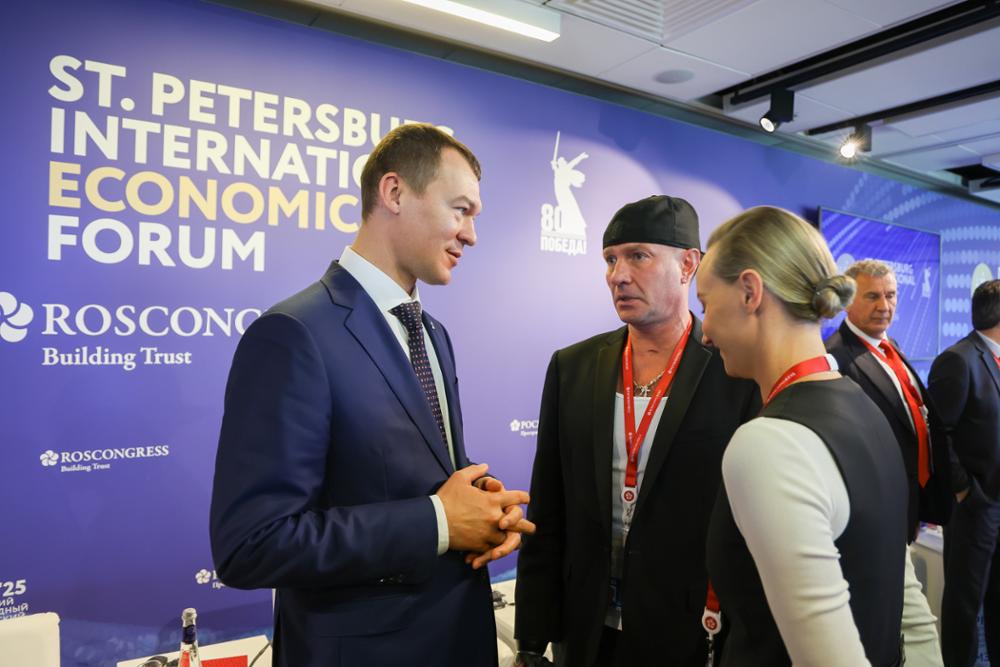
Russia has made ‘multipolarity’ its guiding principle to engage in dialogues with sincerity and openness, attract potential foreign investors for business, trade and investment collaborations. As tradition, June usually marks a distinctive milestone on Russia’s callender, as St Petersburg, the second largest city welcomes thousands of guests and delegations to its international economic forum. In practical terms, time has elapsed, and this June, St. Petersburg welcomes visitors to the 29th traditional business forum from June 3 to 6, at the ExpoForum Convention and Exhibition Centre. The theme of this year’s gathering is “Pragmatic Dialogue: the Path to a Stable Future.”
The forum comes at a time of profound change in the global economy and a crisis in the existing model of globalization. Despite that, it offers a unique platform for working out practical solutions aimed at sustainable development, strengthening technological sovereignty, and building a fair, multipolar system of interaction. As expected, the forum brings together leading politicians, business representatives, academics and public figures from across the world. Without doubts, Russia, as an integral part of the global economic system, remains open to constructive and equal partnership.
With resonating influence, Russian President Vladimir Putin’s greetings to the participants, organisers, and guests, ahead of the opening underlined the outstanding fact that Russia still faces a lot of challenges, the most pressing economic integration issues and connectivity with the global economy. Putin has, over the years, mentioned the necessity to improve trade relations and economic collaborations with foreign partners. “At a time when international relations and economic ties are plagued by unprecedented challenges, fragmentation and disruption of supply and technological chains, pragmatism and a dialogue based on equality are particularly needed,” Putin, categorically, emphasized in his statement.
According to his opinion, Russia has always been, and has to remain as an integral part of the global economy. That is invariably related to substantive and results-driven discussions that will contribute to the development of new and effective solutions across all spheres, including energy, digital transformation, food security, human capital development, and strengthening financial and trade sovereignty.
Therefore, Russia is open to constructive cooperation with all partners who share the principles of mutual respect and are ready to develop fair and long-term relations, and prepare to actively engage with foreign economic actors and significantly with multilateral institutions.
The forum’s agenda is divided into five strategic tracks, each addressing key challenges of the time.
First: “The Global Economy: Between Confrontation and Cooperation.” This track will focus on the restructuring of the global financial system, the transformation of international trade, and the development of logistics corridors (including the Trans-Arctic Route) against a backdrop of geopolitical turbulence. Particular attention will be given to strengthening ties between the BRICS, SCO and EAEU countries, as well as other major economies of the Global Majority (in Asia, Africa, the Middle East and Latin America).
Second: “The Russian Economy: Structural Changes for Returning to a Growth Trajectory.” This will be a central focus of the Forum’s work. Discussions will cover the transition to a new growth model based on technological sovereignty, a new model of industrialisation, the advancement of high-tech industries, space exploration, and other innovative domestic sectors. There will also be a presentation of the National Investment Climate Rating for Russian regions.
Third: “Technologies Shaping the Future.” This area will become the main international platform for discussions on digital sovereignty, the use of artificial intelligence (AI First), robotics, Big Data, and cybersecurity in an era of global conflicts.
Fourth: “The Social Sphere in the Age of New Technologies.” This track looks at human capital as the foundation of stability. Experts will discuss ‘Labour Market 2.0’, training personnel for technological leadership, the transformation of the education system, support for families, and promoting the Russian language as a strategic asset.
Fifth: “An Environment to Live In: New Technologies – a New Quality.” This will focus on the integrated development of regions, urban planning, the creative economy, and the strategic development of the Arctic and the Northern Sea Route.
On international cooperation, the programme includes sessions on BRICS topics, an SCO Business Forum, a B20 discussion, and a series of bilateral business dialogues (including Russia–China, Russia–India, Russia–the UAE, Russia–Africa and others).
At the SME Forum, under the overarching theme of the creative code of the economy as a new growth formula for small and medium-sized businesses, entrepreneurs and government representatives will discuss the use of artificial intelligence, digital acceleration for small businesses, and family entrepreneurship.
The Ensuring Drug Security Forum will focus on technological sovereignty in the domestic pharmaceutical industry, biotechnology, and the creation of a new global healthcare architecture.
The “Day of the Future” International Youth Economic Forum (held on June 6) will be a key venue for dialogue between young scientists, entrepreneurs and opinion leaders on the professions of the future and the digital economy.
As usual, the Russian Ministry of Foreign Affairs is taking an active part in the Forum. The Ministry’s leadership will be involved in several sessions. On June 4, Deputy Foreign Minister Mikhail Galuzin will take part in a roundtable discussion entitled “Union State: Time to Be First.” On June 5, Deputy Foreign Minister Alexander Pankin will speak during a special thematic session called “Russia–APEC: Broad Cooperation Prospects on the Horizon until 2035.”
The Information and Press Department will host a panel session on June 3 entitled “Your Words are Like Bullets: How Information has Transformed into the Most Powerful Weapon of the Modern Era,” and will also take part in a session on “The Limits of Artificial Intelligence in the Media.”
On June 4, the Department will participate in the session “Creative Economy: Competing Narratives or Uniting Around Meanings” and, together with The International Affairs journal, will host the session “The Abduction of Europe: The Unlearned Lessons of History. What Future Have Europeans Stolen from Themselves and Coming Generations?”
On June 5, again with the participation of Foreign Ministry representatives: “A Cultural Code as a Foundation for Identity: Russia’s Experience and Future Outlook.” The aim is to put together a comprehensive report on Foreign Ministry’s participation in SPIEF, and will certainly publish it on the official channels.
SPIEF is coordinated by Roscongress Foundation. Since its establishment in 2007 by a decree of Russian President Vladimir Putin, it has marked chronological achievements in boosting and strengthening corporate investor networking and entrepreneurship. It has also taken several key initiatives to foster potential entrepreneurship, leveraging the vast opportunities and supporting the growth of small and medium enterprises (SMEs) in the Russian Federation.
In the context of emerging new world, the 29th St. Petersburg International Economic Forum (SPIEF) is a platform where political leaders, potential investors and corporate executives can practically look for business opportunities. SPIEF has been the main cornerstone, charting dignified economic integration while utilizing available resources, human capital combined with financial capability, and the possibility of improving Russia’s economy and its integration into a better world.