Africa
Sad, As Journalists Are In A Catch-22 Situation Over Section 24 Of Nigeria’s Cybercrime Act Of 2015, by Isaac Asabor

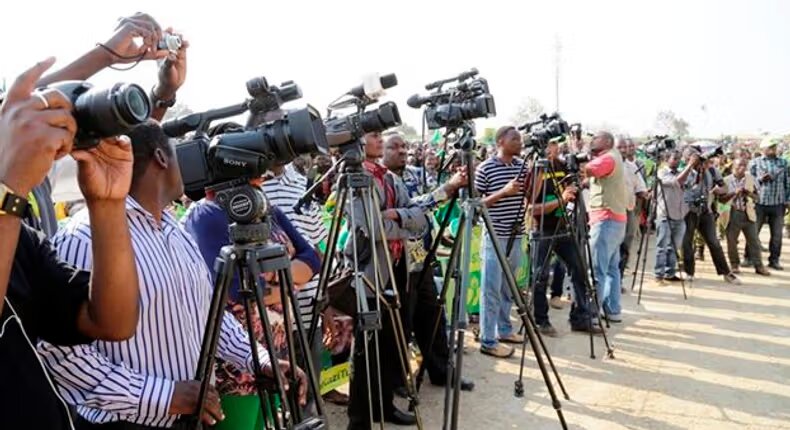
The landscape of journalism in Nigeria is fraught with unique challenges, but none more insidious than the looming threat posed by Section 24 of the Cybercrime Act of 2015. This controversial piece of legislation, ostensibly created to combat cybercrimes, has morphed into a potent weapon for suppressing dissent and silencing critical voices. It is disheartening that a profession tasked with safeguarding public interest finds itself shackled by laws that undermine its very essence.
For the sake of clarity, Section 24 of the Cybercrime Act criminalizes sending messages through a computer system that cause “annoyance, inconvenience, danger, obstruction, insult, injury, criminal intimidation, enmity, hatred, ill will or needless anxiety to another.” These vague and subjective terms create a legal minefield for journalists, bloggers, and public commentators. Anything from a critical opinion piece to an investigative report can be construed as causing “annoyance” or “needless anxiety,” opening the door for harassment, intimidation, and arrest.
The penalties are severe: up to three years imprisonment, a fine of ₦7 million, or both. Such draconian measures place journalists in a Catch-22 situation, between fulfilling their ethical duty to inform the public and avoiding potential legal entanglements. The irony is profound: those tasked with exposing societal ills are now themselves endangered by a law that should protect their freedom of expression.
Since its enactment, Section 24 has been weaponized against journalists and public intellectuals. Agba Jalingo was detained for 34 days under its provisions, four journalists from “Informant247” faced charges after alleging corruption at a Kwara State Polytechnic, and Daniel Ojukwu of the Foundation for Investigative Journalism (FIJ) endured days of detention for exposing government corruption. The list is long and growing, underscoring how the law has become a tool for silencing dissent rather than fostering accountability.
This chilling effect extends beyond the individuals targeted; it sends a clear message to the entire profession: tread carefully or face dire consequences. Investigative journalism, a cornerstone of democracy, is particularly at risk, as reporters hesitate to pursue stories that could implicate powerful individuals or institutions.
Against the backdrop of the foregoing viewpoint, it is not misnomer to opine in this context that the Nigerian legislature has an urgent responsibility to revisit Section 24 of the Cybercrime Act. Laws, especially those concerning freedom of expression, which must be tailored to support democracy, not hinder it. The current wording of Section 24 is alarmingly vague, allowing for its misuse against journalists, activists, and even virtually every Nigerian citizen.
Not only that, the Nigerian lawmakers should look to global best practices for guidance. In 2015, India’s Supreme Court struck down Section 66A of its IT Act, which criminalized sending “offensive” or “annoying” messages online, ruling that the terms were overly broad and violated free speech. Similarly, the ECOWAS Court of Justice has declared Section 24 inconsistent with international standards for freedom of expression and called for its revision.
It is now incumbent on Nigerian lawmakers to act decisively. Democracy thrives on a robust marketplace of ideas, where citizens and journalists can express themselves freely without fear of reprisal. Section 24 in its current form undermines this principle, casting a shadow over Nigeria’s democratic aspirations.
Amending the law would not only protect journalists but also restore public trust in the legislative process. It would signal a commitment to democratic values and the rule of law, ensuring that the freedoms enshrined in the Constitution are not mere words but lived realities.
It is expedient to note in this context that failure to address this issue has far-reaching consequences. The unchecked misuse of Section 24 has already resulted in numerous cases of harassment and detention, eroding public confidence in the justice system. If left un-amended, it will continue to stifle free speech, discourage investigative reporting, and undermine Nigeria’s standing as a democratic nation.
Lawmakers must ask themselves a critical question: What kind of democracy allows its citizens to be imprisoned or fined exorbitantly for causing “annoyance” or “needless anxiety”? The answer is clear: not a healthy or vibrant one. The time to act is now, before more voices are silenced and more freedoms eroded.
The passage of the Cybercrime Act in 2015 raises uncomfortable questions for Nigeria’s media community. Where were the journalists, media unions, and advocacy groups when this law was enacted? How did such a profession, dedicated to vigilance and speaking truth to power, allow itself to be blindsided? The silence of the Nigerian Union of Journalists (NUJ), Nigerian Guild of Editors (NGE), RATTAWU, and other bodies during the law’s drafting and enactment is particularly troubling.
This collective lapse underscores a critical failure: the price of freedom is eternal vigilance, and we failed to pay it when it mattered most.
While the situation is dire, it is not irredeemable. The media community must now rally to advocate for the repeal or substantial amendment of Section 24. This effort will require coordinated action from all stakeholders, journalists, media houses, unions, civil society organizations, and legal experts. Advocacy campaigns, legal challenges, and sustained public pressure are necessary to ensure that this law is either repealed or reformed to align with international standards.
The struggle for media freedom must also extend beyond Section 24. Other draconian laws, including the Sedition Act, remain on the books and pose similar threats. A comprehensive review of Nigeria’s legal framework concerning freedom of expression is long overdue.
While high-profile individuals like Dele Farotimi may have the resources and public support to navigate the pitfalls of Section 24, the same cannot be said for ordinary journalists, bloggers, and content creators. These individuals are most vulnerable to the law’s misuse and are often left to fend for themselves when targeted. It is incumbent upon the media community to stand in solidarity with these individuals and ensure they are not abandoned to face persecution alone.
This solidarity must also include capacity building. Journalists must be educated about their rights and the legal frameworks governing their work. Media houses must prioritize legal support for their staff, and unions must provide robust advocacy and protection for their members.
The Cybercrime Act of 2015, particularly Section 24, represents a dark chapter in Nigeria’s democratic journey. It is a reminder of the fragility of freedom and the need for constant vigilance to protect it. For Nigerian journalism to thrive, it must confront this existential threat head-on, rallying as a community to demand the repeal of oppressive laws and the safeguarding of press freedom.
The stakes could not be higher. A free press is the bedrock of democracy, and its erosion threatens the very fabric of Nigerian society. It is time for lawmakers to prioritize the amendment of Section 24, demonstrating their commitment to democratic values and the protection of fundamental rights. Journalists must refuse to be victims of a Catch-22 situation, reclaiming their rightful role as watchdogs of democracy.
Freedom of expression is not negotiable; it is a cornerstone of every thriving democracy. The question remains: will Nigeria’s lawmakers rise to the occasion, or will they let this oppressive law continue to stifle the voices of truth? The answer lies in their hands, and in ours.