
Africa
State Creation Is Useless In Nigeria’s Current Crisis -By Beatrice Bala Amos
We must resist the temptation to tinker with geography while ignoring governance. The problems Nigeria faces are not about lines on a map; they are about leadership, vision, and the political will to serve the people. More states will not fix a broken system—they will only multiply the symptoms of its failure. Let us focus instead on fixing what is already broken. That is the real work that must begin.

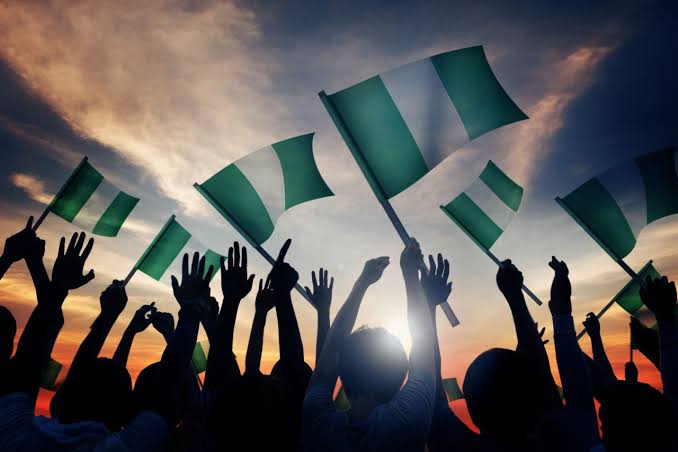
Nigeria is a country grappling with crises of historic proportions. From the rising cost of living to an unprecedented wave of insecurity, every indicator points to a nation on the edge. Inflation has reached record highs, with food prices tripling in many parts of the country. Banditry, terrorism, and kidnapping are now regular occurrences, even in areas once considered safe. Over 130 million Nigerians are currently classified as multidimensionally poor, living without access to proper healthcare, education, housing, or nutrition. Despite these realities, a growing number of political voices are calling for the creation of new states. This agitation has gained momentum in the National Assembly and within political circles across the country. But in truth, the idea of creating more states in the current climate is not only misplaced—it is deeply irresponsible and detached from the suffering of ordinary Nigerians.
State creation has long been romanticized in Nigeria as a pathway to development and political equity. Its proponents argue that carving out new administrative entities brings governance closer to the people. They claim that it allows minority groups to enjoy greater representation and access to federal resources. However, the truth is that many of the 36 states we already have are barely functional. Most states are completely dependent on monthly allocations from the federal government to survive. Many cannot pay salaries without borrowing or waiting for oil revenue to trickle down from Abuja. What then is the rationale for creating new states when the existing ones are drowning under the weight of mismanagement and economic stagnation?
Let us examine the economic side of the matter. Every new state comes with massive overhead costs. It must have a governor, a deputy governor, commissioners, a State House of Assembly, judges, permanent secretaries, and a full civil service structure. That means new government houses, vehicles, administrative buildings, official residences, and the inevitable corruption that accompanies budget disbursement. In a country where recurrent expenditure already swallows over 70% of national and state budgets, the financial implication of state creation is simply unsustainable. The funds that could have been used for healthcare, education, or agricultural development will be used instead to set up a new class of political appointees. This is not development; it is duplication and elite expansionism.
What is more concerning is that most of the advocates for state creation are political elites who stand to benefit directly from the exercise. Their interests are rarely about the welfare of the people but about securing political dominance, controlling more resources, or creating more power centers for their ethnic or regional bloc. They do not live in the villages they claim to represent. They are not affected by the bad roads, empty schools, or hospitals without drugs. Their children school abroad, and their families receive medical treatment in Europe. For them, a new state is just another political trophy—a structure they can manipulate and control.
The security situation in the country alone should render any discussion about state creation moot. Large swathes of Nigeria’s territory are currently ungovernable. In the northwest and north-central, bandits control farmlands and highways, forcing entire communities to pay taxes in exchange for survival. In the northeast, Boko Haram and ISWAP continue to terrorize towns and villages. In the southeast, secessionist unrest and criminality have made travel dangerous and commerce unstable. Even the once relatively calm southwest is now plagued by kidnapping and cult violence. How does it make sense to increase the number of administrative units in a country that cannot even secure the ones it has?
There is also the issue of poor infrastructure. Basic amenities like roads, power, clean water, and schools are absent in many existing states. A visit to local government areas across Nigeria will reveal a depressing uniformity of underdevelopment. Primary healthcare centers are dilapidated or shut down. Public schools are overcrowded and under-resourced. Roads are either unpaved or full of potholes, making the movement of goods and people difficult. Many communities still rely on contaminated streams for drinking water. Will the creation of new states magically solve these problems? The answer is no. These are failures of governance, not geography.
Furthermore, the very idea of state creation as a solution to marginalization is flawed. Marginalization in Nigeria is not about the number of states or local governments; it is about access to justice, fairness in appointments, and equitable distribution of national wealth. There are regions with multiple states that still feel marginalized. There are ethnic groups that dominate a state but still fail to deliver basic services to their own people. Equity cannot be achieved by creating more boundaries—it is achieved by enforcing policies that ensure inclusion and equal opportunity across the board.
The lack of fiscal discipline In many states also underscores why more states are not the answer. Too many governors run their states like personal fiefdoms, focusing on cosmetic projects, white-elephant constructions, and massive debt accumulation. Internally Generated Revenue (IGR) is low in most states, with some collecting less than ₦2 billion per year. The dependence on federal allocations has created a lazy and rent-seeking political culture. Instead of developing innovative economic strategies or harnessing local resources, states sit back and wait for oil money. Adding more states will only multiply this pattern of laziness and dependency.
Also, let us not forget the danger of deepening ethnic and regional divisions. Every demand for a new state is usually based on identity—ethnic, religious, or regional. It encourages zero-sum thinking, where one group’s gain is seen as another’s loss. This further fragments national unity and creates new flashpoints for conflict. In a country already struggling to manage its diversity, creating more layers of identity-based governance could be explosive.
Nigeria’s democracy is still young and fragile. Instead of focusing on more state creation, we should be working on electoral reforms, strengthening the rule of law, and building institutions that can withstand political interference. We should be improving transparency in public finance, ensuring justice for all citizens, and holding leaders accountable for their actions. These are the kinds of changes that can improve the lives of ordinary Nigerians—not the addition of more states.
There is also an international dimension to this argument. Investors are already wary of doing business in Nigeria because of our unstable political environment, poor infrastructure, and weak legal systems. More states will not improve our investment climate. If anything, they will add to the layers of bureaucracy, increase the risk of inter-state conflict, and raise the cost of doing business.
Young Nigerians, who represent over 60% of the population, are not clamoring for new states. They are asking for jobs, skills, access to capital, and opportunities to innovate. They want an education system that prepares them for the real world and a healthcare system that can save lives. They want electricity to power their businesses and roads to connect them to markets. These are legitimate demands, and our leaders must stop ignoring them.
Moreover, creating more states now will likely weaken governance at the center. The more states you have, the more voices at the federal table, and the harder it becomes to build consensus on national issues. Federalism should promote efficiency, not fragmentation. What we need is a leaner, smarter federation—not a bloated one.
Many Nigerians are growing disillusioned with politics because they feel that leaders are disconnected from their realities. When lawmakers prioritize state creation over food security, education reform, or job creation, it sends a clear message: politics is about power, not people. This erosion of trust in leadership is dangerous for national stability and democratic growth.
Even the logistics of creating new states are fraught with challenges. Boundary disputes, power tussles, relocation of workers, and reallocation of resources often lead to prolonged legal and administrative chaos. Instead of peace and development, state creation can lead to instability and tension, especially in ethnically mixed regions.
The 1999 Constitution already gives states significant powers to govern themselves. They can create development commissions, attract foreign investment, build infrastructure, reform education, and strengthen health systems. The failure of existing states to deliver is not due to their size but due to poor leadership, corruption, and lack of vision.
What Nigeria needs right now is a national agenda focused on economic revival, national security, youth empowerment, and institution building. These are the building blocks of progress. When these are in place, the structure of the federation can be reviewed—not as a political gimmick, but as part of a thoughtful and inclusive reform process.
If we continue down the path of distraction and misprioritization, we risk making things worse. History will not be kind to a generation of leaders who chose to carve new boundaries while the nation was on its knees. State creation is not a solution—it is a symptom of a political class out of touch with reality.
We must resist the temptation to tinker with geography while ignoring governance. The problems Nigeria faces are not about lines on a map; they are about leadership, vision, and the political will to serve the people. More states will not fix a broken system—they will only multiply the symptoms of its failure. Let us focus instead on fixing what is already broken. That is the real work that must begin.
Beatrice Bala Amos Is A 300 Level Student From Mass Communication Department University Of Maiduguri.






















You must be logged in to post a comment Login