
Africa
Flood Warnings Deserve Action – Not Just Alerts -By Ugwu Augustine
The truth is that we cannot stop the rain—but we can stop the tragedy. Other countries face storms and survive because they prepare. We cannot afford to wait until every rainy season becomes a national emergency. Climate change is real, and it is intensifying our flood seasons. Forecasts will get worse. The time to act is not tomorrow. It is now.

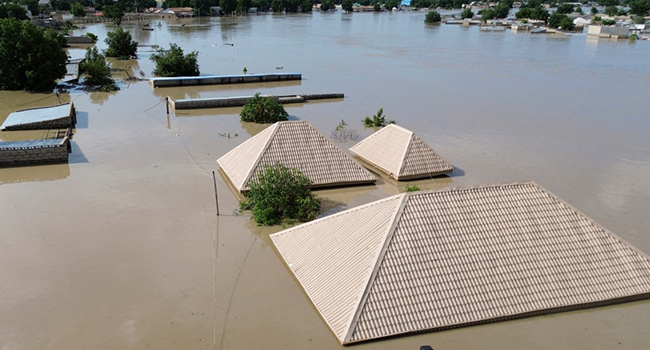
Every year, the rains come. And every year, Nigeria is caught unprepared. This August, the Federal Government has again issued an alert: from August 5 to 9, at least 19 states and 76 communities are at risk of flooding. It’s not the first time we’ve heard it, and sadly, it won’t be the last.
The alerts were issued by the Nigeria Hydrological Services Agency (NIHSA) and the National Emergency Management Agency (NEMA). They have listed vulnerable states like Lagos, Ogun, Delta, Anambra, Rivers, Gombe, Kaduna, and Plateau, warning residents to brace for heavy rainfall and its aftermath. But how many of these warnings have translated into real action? Beyond the headlines and media statements, where are the physical preparations—cleared drainages, pre-positioned relief materials, early evacuation protocols?
Lagos State has already advised residents in flood-prone areas like Lekki, Ajegunle, and Ikorodu to relocate. A necessary warning, yes. But relocation is not a simple task. Where should people go? Who is providing transport? Where are the safe havens?
It is easy to issue warnings, but far harder to build infrastructure that keeps people safe. Most flood-prone communities in Nigeria are chronically underserved. Drainage systems are blocked or non-existent, roads are poorly maintained, and no proper flood barriers are in place. Flooding is not just a natural disaster. In Nigeria, it is a product of neglect. A disaster made worse by poor planning, poor enforcement of environmental laws, and a consistent failure to act until lives and properties are lost.
We cannot continue to act like flooding is an unpredictable event. Every year, it happens. Every year, communities are displaced. Every year, emergency agencies scramble—after the damage is done.
In 2022 and 2023, thousands of people lost their homes to floods. In 2024, entire farming communities were wiped out. Already this year, Niger State’s Mokwa flood disaster claimed over 500 lives and left thousands homeless. That flood, like many others, wasn’t caused by rain alone. Poor water management, dam overflow, and the absence of preventive structures all contributed to the scale of destruction. And still, we see no urgency in building the Dasin Hausa Dam to mitigate the impact of Cameroon’s Lagdo Dam release.
If we know the cause, why are we so slow to fix it? Flood alerts should trigger immediate steps: relocation assistance, sandbagging in key areas, stockpiling of food and medication, and activation of rapid-response teams.
Instead, what we often get is a press release. The reality is that most flood-prone Nigerians don’t even hear these alerts in time. They wake up one morning and find their homes submerged, their belongings swept away, and no one to call. Even when there’s advance notice, many don’t evacuate—not because they don’t want to, but because they have nowhere to go. Our emergency shelters are inadequate, underfunded, or simply not there. People would rather risk the flood than become destitute.
Flooding also brings other tragedies—cholera outbreaks, loss of farmland, hunger, and school closures. When water overflows, it washes away more than homes. It drowns opportunity, stability, and progress.
And it is always the poor who suffer the most. The wealthy build homes on higher ground, fortified with concrete and escape plans. The poor live in swampy neighborhoods, with zinc rooftops and no plan B.
If the government is serious about protecting lives, then action must follow warnings. That means equipping NEMA and state emergency units with funds, personnel, and tools to prevent, not just respond. It means treating flood mitigation the way we treat elections: with preparation months in advance, a clear strategy, and the political will to enforce rules—even if it means demolishing structures built on waterways.
We also need to educate communities. Many Nigerians still dispose of waste in drainages. Urban planning must be enforced, and environmental education must go beyond jingles to real engagement.
The truth is that we cannot stop the rain—but we can stop the tragedy. Other countries face storms and survive because they prepare. We cannot afford to wait until every rainy season becomes a national emergency. Climate change is real, and it is intensifying our flood seasons. Forecasts will get worse. The time to act is not tomorrow. It is now.
Because if the only response we give to flood warnings is press releases, we are simply watching water write our national obituary—one soaked community at a time.
Ugwu Augustine Is A 300 Level Student From Mass Communication Department University Of Maiduguri.

























You must be logged in to post a comment Login