Africa
The Cripple Man, Blind Man’s Wife, Biafra and Nigeria -By Prince Charles Dickson Ph.D
To be fair, there have been efforts. The postwar policy of reintegrating ex-combatants, the spreading of federal institutions, the rituals of national youth service, the presence of Igbo, Yoruba, Hausa, Ijaw, Tiv and others in classrooms, markets, and workplaces across the country. These matters. But they coexist with an unspoken rule: do not dig too deep into the past, do not ask too many questions about the war, and do not demand accountability for old crimes.

The young palm tree which shoots up at dawn and tries to touch the sky should ask why older ones have not succeeded in doing so.
The cripple man kissed the wife of the blind man, and the dumb man saw him and was awed. Now how can the dumb tell the blind what he saw?
The Nigerian Civil War is one of those older palm trees. It still stands in our national landscape, bent, scarred, but very much present. Yet each generation of young Nigerians behaves like a new palm, stretching upward as if history does not exist, as if the soil is not still soaked with an old conflict that was never properly named, let alone healed.
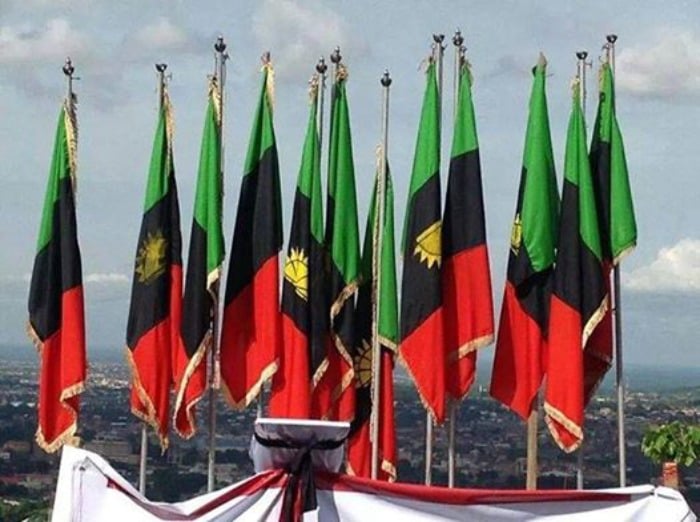
Between 1967 and 1970, Nigeria and the secessionist state of Biafra fought a brutal war. The slogans were lofty. From Lagos came “To keep Nigeria one is a task that must be done.” From Biafra came the assertion that unity without justice is captivity. In the end, Biafra surrendered, and General Yakubu Gowon declared “No victor, no vanquished”, promising reconciliation, reconstruction and rehabilitation. On paper, it was a generous creed. In practice, it became something closer to: no victor, no vanquished, but plenty of silent wounded.
Today, more than five decades later, the question hangs in the air like harmattan dust. Has the nation truly healed, or are we simply pretending that the limp is fashionable?
The parable of the cripple man, the blind man’s wife and the dumb man captures our national dilemma with uncomfortable accuracy.
Who is the cripple in the Nigerian story? One could argue it is the Nigerian state itself, unable to walk straight in justice. It moves, but awkwardly. It claims unity but often trips over its own inequities. Its institutions are weak, its federal character selectively applied, its promises of equity heavily rationed.
The blind man might be the ordinary citizen, especially generations born after the war. They were never allowed to see the full truth. Our schoolbooks reduce the war to a few sanitized paragraphs. Many homes do not speak about it. Whole regions carry memories in whispers, in songs, in silences that children learn not to question. The nation chose amnesia and renamed it “moving on.”
The wife of the blind man is the shared commons of this country: its oil, ports, political power, symbolic prestige, and access to opportunity. That wife is constantly being kissed, grabbed, negotiated over by the crippled elite, who know that the blind cannot see and the dumb cannot easily testify.
And the dumb man? That is the part of Nigeria that can see clearly but is not allowed to speak fully. It is the student whose curriculum edits out uncomfortable history. It is the civil servant who understands how lopsided decisions are, but has no language of safety to challenge them. It is the minority communities, the internally displaced, the victims of pogroms, massacres and ethnic cleansing whose testimonies are never recorded as official truth.
The dumb sees the abuse of trust. He watches the crippled state take liberties with the blind citizen’s wife, our shared resources and dignity. He is awed, not with admiration, but with shock. Yet he does not have the tools, platforms or protections to tell the blind what he has seen.
That is the tragedy of Nigeria’s postwar settlement. We proclaimed “no victor, no vanquished” but refused to build the channels through which the dumb could speak and the blind could see.
Did Nigeria heal from the Civil War, or did we only stop shooting?
Healing is more than the absence of bullets. Genuine healing requires truth, acknowledgement, restitution, and institutional guarantees that the old wounds will not be reopened with new knives. Instead, the Nigerian approach was a hurried national cover-up. We exchanged bullets for silence and called it peace.
The Igbo narrative of marginalization remains strong, and not without evidence. From abandoned property issues to the “twenty pounds” policy, from lopsided federal appointments to stalled infrastructure, there is a long memory of being asked to sing the national anthem while standing outside the main tent.
Yet, if we are honest, marginalization has become a national language spoken in multiple accents. The Niger Delta speaks of polluted waters and stolen wealth. The Middle Belt recalls villages erased in the name of land, faith and cattle. The North East counts the cost of insurgency and a state that arrived late and stayed weak. Even in the far North and South West, poor communities watch their lives shrink under the weight of a political and economic elite that feels more like an occupation than a representation.
So, we must ask a harder question. Is Nigeria marginalizing just one region, or is Nigeria marginalizing Nigeria, from all corners, with rotating victims and rotating beneficiaries?
Our problem is not only that one side lost the war. Our problem is that the entire country has refused to process what that war revealed about us: our capacity for cruelty, our addiction to power, our casual comfort with other people’s suffering, as long as it is translated into statistics.
Chukwuemeka Odumegwu Ojukwu warned in his reflection on unity that there is a difference between the unity of Jonah in the belly of the fish and the unity of holy matrimony. One is forced, suffocating, and ends in expulsion. The other is chosen, negotiated and leads to new life.
Which unity does Nigeria practice today?
Many Nigerians feel like Jonah, trapped inside an arrangement they did not design, hearing constant lectures on “indivisibility” while gasping for air. Our federalism is often a slogan rather than a functioning system. State creation has not always been about justice, but sometimes about elite bargaining. Power rotation is negotiated in smoke filled rooms, not rooted in constitutional clarity.
We insist on being one, yet refuse to do the hard work of becoming a fair one.
To be fair, there have been efforts. The postwar policy of reintegrating ex-combatants, the spreading of federal institutions, the rituals of national youth service, the presence of Igbo, Yoruba, Hausa, Ijaw, Tiv and others in classrooms, markets, and workplaces across the country. These matters. But they coexist with an unspoken rule: do not dig too deep into the past, do not ask too many questions about the war, and do not demand accountability for old crimes.
We want the benefits of holy matrimony without the vulnerability of courtship, confession and mutual respect.
If the cripple is to learn to walk straight, if the blind is to see, if the dumb is to speak, Nigeria must confront the Civil War not as an embarrassing chapter, but as a diagnostic scan.
We need an honest national conversation, not performative conferences. Our children should learn about the war in a way that humanizes all sides, honours the dead, confronts the atrocities and extracts lessons for today’s conflicts. Survivors and communities should have pathways to tell their stories without fear of being labeled unpatriotic.
Institutionally, we must move beyond rhetoric. Equality before the law, equity in appointments, transparent resource management and real federalism are not ethnic favours. They are the crutches that help a crippled state learn to walk differently.
Because if we refuse to create safe spaces where the dumb can testify, they will still speak, but through unrest, agitation and exit fantasies. If we refuse to help the blind see, they will still feel, but through resentment, suspicion and withdrawal.
The young palm tree must ask why older ones have not touched the sky. Nigeria is not the first country to fight a civil war. Some emerged wiser by telling the truth about what they had done to one another. Others emerged quieter, only to detonate decades later.
Our choice is simple, though not easy. Either we remain a crippled state kissing what should belong to all, while the blind stumble and the dumb choke on unsaid words. Or we begin the slow, painful but necessary work of transforming forced unity into a chosen community.
No victor, no vanquished is a beautiful sentence. It will remain a lie until the most wounded parts of this country can repeat it without tasting blood in their mouths—May Nigeria win