Global Issues
The Flames Of Soweto Have Returned, But Now They Burn Brothers -By Isaac Asabor
Because if this fire continues, there will be nowhere left to run. Not to Johannesburg. Not to Harare. Not to Lagos. The smoke will choke us all.Africa is our home. Freedom is our goal. But freedom dies when we burn each other.

“Fire in Soweto, burning all my people.” When Sunny Okosun lyricized these haunting words, he was singing about the apartheid regime’s brutal machinery, the Vorster government, the police dogs, the bullets aimed at Black bodies. That fire was the fire of oppression: white supremacy, forced removals, and the murder of children like Hector Pieterson.
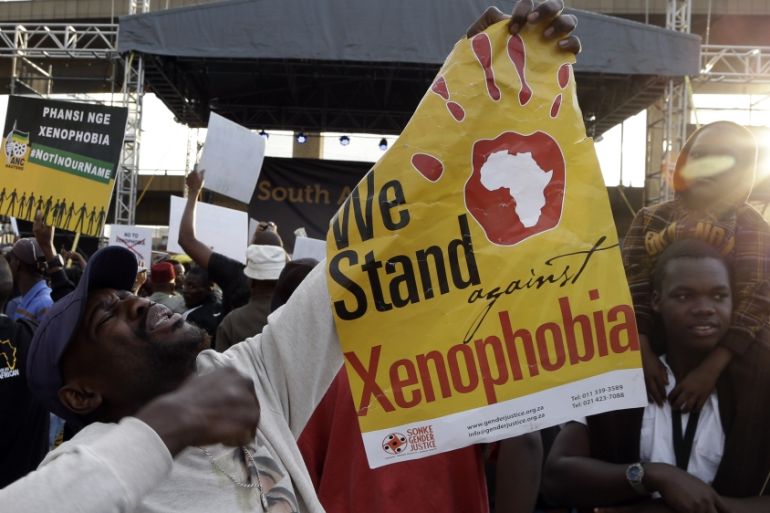
Today, the lyrics echo again, but the fire has taken a sickening turn. The arsonists are no longer only foreign-backed white supremacists. In South Africa, young men and women, the very descendants of those who fled Soweto’s flames, are now setting shops, trucks, and bodies of fellow Africans. Zambians, Malawians, Zimbabweans, Ghanaians and Nigerians. Not only that, but mothers also selling vegetable, taxi drivers, students, among others are harassed and beaten for being strangers in South Africa contrary to God’s biblical injunctions on how and how not strangers should be treated. Against the backdrop of the foregoing, it suffices to opine that the following viewpoints are explanatory enough on why God frowns against the mistreatments or oppressions of strangers.
The Bible contains numerous strong injunctions against the mistreatment or oppression of strangers, variously described as foreigners, sojourners, or aliens. These commands are often grounded in the historical memory of the Israelites’ own experience as foreigners in Egypt. That shared past serves as a moral foundation, intended to cultivate empathy, justice, and compassion in their treatment of others.
One major theme is the direct command not to oppress strangers. In several passages, such as Exodus 22:21 and 23:9, the instruction is explicit: foreigners must not be mistreated, precisely because the Israelites themselves once lived as outsiders in Egypt. This principle is expanded in Leviticus 19:33–34, where the people are commanded not only to avoid oppression but to love the foreigner as they love themselves, treating them as native-born. Deuteronomy 10:19 reinforces this obligation, again linking it to the shared memory of exile, while Zechariah 7:10 places foreigners alongside widows, orphans, and the poor as groups especially protected from injustice.
Beyond moral exhortation, the Bible also establishes legal protections for strangers. Deuteronomy 24:17 and 27:19 explicitly forbid denying them justice and even pronounce a curse on those who do so. Numbers 15:15–16 emphasizes equality under the law, declaring that the same standards apply to both native-born Israelites and foreigners residing among them. This commitment to inclusion reaches a striking point in Ezekiel 47:22, where resident foreigners who have families are to be treated as full members of the community, even to the extent of receiving an inheritance in the land.
The scriptures also outline practical and economic support for strangers. In Leviticus 19:9–10, landowners are instructed to leave portions of their harvest for the poor and for foreigners. Deuteronomy 24:14–15 warns against exploiting hired workers, regardless of whether they are Israelites or foreigners, stressing fairness in wages and treatment. Similarly, Deuteronomy 14:28–29 includes strangers among those who benefit from the triennial tithe, ensuring they are not excluded from communal provision.
In the New Testament, the emphasis shifts toward hospitality and inclusion. Believers are encouraged to welcome strangers and care for those in need, as seen in Hebrews 13:2 and Romans 12:13. This ethic is elevated further in Matthew 25:35, where welcoming the stranger is presented as an act of service to Christ himself, giving the practice a deeply spiritual significance.
At the heart of all these teachings lies a consistent motivation: “for you were strangers.” The Israelites’ own history of displacement and vulnerability becomes the ethical lens through which they are called to view others. By remembering what it meant to be outsiders, they are taught to understand the “heart of a stranger” and to respond not with oppression, but with compassion and justice.
And the refrain plays in my mind: “I look at them a burning, my people are crying. I look at them a shooting, my people are dying.”
At this juncture, it istra expedient to ask, why are some South African youths transferring their collective aggression to strangers? Though it is understood that unemployment in South Africa hovers above 30%, housing and healthcare are stretched. Yes, decades after apartheid, inequality remains a wound that will not close. But when did we learn to answer poverty by turning a brother into prey? When did “foreigner” become synonymous with “enemy”?
The same lyrics that once named apartheid’s evil now name our own: “We did nothing, nothing that we owe you.” The Ghanaian trader in Pretoria owes no debt. The Somali shopkeeper in Soweto did not steal a job, he created one in a dead street. The Zimbabwean cleaner did not bring the drugs; she brought her blistered hands to scrub floors no one else wanted.
And yet, the youth attack. With stones. With pangas. With the same language of “cleansing” that Vorster’s police once used.
I hear Okosun’s warning: “Tell me where you’re going to run when the law come down.” But today, the law is slow. Politicians fan xenophobia for votes. Police watch while families burn. And the pan-African dream, once a roaring fire of liberation, is reduced to ash.
Do we not remember? Angola, Mozambique, Namibia, Zimbabwe, those names in the song were not foreign lands. They were comrades in arms. They sent soldiers, hosted exiles, and bled for the freedom of all Black people. Now, our youth call them *makwerekwere* and torch their homes.
The song ends with hope: “The color of God, neither black nor white. We have risen; freedom is our goal.” But freedom without solidarity is just a bigger cage. If a Malawian cannot walk safely in Soweto, no South African is truly free.
So I ask: What will we do when we follow the truth? The truth is that the fire in Soweto has changed hands. It is time to put it out, not with bullets, but with brotherhood.
Because if this fire continues, there will be nowhere left to run. Not to Johannesburg. Not to Harare. Not to Lagos. The smoke will choke us all.Africa is our home. Freedom is our goal. But freedom dies when we burn each other.