
Forgotten Dairies
The IBB Metamorphosis: From Journey In Service To Service In Journey -By Abdu Abdullahi
Beyond his massive investments on infrastructures that cut across the country, his antagonists will continue to remember him for what the News magazine depicted him as the’ Lonely Long Distance Runner’. With that complex description, he had his own way of engaging in ideological battles with almost all the segments of the mainstream society. On this note, he was able to neutralize some of the vibrant radical elements of the society. A typical example here was the late social critic, Dr. Tai Solarin, who suddenly replaced his symbolic attire for struggling against oppression with flowing Agbada. It was IBB’s political wit that enabled him to convert some radicals to conservatives.

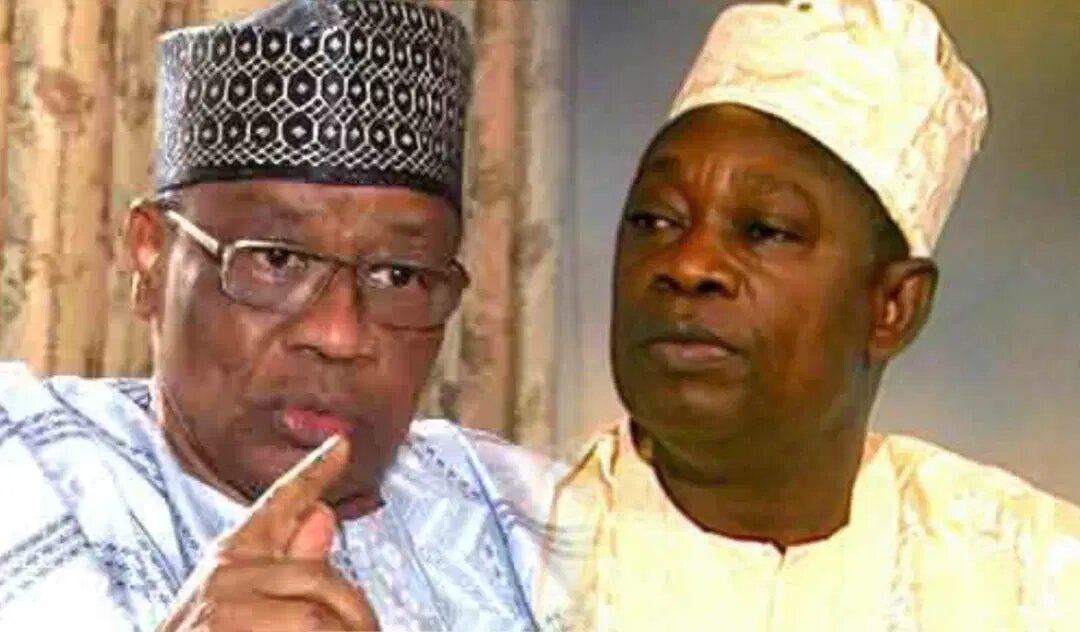
Eventually, General Ibrahim Babangida’s ‘ A Journey in Service,’ an autobiography, was formally launched, generating as humongous as 17 billion naira, sparkling incredible reactions from Nigerians.
Interestingly, its content is vast and rich, from the historical and material perspectives, yet despised and rejected by many, given the fact that he has unavoidably written about the political earthquake of the June 12 presidential election annulment which shook the very foundation of Nigeria’s unity, the bloody episode of the execution of the late Mamman Vatsa and the other coup plotters who violently attempted to dethrone him, and the mysterious and unprecedented death of the veteran journalist Dele Giwa among others.

Sadly, the book recounts the June 12 election which was on the verge of transforming Nigeria into a true nation, but unfortunately a deep injury was inflicted on the national psyche and we were forced to live with a political disaster. Has the severe wound been healed? Is it not a belated confession of IBB that the late MKO Abiola won the June 12 presidential election that was unjustly annulled by his military junta? What significant value has it added to the book vis-a-vis IBB’s assertive innocence?
From the chain of responses trailing the formal launch of the book, the simple and clear verdict deducted is that IBB is the most controversial leader Nigeria has ever produced, who ruled Nigeria from 1985 to 1993. The core themes of the trending document, also controversial as the author himself vividly capture his personal life, military career and of course, his eventual journey in political and national leadership, the most significant turning point of his life and how it shaped Nigeria’s political development, from which the inspiration for the book authorship was largely drawn.
Spanning a period of eight years, Babangida’s regime will be remembered for its intensity of suspenses, surprises and shocks put together with their direct bearings on Nigeria’s political and economic development. There was also scarcity of directional purpose which led many to believe that he nursed a hidden agenda. A typical example here was the turbulent transition to civil rule program which ardent critics described as a ‘transition to doom’. In a nutshell, IBB got himself enmeshed in a deep crisis of confidence. Can the content of the book bring back this eroded confidence?
In his frantic bid to defend some of the tragic episodes of his power play in the book, he has invariably and profoundly infuriated many. A typical example here is the late Vatsa’s family. Vatsa’s blood relations have vehemently condemned Babangida’s reasons for the execution of their beloved one in strong terms.It is as though we were watching the reenactment of various political and economic dramas of those unforgettable years. Also, the dramatic scenario is like an accused person trying to defend himself before the court of law. Similarly, IBB’s self narration in this book is before the court of Nigerians who will scrutinize and judge him fairly or unfairly. The historical and defensive expression of the book may be fruitful or fruitless. It all depends on how one views the content and context, how one believes in the message and not the messenger.
Can we say that IBB also ranks the most ambitious leader Nigeria has ever produced? This personal attribute was pronounced in his deeds and actions as testified by mainly his superior officers. His insatiable desire for power triggered him to set his ambitious machinery in motion and he succeeded ultimately. The most disgusting aspect of his political power was the implementation of the Structural Adjustment Program( SAP). Under this unpopular externally oriented policy, the middle class was obliterated, the university students were radicalized and organized a series of anti-SAP riots that culminated in tears, sorrow and blood. There was the brain drain phenomenon in our universities then. These and other crucial matters that characterized the political personality of IBB will be difficult to erode in the historical evolution of Nigerian.
Though he and his apologists have highlighted many structural and institutional achievements he has recorded, it is also imperative to cite inner motives that were largely meant to politically aggrandize himself. For instance, the crafty evolution of the cultist ‘IBB Boys’ was a political calculation for the sustenance of his political relevance even after relinquishing power as a military leader. For example ,his foiled attempt to reinvent his highly political project in 2003 was thwarted by Chief Olusegun Obasanjo, who was then in the process of inventing the ill-fated third term.
The roll call of who was who in that class membership included Majors Abubakar Dangiwa Umar, Abdulmuminu Aminu, Lawan Gwadabe, Col. David Mark, Major Generals John Shagaya and Joshua Dogon Yaro amongst others. In fact, one of the major reasons for the attempted coup of Mamman Vatsa and his allies was appointing Majors as a governors, a tradition believed to be alien in the then military disposition.
Beyond his massive investments on infrastructures that cut across the country, his antagonists will continue to remember him for what the News magazine depicted him as the’ Lonely Long Distance Runner’. With that complex description, he had his own way of engaging in ideological battles with almost all the segments of the mainstream society. On this note, he was able to neutralize some of the vibrant radical elements of the society. A typical example here was the late social critic, Dr. Tai Solarin, who suddenly replaced his symbolic attire for struggling against oppression with flowing Agbada. It was IBB’s political wit that enabled him to convert some radicals to conservatives.
IBB is ably or otherwise represented by this book, doing his own accurate public relations communication to correct the wrongful impressions about his political journey. This historical book production is, in itself, a service in his journey, within a journey in service.

Continue Reading






















You must be logged in to post a comment Login