Forgotten Dairies
The Journey of Women in Nigerian Politics: A Long Road -By Kulkwa Ayuba
The consequences of this exclusion extend beyond women themselves. When women are absent from decision-making spaces, issues such as maternal health, education, gender-based violence, and economic empowerment often receive less attention. A democracy functions best when it reflects the diversity of its people. Excluding half of the population from leadership weakens governance and limits national development.

When Nigeria returned to democratic rule on May 29, 1999, many citizens celebrated what seemed like the beginning of a new era. Democracy promised representation, equality, and opportunities for all Nigerians. For women, who make up nearly half of the country’s population, there was hope that their voices would finally be heard in the corridors of power. More than two decades later, however, that promise remains only partly fulfilled.
The struggle for women’s political participation in Nigeria did not begin with the Fourth Republic. Long before independence, brave women challenged injustice and demanded a place in public life. One of the most prominent was Funmilayo Ransome-Kuti, who led thousands of women in Abeokuta against unfair colonial taxation in the 1940s. Her activism laid the foundation for women’s political engagement in Nigeria. Around the same time, Margaret Ekpo emerged as a powerful voice in the Eastern Region, mobilizing women and encouraging them to participate in governance. In Northern Nigeria, Gambo Sawaba fearlessly challenged social norms that restricted women from politics, enduring arrests and intimidation for her beliefs.
These pioneers proved that women were not merely observers in politics; they were leaders and change-makers. Yet despite their sacrifices, the path to political inclusion remained difficult. After independence in 1960, politics continued to be dominated by men, while women struggled to gain access to decision-making positions. Military rule further limited democratic participation and slowed progress toward gender inclusion.
The return to democracy in 1999 raised expectations that things would change. But the numbers told a different story. Only three women won seats in the 109-member Senate, while just 12 women secured seats in the 360-member House of Representatives. Although representation improved slightly over the years, progress was slow and inconsistent. Today, women’s representation in Nigeria’s legislature remains among the lowest in Africa, despite decades of democratic governance.
Ironically, Nigerian women have repeatedly demonstrated their ability to lead whenever given the opportunity. In 2007, Patricia Etteh made history as the first woman elected Speaker of the House of Representatives. Although her tenure was brief, her emergence broke a major political barrier. Similarly, Dora Akunyili earned national admiration through her courageous leadership of NAFDAC, proving that women can lead institutions effectively and inspire public trust.
Beyond Nigeria’s borders, women have continued to make the country proud. Ngozi Okonjo-Iweala rose from serving as Nigeria’s Finance Minister to becoming the Director-General of the World Trade Organization, one of the most influential economic organizations in the world. Amina J. Mohammed moved from national service to become the Deputy Secretary-General of the United Nations. Their achievements demonstrate that Nigerian women possess the competence, vision, and leadership qualities required to excel at the highest levels.
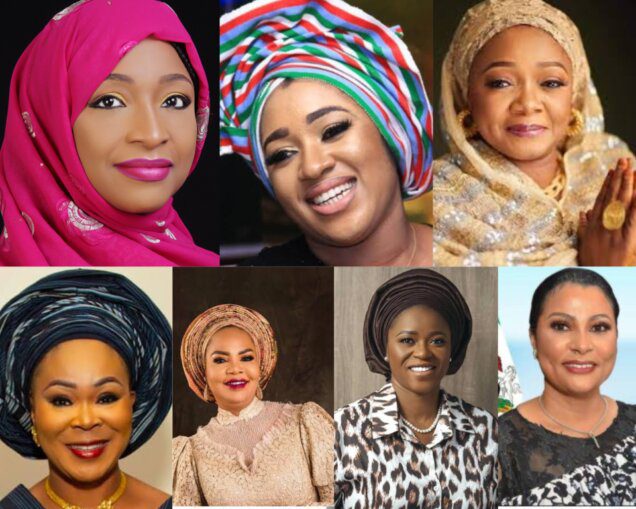
In recent years, a new generation of female politicians has emerged to challenge the status quo. Senator Oluremi Tinubu served three terms in the Senate and became one of the most influential female lawmakers in Nigeria’s democratic history. Senator Natasha Akpoti-Uduaghan broke barriers in Kogi State politics, while Senator Ireti Kingibe’s victory in the Federal Capital Territory showed that women can compete successfully in highly contested elections.
Perhaps no recent figure symbolizes the struggle for women’s political inclusion more than Senator Aishatu Dahiru Ahmed, popularly known as Binani. In 2023, she made history by becoming the first woman to secure the governorship ticket of a major political party in Adamawa State and mount a serious challenge for governorship in Northern Nigeria. Although she was ultimately not declared governor, her campaign inspired countless women and young girls across the country. For many Nigerians, Binani’s candidacy proved that women are increasingly willing to challenge political traditions that have excluded them for decades.
Despite these inspiring examples, major obstacles remain. Politics in Nigeria is still largely shaped by patriarchal attitudes that view leadership as a male responsibility. Many women face cultural barriers, financial constraints, and discrimination within political parties. Campaigns require substantial resources, while party structures are often controlled by powerful male networks. As a result, many qualified women are pushed aside long before elections even begin.
The consequences of this exclusion extend beyond women themselves. When women are absent from decision-making spaces, issues such as maternal health, education, gender-based violence, and economic empowerment often receive less attention. A democracy functions best when it reflects the diversity of its people. Excluding half of the population from leadership weakens governance and limits national development.
As Nigeria prepares for future elections and constitutional reforms, the country faces an important question: Will it continue to treat women’s political participation as an aspiration, or will it take concrete steps to make it a reality? The stories of Funmilayo Ransome-Kuti, Margaret Ekpo, Gambo Sawaba, Patricia Etteh, Dora Akunyili, Ngozi Okonjo-Iweala, Amina Mohammed, Oluremi Tinubu, Natasha Akpoti-Uduaghan, and Aisha Binani show that Nigerian women have never lacked the capacity to lead. What they have lacked is equal access to political power.
The journey of women in Nigerian politics is therefore a story of resilience, courage, and determination. It is a story of women who refused to be silenced, who broke barriers in the face of overwhelming odds, and who continue to inspire future generations. Their struggle is not only a women’s issue; it is a democratic issue. And until Nigerian women occupy their rightful place in governance, the country’s democratic journey will remain incomplete.
Kulkwa Ayuba
Department of Mass Communication
Kashim Ibrahim University